
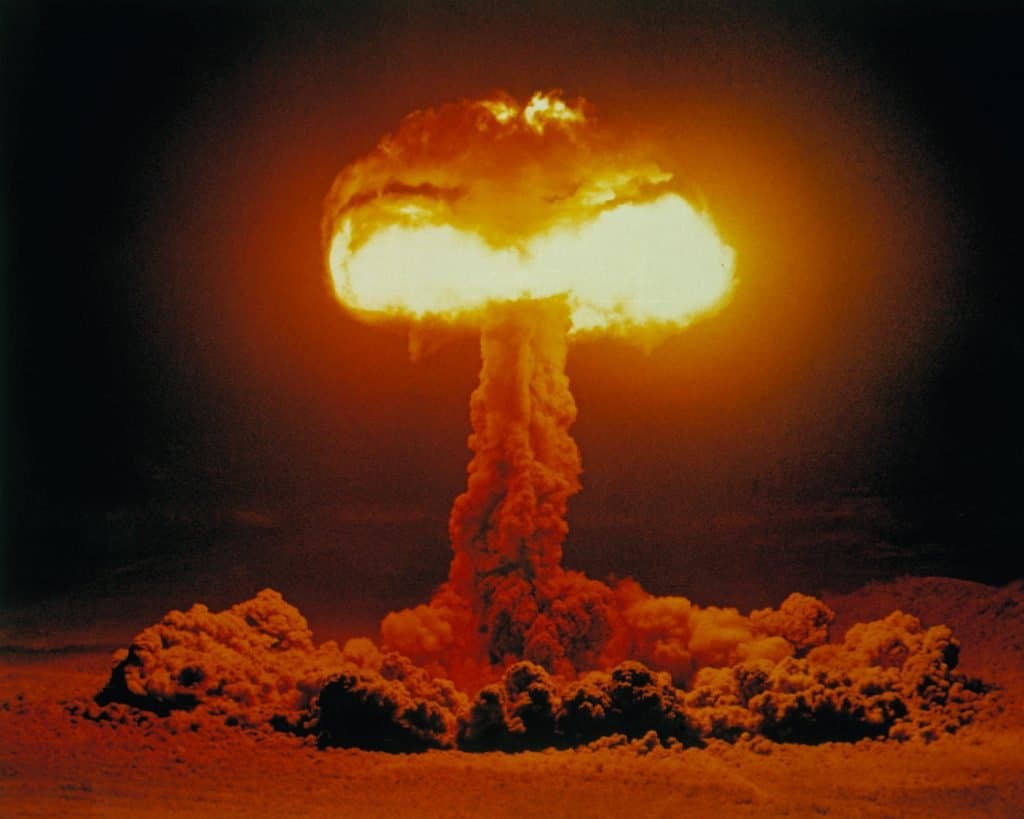
President Trump's October 2025 directive to resume U.S. nuclear weapons testing "on an equal basis" with Russia and China has shaped trader views on any near-term explosive test, though Energy Department and NNSA officials quickly clarified that planned activities center on subcritical experiments, system checks, and stockpile stewardship at the Nevada National Security Site rather than full-yield detonations. Lab directors and STRATCOM have repeatedly certified the arsenal's reliability without explosive tests, while a presidential decision to restart underground explosions would face 24-36 month preparation timelines. February 2026 U.S. accusations of prior Chinese low-yield activity and March Senate testimony confirming no final decisions on explosive testing have reinforced expectations that any shift remains uncertain and distant. Scheduled budget reviews, confirmation processes, and ongoing CTBT-related diplomacy could influence timelines.
Experimentelle KI-generierte Zusammenfassung mit Polymarket-Daten. Dies ist keine Handelsberatung und spielt keine Rolle bei der Auflösung dieses Marktes. · AktualisiertUS-Atomtest von...?
US-Atomtest von...?
$795,296 Vol.
30. September 2026
1%
31. Dezember 2026
5%
$795,296 Vol.
30. September 2026
1%
31. Dezember 2026
5%
A nuclear test is defined as the intentional non-combat detonation of a device by the US that produces a nuclear chain reaction (fission or fusion), regardless of yield.
Accidents, radiological dispersal devices (bombs that spread radioactive material using conventional explosives such as "dirty bombs"), or actions by third parties will not count toward this market's resolution.
Tests not explicitly claimed by US may still qualify if a clear consensus of credible reporting attributes the nuclear detonation to US. For example, an unclaimed nuclear test analogous to the 1979 "Vela Incident" would count if credible reporting attributes it to the US.
The resolution source for this market will be a broad consensus of credible reporting.
Markt eröffnet: Mar 31, 2026, 3:32 PM ET
Abwickler
0x65070BE91...A nuclear test is defined as the intentional non-combat detonation of a device by the US that produces a nuclear chain reaction (fission or fusion), regardless of yield.
Accidents, radiological dispersal devices (bombs that spread radioactive material using conventional explosives such as "dirty bombs"), or actions by third parties will not count toward this market's resolution.
Tests not explicitly claimed by US may still qualify if a clear consensus of credible reporting attributes the nuclear detonation to US. For example, an unclaimed nuclear test analogous to the 1979 "Vela Incident" would count if credible reporting attributes it to the US.
The resolution source for this market will be a broad consensus of credible reporting.
Abwickler
0x65070BE91...President Trump's October 2025 directive to resume U.S. nuclear weapons testing "on an equal basis" with Russia and China has shaped trader views on any near-term explosive test, though Energy Department and NNSA officials quickly clarified that planned activities center on subcritical experiments, system checks, and stockpile stewardship at the Nevada National Security Site rather than full-yield detonations. Lab directors and STRATCOM have repeatedly certified the arsenal's reliability without explosive tests, while a presidential decision to restart underground explosions would face 24-36 month preparation timelines. February 2026 U.S. accusations of prior Chinese low-yield activity and March Senate testimony confirming no final decisions on explosive testing have reinforced expectations that any shift remains uncertain and distant. Scheduled budget reviews, confirmation processes, and ongoing CTBT-related diplomacy could influence timelines.
Experimentelle KI-generierte Zusammenfassung mit Polymarket-Daten. Dies ist keine Handelsberatung und spielt keine Rolle bei der Auflösung dieses Marktes. · Aktualisiert


Vorsicht bei externen Links.
Vorsicht bei externen Links.
Häufig gestellte Fragen