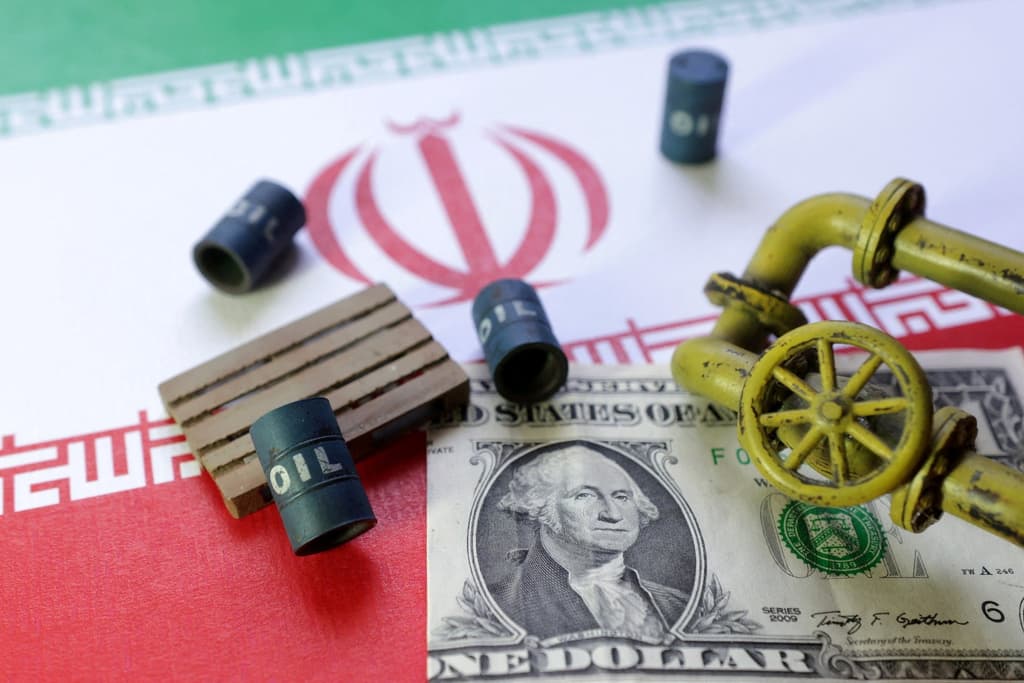
Escalating Middle East tensions, driven by Israel's intensified airstrikes on Hezbollah strongholds in Lebanon and Iran's vows of retaliation, have reinforced trader consensus against a US-Iran ceasefire before oil prices reach $120 per barrel, with "No" trading at 61%. Recent US deployments of military assets to the region and tightened sanctions signal deterrence rather than diplomacy, while Iranian officials dismissed negotiations amid proxy conflicts involving Hamas and Houthis. Brent crude hovers around $75, far from $120 thresholds that would require disruptions like a Strait of Hormuz blockade—deemed improbable without full-scale war. Absent official talks or de-escalation signals in the past week, markets price in prolonged standoff over imminent breakthrough.
Résumé expérimental généré par IA à partir des données Polymarket · Mis à jourCessez-le-feu entre les États-Unis et l'Iran avant que le pétrole n'atteigne 120 $ ?
Cessez-le-feu entre les États-Unis et l'Iran avant que le pétrole n'atteigne 120 $ ?
Oui
$30,445 Vol.
$30,445 Vol.
Oui
$30,445 Vol.
$30,445 Vol.
This market will resolve to “No” if Crude Oil (CL) hits ↑ $120 before there is an official ceasefire agreement, defined as a publicly announced and mutually agreed halt in direct military engagement, between the United States and Iran.
If there is neither a qualifying ceasefire agreement between the United States and Iran nor does Crude Oil (CL) hit ↑ $120 by June 30, 2026 (ET), this market will resolve 50-50.
If both events occur on the same calendar date, this market will resolve based on which event occurred earlier in ET time.
1. Crude Oil (CL) hits ↑ $120
This market will resolve to "Yes" if, on any trading day, the official CME settlement price for the Active Month (front month) of Crude Oil (CL) futures is equal to or above the listed price by the final trading day of June 2026. Otherwise, the market will resolve to "No".
For CME Crude Oil (CL) futures contracts, the active month is the nearest of the contract months listed. The active month becomes a non-active month effective two business days prior to the spot month expiration. For example; if the spot month expires on a Friday the next listed contract will be considered the Active Month on the Wednesday prior to the spot month expiration.
Only the Active Month's official settlement price published by CME Group will be considered. Intraday trades, highs, lows, bids, offers, midpoint values, or indicative prices do not count.
Note that the settlement price may differ from the last traded price. CME's methodology to determine the settlement price can vary by commodity and contract.
Only days on which CME publishes an official settlement price for the Active Month will be included. Days without settlement prices (weekends, holidays, or market closures) are ignored.
This market will resolve based on the settlement price as it appears on the CME settlement page at the time it is first published for that trading day, regardless of any later corrections or updates.
The resolution source is the CME Group website — specifically, the daily "Settlement" price for the Active Month of Crude Oil (CL) futures.
2. US x Iran ceasefire
For the purposes of this market, an “official ceasefire agreement” requires clear public confirmation from both the United States government and the government of Iran that they have agreed to halt military hostilities against one another, or for an official ceasefire agreement to be otherwise confirmed to have been reached by an overwhelming consensus of media reporting.
If the agreement is officially reached before Trump visits China, this market will resolve to “Yes,” regardless of whether or when the ceasefire officially takes effect.
Any form of informal understanding, backchannel communication, de-escalation without an announced agreement, or unilateral pause in hostilities will not be considered an official ceasefire. Humanitarian pauses, limited operational pauses, or temporary tactical stand-downs will not count toward the resolution of this market.
A broader peace deal, normalization agreement, or political framework will qualify only if it includes a publicly announced and mutually agreed halt in military engagement between the United States and Iran, effective on a specified date, or otherwise confirmed by an overwhelming consensus of credible reporting. Agreements that outline future negotiations or de-escalation measures without an explicit, dated commitment to stop fighting will not qualify.
The primary resolution source for whether a qualifying ceasefire agreement has been reached will be official statements from the United States government and the government of Iran. However, an overwhelming consensus of credible media reporting confirming that an official ceasefire agreement has been reached will suffice.
Marché ouvert : Mar 26, 2026, 4:45 PM ET
Resolver
0x65070BE91...This market will resolve to “No” if Crude Oil (CL) hits ↑ $120 before there is an official ceasefire agreement, defined as a publicly announced and mutually agreed halt in direct military engagement, between the United States and Iran.
If there is neither a qualifying ceasefire agreement between the United States and Iran nor does Crude Oil (CL) hit ↑ $120 by June 30, 2026 (ET), this market will resolve 50-50.
If both events occur on the same calendar date, this market will resolve based on which event occurred earlier in ET time.
1. Crude Oil (CL) hits ↑ $120
This market will resolve to "Yes" if, on any trading day, the official CME settlement price for the Active Month (front month) of Crude Oil (CL) futures is equal to or above the listed price by the final trading day of June 2026. Otherwise, the market will resolve to "No".
For CME Crude Oil (CL) futures contracts, the active month is the nearest of the contract months listed. The active month becomes a non-active month effective two business days prior to the spot month expiration. For example; if the spot month expires on a Friday the next listed contract will be considered the Active Month on the Wednesday prior to the spot month expiration.
Only the Active Month's official settlement price published by CME Group will be considered. Intraday trades, highs, lows, bids, offers, midpoint values, or indicative prices do not count.
Note that the settlement price may differ from the last traded price. CME's methodology to determine the settlement price can vary by commodity and contract.
Only days on which CME publishes an official settlement price for the Active Month will be included. Days without settlement prices (weekends, holidays, or market closures) are ignored.
This market will resolve based on the settlement price as it appears on the CME settlement page at the time it is first published for that trading day, regardless of any later corrections or updates.
The resolution source is the CME Group website — specifically, the daily "Settlement" price for the Active Month of Crude Oil (CL) futures.
2. US x Iran ceasefire
For the purposes of this market, an “official ceasefire agreement” requires clear public confirmation from both the United States government and the government of Iran that they have agreed to halt military hostilities against one another, or for an official ceasefire agreement to be otherwise confirmed to have been reached by an overwhelming consensus of media reporting.
If the agreement is officially reached before Trump visits China, this market will resolve to “Yes,” regardless of whether or when the ceasefire officially takes effect.
Any form of informal understanding, backchannel communication, de-escalation without an announced agreement, or unilateral pause in hostilities will not be considered an official ceasefire. Humanitarian pauses, limited operational pauses, or temporary tactical stand-downs will not count toward the resolution of this market.
A broader peace deal, normalization agreement, or political framework will qualify only if it includes a publicly announced and mutually agreed halt in military engagement between the United States and Iran, effective on a specified date, or otherwise confirmed by an overwhelming consensus of credible reporting. Agreements that outline future negotiations or de-escalation measures without an explicit, dated commitment to stop fighting will not qualify.
The primary resolution source for whether a qualifying ceasefire agreement has been reached will be official statements from the United States government and the government of Iran. However, an overwhelming consensus of credible media reporting confirming that an official ceasefire agreement has been reached will suffice.
Resolver
0x65070BE91...Escalating Middle East tensions, driven by Israel's intensified airstrikes on Hezbollah strongholds in Lebanon and Iran's vows of retaliation, have reinforced trader consensus against a US-Iran ceasefire before oil prices reach $120 per barrel, with "No" trading at 61%. Recent US deployments of military assets to the region and tightened sanctions signal deterrence rather than diplomacy, while Iranian officials dismissed negotiations amid proxy conflicts involving Hamas and Houthis. Brent crude hovers around $75, far from $120 thresholds that would require disruptions like a Strait of Hormuz blockade—deemed improbable without full-scale war. Absent official talks or de-escalation signals in the past week, markets price in prolonged standoff over imminent breakthrough.
Résumé expérimental généré par IA à partir des données Polymarket · Mis à jour
Méfiez-vous des liens externes.
Méfiez-vous des liens externes.
Questions fréquentes