
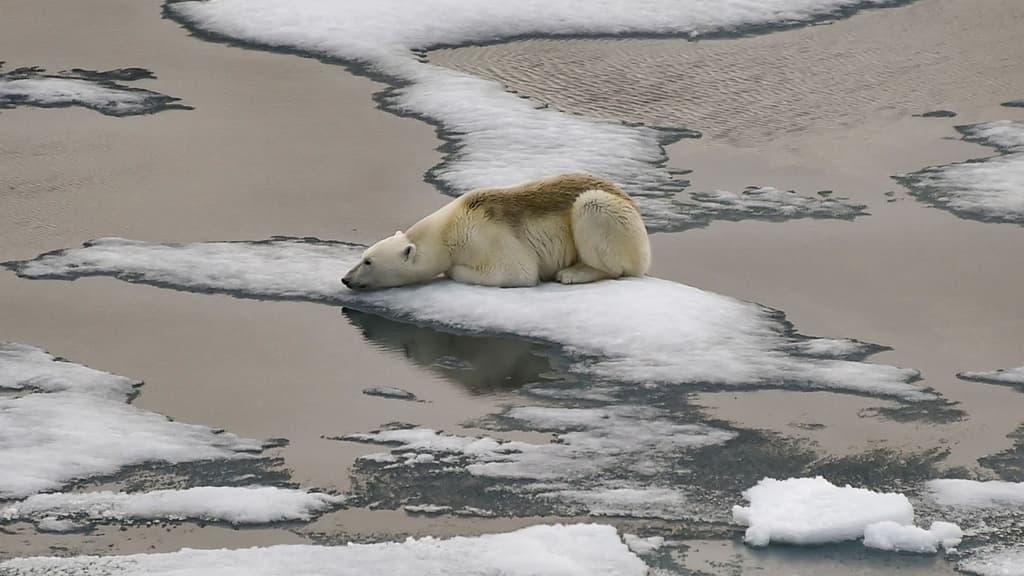
Trader consensus on a 4.4-4.6 million square kilometer minimum Arctic sea ice extent reflects NSIDC August 2026 data showing average extent of 5.56 million square kilometers—the seventh lowest on record—after early-summer trajectories tracked 2012 levels before cooler high-latitude conditions and persistent low-pressure systems slowed melt. This aligns with post-2007 climatology and Sea Ice Outlook medians near 4.5, supported by satellite concentration thresholds and volume records entering the season. The minimum, typically declared mid-September by NSIDC, faces limited upside risk from renewed warm southerly winds or model revisions but remains anchored by current observational trends and reduced intensification potential.
Polymarket डेटा का संदर्भ देने वाला प्रयोगात्मक AI-जनरेटेड सारांश। यह ट्रेडिंग सलाह नहीं है और इस बाज़ार के समाधान में कोई भूमिका नहीं निभाता। · अपडेट किया गयाइस गर्मी में न्यूनतम आर्कटिक समुद्री बर्फ की सीमा?
इस गर्मी में न्यूनतम आर्कटिक समुद्री बर्फ की सीमा?
4.4-4.6 मिलियन वर्ग किमी 92.9%
4.2-4.4 मिलियन वर्ग किमी 3.1%
<4 मिलियन वर्ग किमी 1.4%
4.6-4.8 मिलियन वर्ग किमी 1.2%
$79,261 वॉल्यूम
$79,261 वॉल्यूम
30 सित, 2026
<4 मिलियन वर्ग किमी
1%
4.0-4.2m वर्ग किमी
1%
4.2-4.4 मिलियन वर्ग किमी
3%
4.4-4.6 मिलियन वर्ग किमी
93%
4.6-4.8 मिलियन वर्ग किमी
1%
4.8-5 मिलियन वर्ग किलोमीटर
1%
5 मिलियन+ वर्ग किमी
<1%
4.4-4.6 मिलियन वर्ग किमी 92.9%
4.2-4.4 मिलियन वर्ग किमी 3.1%
<4 मिलियन वर्ग किमी 1.4%
4.6-4.8 मिलियन वर्ग किमी 1.2%
$79,261 वॉल्यूम
$79,261 वॉल्यूम
30 सित, 2026
<4 मिलियन वर्ग किमी
$33,595 वॉल्यूम
1%
4.0-4.2m वर्ग किमी
$7,498 वॉल्यूम
1%
4.2-4.4 मिलियन वर्ग किमी
$3,817 वॉल्यूम
3%
4.4-4.6 मिलियन वर्ग किमी
$4,588 वॉल्यूम
93%
4.6-4.8 मिलियन वर्ग किमी
$10,293 वॉल्यूम
1%
4.8-5 मिलियन वर्ग किलोमीटर
$4,370 वॉल्यूम
1%
5 मिलियन+ वर्ग किमी
$15,098 वॉल्यूम
<1%
This market will resolve according to the minimum Arctic sea ice extent for all days between August 1, 2026 and October 1, 2026, as published by the National Snow and Ice Data Center.
This market will remain open until data has been published for October 1, 2026, at which point it will resolve immediately. Any revisions to sea ice extent recorded after data is published for October 1, 2026 will not be considered.
The resolution source for this market measures temperatures to thousands of square kilometers (e.g. 4.255 million sq km). Thus, this is the level of precision that will be used when resolving the market.
The resolution source for this market will be information from the National Snow and Ice Data Center, specifically the minimum value recorded for any day between August 1, 2026 and October 1, 2026 in the “NH-Daily-Extent” tab of the “Sea Ice Index Daily Extent” data set, available at https://nsidc.org/sea-ice-today/sea-ice-tools. If this resolution source becomes unavailable, another resolution source will be chosen.Trader consensus on a 4.4-4.6 million square kilometer minimum Arctic sea ice extent reflects NSIDC August 2026 data showing average extent of 5.56 million square kilometers—the seventh lowest on record—after early-summer trajectories tracked 2012 levels before cooler high-latitude conditions and persistent low-pressure systems slowed melt. This aligns with post-2007 climatology and Sea Ice Outlook medians near 4.5, supported by satellite concentration thresholds and volume records entering the season. The minimum, typically declared mid-September by NSIDC, faces limited upside risk from renewed warm southerly winds or model revisions but remains anchored by current observational trends and reduced intensification potential.
This market will resolve according to the minimum Arctic sea ice extent for all days between August 1, 2026 and October 1, 2026, as published by the National Snow and Ice Data Center.
This market will remain open until data has been published for October 1, 2026, at which point it will resolve immediately. Any revisions to sea ice extent recorded after data is published for October 1, 2026 will not be considered.
The resolution source for this market measures temperatures to thousands of square kilometers (e.g. 4.255 million sq km). Thus, this is the level of precision that will be used when resolving the market.
The resolution source for this market will be information from the National Snow and Ice Data Center, specifically the minimum value recorded for any day between August 1, 2026 and October 1, 2026 in the “NH-Daily-Extent” tab of the “Sea Ice Index Daily Extent” data set, available at https://nsidc.org/sea-ice-today/sea-ice-tools. If this resolution source becomes unavailable, another resolution source will be chosen.
This market will remain open until data has been published for October 1, 2026, at which point it will resolve immediately. Any revisions to sea ice extent recorded after data is published for October 1, 2026 will not be considered.
The resolution source for this market measures temperatures to thousands of square kilometers (e.g. 4.255 million sq km). Thus, this is the level of precision that will be used when resolving the market.
The resolution source for this market will be information from the National Snow and Ice Data Center, specifically the minimum value recorded for any day between August 1, 2026 and October 1, 2026 in the “NH-Daily-Extent” tab of the “Sea Ice Index Daily Extent” data set, available at https://nsidc.org/sea-ice-today/sea-ice-tools. If this resolution source becomes unavailable, another resolution source will be chosen.
बाज़ार खुला: Nov 20, 2025, 6:43 PM ET
वॉल्यूम
$79,261समाप्ति तिथि
1 अक्टू, 2026बाज़ार खुला
Nov 20, 2025, 6:43 PM ETरिज़ॉल्वर
0x2F5e3684c...This market will resolve according to the minimum Arctic sea ice extent for all days between August 1, 2026 and October 1, 2026, as published by the National Snow and Ice Data Center.
This market will remain open until data has been published for October 1, 2026, at which point it will resolve immediately. Any revisions to sea ice extent recorded after data is published for October 1, 2026 will not be considered.
The resolution source for this market measures temperatures to thousands of square kilometers (e.g. 4.255 million sq km). Thus, this is the level of precision that will be used when resolving the market.
The resolution source for this market will be information from the National Snow and Ice Data Center, specifically the minimum value recorded for any day between August 1, 2026 and October 1, 2026 in the “NH-Daily-Extent” tab of the “Sea Ice Index Daily Extent” data set, available at https://nsidc.org/sea-ice-today/sea-ice-tools. If this resolution source becomes unavailable, another resolution source will be chosen.Trader consensus on a 4.4-4.6 million square kilometer minimum Arctic sea ice extent reflects NSIDC August 2026 data showing average extent of 5.56 million square kilometers—the seventh lowest on record—after early-summer trajectories tracked 2012 levels before cooler high-latitude conditions and persistent low-pressure systems slowed melt. This aligns with post-2007 climatology and Sea Ice Outlook medians near 4.5, supported by satellite concentration thresholds and volume records entering the season. The minimum, typically declared mid-September by NSIDC, faces limited upside risk from renewed warm southerly winds or model revisions but remains anchored by current observational trends and reduced intensification potential.
This market will resolve according to the minimum Arctic sea ice extent for all days between August 1, 2026 and October 1, 2026, as published by the National Snow and Ice Data Center.
This market will remain open until data has been published for October 1, 2026, at which point it will resolve immediately. Any revisions to sea ice extent recorded after data is published for October 1, 2026 will not be considered.
The resolution source for this market measures temperatures to thousands of square kilometers (e.g. 4.255 million sq km). Thus, this is the level of precision that will be used when resolving the market.
The resolution source for this market will be information from the National Snow and Ice Data Center, specifically the minimum value recorded for any day between August 1, 2026 and October 1, 2026 in the “NH-Daily-Extent” tab of the “Sea Ice Index Daily Extent” data set, available at https://nsidc.org/sea-ice-today/sea-ice-tools. If this resolution source becomes unavailable, another resolution source will be chosen.
This market will remain open until data has been published for October 1, 2026, at which point it will resolve immediately. Any revisions to sea ice extent recorded after data is published for October 1, 2026 will not be considered.
The resolution source for this market measures temperatures to thousands of square kilometers (e.g. 4.255 million sq km). Thus, this is the level of precision that will be used when resolving the market.
The resolution source for this market will be information from the National Snow and Ice Data Center, specifically the minimum value recorded for any day between August 1, 2026 and October 1, 2026 in the “NH-Daily-Extent” tab of the “Sea Ice Index Daily Extent” data set, available at https://nsidc.org/sea-ice-today/sea-ice-tools. If this resolution source becomes unavailable, another resolution source will be chosen.
वॉल्यूम
$79,261समाप्ति तिथि
1 अक्टू, 2026बाज़ार खुला
Nov 20, 2025, 6:43 PM ETरिज़ॉल्वर
0x2F5e3684c...Trader consensus on a 4.4-4.6 million square kilometer minimum Arctic sea ice extent reflects NSIDC August 2026 data showing average extent of 5.56 million square kilometers—the seventh lowest on record—after early-summer trajectories tracked 2012 levels before cooler high-latitude conditions and persistent low-pressure systems slowed melt. This aligns with post-2007 climatology and Sea Ice Outlook medians near 4.5, supported by satellite concentration thresholds and volume records entering the season. The minimum, typically declared mid-September by NSIDC, faces limited upside risk from renewed warm southerly winds or model revisions but remains anchored by current observational trends and reduced intensification potential.
Polymarket डेटा का संदर्भ देने वाला प्रयोगात्मक AI-जनरेटेड सारांश। यह ट्रेडिंग सलाह नहीं है और इस बाज़ार के समाधान में कोई भूमिका नहीं निभाता। · अपडेट किया गया


बाहरी लिंक से सावधान रहें।
बाहरी लिंक से सावधान रहें।
अक्सर पूछे जाने वाले प्रश्न