
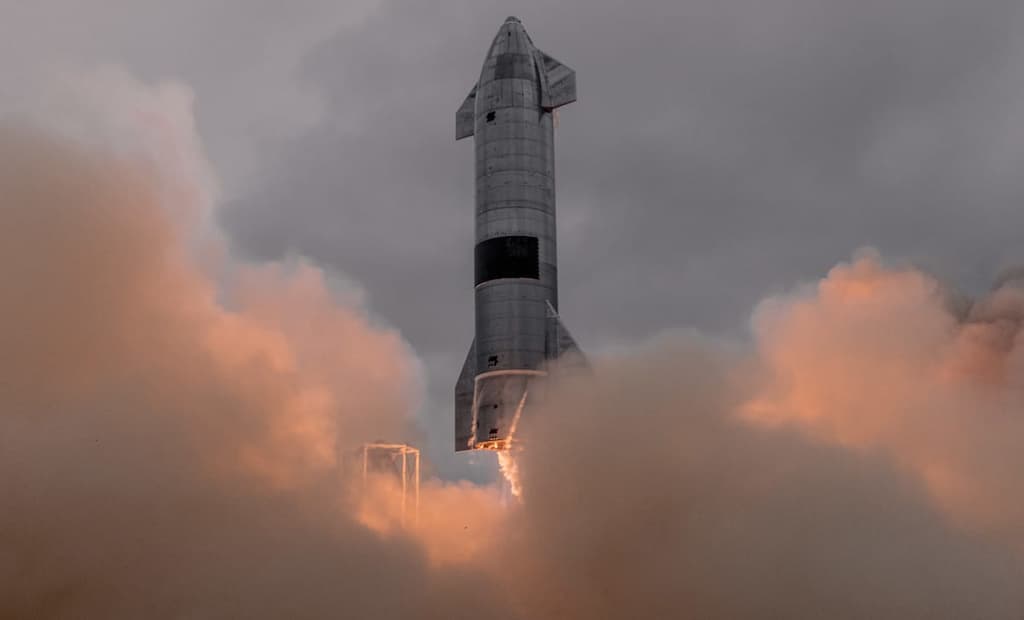
SpaceX’s Starship V3 vehicles now integrate dedicated docking ports, drogues, and propellant feed lines, enabling the first ship-to-ship rendezvous and transfer demonstration targeted for 2026. Recent Flight 13 success in July 2026, which deployed operational Starlink satellites, validated upgraded Raptor 3 engines and set the stage for Flight 14’s planned low-Earth orbit attempt and booster catch later this month. NASA-qualified androgynous docking hardware, already tested for Artemis Orion interfaces, provides proven navigation heritage via DragonEye sensors. Competitive pressure from lunar refueling needs and internal milestones for Mars tanker operations continue to drive rapid iteration, though regulatory approvals and vehicle recovery remain key variables for near-term docking attempts.
Ringkasan eksperimental yang dihasilkan AI dengan referensi data Polymarket. Ini bukan saran trading dan tidak berperan dalam bagaimana pasar ini diselesaikan. · Diperbarui$59,655 Vol.
December 31, 2026
12%
December 31, 2027
61%
$59,655 Vol.
December 31, 2026
12%
December 31, 2027
61%
A qualifying docking maneuver must physically join two vessels, matching in velocity, into a connected structure via mating hardware for at least 60 continuous seconds. The two vessels must be in stable Earth orbit with a perigee of at least 100 kilometers above the Earth’s surface.
The docking of any two SpaceX vessels which each serve as an integrated rocket-and-spacecraft and both equal or exceed Starship in scale will qualify regardless of their contents or variant (standard, tanker, depot, HLS, test article, etc.). The two vessels must be free-flying. Any capsule or payload carried to orbit exclusively atop a separate launch vehicle will not qualify. If either vessel is passively placed into the mating interface of the other vessel, that conjunction will not qualify.
The resolution source for this market will be a consensus of credible reporting.
Pasar Dibuka: Jun 11, 2026, 1:09 PM ET
Resolver
0x65070BE91...A qualifying docking maneuver must physically join two vessels, matching in velocity, into a connected structure via mating hardware for at least 60 continuous seconds. The two vessels must be in stable Earth orbit with a perigee of at least 100 kilometers above the Earth’s surface.
The docking of any two SpaceX vessels which each serve as an integrated rocket-and-spacecraft and both equal or exceed Starship in scale will qualify regardless of their contents or variant (standard, tanker, depot, HLS, test article, etc.). The two vessels must be free-flying. Any capsule or payload carried to orbit exclusively atop a separate launch vehicle will not qualify. If either vessel is passively placed into the mating interface of the other vessel, that conjunction will not qualify.
The resolution source for this market will be a consensus of credible reporting.
Resolver
0x65070BE91...SpaceX’s Starship V3 vehicles now integrate dedicated docking ports, drogues, and propellant feed lines, enabling the first ship-to-ship rendezvous and transfer demonstration targeted for 2026. Recent Flight 13 success in July 2026, which deployed operational Starlink satellites, validated upgraded Raptor 3 engines and set the stage for Flight 14’s planned low-Earth orbit attempt and booster catch later this month. NASA-qualified androgynous docking hardware, already tested for Artemis Orion interfaces, provides proven navigation heritage via DragonEye sensors. Competitive pressure from lunar refueling needs and internal milestones for Mars tanker operations continue to drive rapid iteration, though regulatory approvals and vehicle recovery remain key variables for near-term docking attempts.
Ringkasan eksperimental yang dihasilkan AI dengan referensi data Polymarket. Ini bukan saran trading dan tidak berperan dalam bagaimana pasar ini diselesaikan. · Diperbarui
Hati-hati dengan link eksternal.
Hati-hati dengan link eksternal.
Pertanyaan yang Sering Diajukan