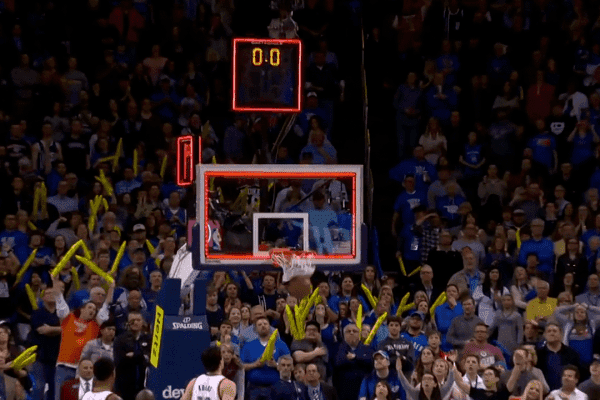
Through the Sweet 16 of the 2026 Men's NCAA Tournament, exactly two game-winning buzzer beaters have occurred: Dylan Darling's layup at the buzzer for St. John's over Kansas in the second round on March 22, and Trey Kaufman-Renn's 0.7-second tip-in for Purdue against Texas on March 26. Sweet 16 matchups like Duke's narrow 80-75 win over St. John's produced tension but no additional buzzers, while earlier rounds saw overtime thrillers such as Kentucky-Santa Clara. Elite Eight games begin today with Iowa-Illinois, Purdue-Arizona, Tennessee-Michigan, and UConn-Duke, pitting playoff-tested squads in high-pressure environments ripe for late drama, overtime, or clutch heroics that could boost the count before the Final Four.
Résumé expérimental généré par IA à partir des données Polymarket · Mis à jour$15,362 Vol.
Apr 13, 2026
3 ou plus
31%
4 ou plus
6%
5+
2%
6 ou plus
<1%
7 ou plus
1%
8+
3%
9 ou plus
1%
$15,362 Vol.
3 ou plus
$0 Vol.
31%
4 ou plus
$524 Vol.
6%
5+
$1,508 Vol.
2%
6 ou plus
$1,390 Vol.
<1%
7 ou plus
$630 Vol.
1%
8+
$0 Vol.
3%
9 ou plus
$0 Vol.
1%
This market will resolve to “Yes” if the total number of buzzer beater shots scored to end any regulation 2nd half or overtime period during the 2026 Men’s NCAA Tournament equals or exceeds the listed number. Otherwise, the market will resolve to “No”
If no buzzer beater is scored during the 2026 NCAA Tournament, the market will resolve to “No”
A ‘buzzer beater’ is a made field goal that is scored at the expiration (leaving zero seconds on game clock) of any second-half or overtime period during the NCAA Tournament and ties the game or gives the shooting team the lead. First-half buzzer beaters will not count. Shots by a team that is already ahead or behind and that do not result in a tie or lead change will not count. Shots made at the end of the shot clock are not considered buzzer beaters.
If the tournament concludes early, is shortened, or is truncated for any reason, the outcome shall be determined using available NCAA statistics for completed games.
If the NCAA Tournament is cancelled, postponed after April 30, 2026, 11:59 PM ET, or if the exact number of “buzzer beaters” cannot be determined within that timeframe, this market will resolve to "No".
The primary resolution source for this market will be official information from the NCAA and its official broadcast partners; however, a consensus of credible reporting may also be used.Through the Sweet 16 of the 2026 Men's NCAA Tournament, exactly two game-winning buzzer beaters have occurred: Dylan Darling's layup at the buzzer for St. John's over Kansas in the second round on March 22, and Trey Kaufman-Renn's 0.7-second tip-in for Purdue against Texas on March 26. Sweet 16 matchups like Duke's narrow 80-75 win over St. John's produced tension but no additional buzzers, while earlier rounds saw overtime thrillers such as Kentucky-Santa Clara. Elite Eight games begin today with Iowa-Illinois, Purdue-Arizona, Tennessee-Michigan, and UConn-Duke, pitting playoff-tested squads in high-pressure environments ripe for late drama, overtime, or clutch heroics that could boost the count before the Final Four.
This market will resolve to “Yes” if the total number of buzzer beater shots scored to end any regulation 2nd half or overtime period during the 2026 Men’s NCAA Tournament equals or exceeds the listed number. Otherwise, the market will resolve to “No”
If no buzzer beater is scored during the 2026 NCAA Tournament, the market will resolve to “No”
A ‘buzzer beater’ is a made field goal that is scored at the expiration (leaving zero seconds on game clock) of any second-half or overtime period during the NCAA Tournament and ties the game or gives the shooting team the lead. First-half buzzer beaters will not count. Shots by a team that is already ahead or behind and that do not result in a tie or lead change will not count. Shots made at the end of the shot clock are not considered buzzer beaters.
If the tournament concludes early, is shortened, or is truncated for any reason, the outcome shall be determined using available NCAA statistics for completed games.
If the NCAA Tournament is cancelled, postponed after April 30, 2026, 11:59 PM ET, or if the exact number of “buzzer beaters” cannot be determined within that timeframe, this market will resolve to "No".
The primary resolution source for this market will be official information from the NCAA and its official broadcast partners; however, a consensus of credible reporting may also be used.
If no buzzer beater is scored during the 2026 NCAA Tournament, the market will resolve to “No”
A ‘buzzer beater’ is a made field goal that is scored at the expiration (leaving zero seconds on game clock) of any second-half or overtime period during the NCAA Tournament and ties the game or gives the shooting team the lead. First-half buzzer beaters will not count. Shots by a team that is already ahead or behind and that do not result in a tie or lead change will not count. Shots made at the end of the shot clock are not considered buzzer beaters.
If the tournament concludes early, is shortened, or is truncated for any reason, the outcome shall be determined using available NCAA statistics for completed games.
If the NCAA Tournament is cancelled, postponed after April 30, 2026, 11:59 PM ET, or if the exact number of “buzzer beaters” cannot be determined within that timeframe, this market will resolve to "No".
The primary resolution source for this market will be official information from the NCAA and its official broadcast partners; however, a consensus of credible reporting may also be used.
Marché ouvert : Mar 18, 2026, 4:08 PM ET
Volume
$15,362Date de fin
Apr 13, 2026Marché ouvert
Mar 18, 2026, 4:08 PM ETResolver
0x65070BE91...This market will resolve to “Yes” if the total number of buzzer beater shots scored to end any regulation 2nd half or overtime period during the 2026 Men’s NCAA Tournament equals or exceeds the listed number. Otherwise, the market will resolve to “No”
If no buzzer beater is scored during the 2026 NCAA Tournament, the market will resolve to “No”
A ‘buzzer beater’ is a made field goal that is scored at the expiration (leaving zero seconds on game clock) of any second-half or overtime period during the NCAA Tournament and ties the game or gives the shooting team the lead. First-half buzzer beaters will not count. Shots by a team that is already ahead or behind and that do not result in a tie or lead change will not count. Shots made at the end of the shot clock are not considered buzzer beaters.
If the tournament concludes early, is shortened, or is truncated for any reason, the outcome shall be determined using available NCAA statistics for completed games.
If the NCAA Tournament is cancelled, postponed after April 30, 2026, 11:59 PM ET, or if the exact number of “buzzer beaters” cannot be determined within that timeframe, this market will resolve to "No".
The primary resolution source for this market will be official information from the NCAA and its official broadcast partners; however, a consensus of credible reporting may also be used.Through the Sweet 16 of the 2026 Men's NCAA Tournament, exactly two game-winning buzzer beaters have occurred: Dylan Darling's layup at the buzzer for St. John's over Kansas in the second round on March 22, and Trey Kaufman-Renn's 0.7-second tip-in for Purdue against Texas on March 26. Sweet 16 matchups like Duke's narrow 80-75 win over St. John's produced tension but no additional buzzers, while earlier rounds saw overtime thrillers such as Kentucky-Santa Clara. Elite Eight games begin today with Iowa-Illinois, Purdue-Arizona, Tennessee-Michigan, and UConn-Duke, pitting playoff-tested squads in high-pressure environments ripe for late drama, overtime, or clutch heroics that could boost the count before the Final Four.
This market will resolve to “Yes” if the total number of buzzer beater shots scored to end any regulation 2nd half or overtime period during the 2026 Men’s NCAA Tournament equals or exceeds the listed number. Otherwise, the market will resolve to “No”
If no buzzer beater is scored during the 2026 NCAA Tournament, the market will resolve to “No”
A ‘buzzer beater’ is a made field goal that is scored at the expiration (leaving zero seconds on game clock) of any second-half or overtime period during the NCAA Tournament and ties the game or gives the shooting team the lead. First-half buzzer beaters will not count. Shots by a team that is already ahead or behind and that do not result in a tie or lead change will not count. Shots made at the end of the shot clock are not considered buzzer beaters.
If the tournament concludes early, is shortened, or is truncated for any reason, the outcome shall be determined using available NCAA statistics for completed games.
If the NCAA Tournament is cancelled, postponed after April 30, 2026, 11:59 PM ET, or if the exact number of “buzzer beaters” cannot be determined within that timeframe, this market will resolve to "No".
The primary resolution source for this market will be official information from the NCAA and its official broadcast partners; however, a consensus of credible reporting may also be used.
If no buzzer beater is scored during the 2026 NCAA Tournament, the market will resolve to “No”
A ‘buzzer beater’ is a made field goal that is scored at the expiration (leaving zero seconds on game clock) of any second-half or overtime period during the NCAA Tournament and ties the game or gives the shooting team the lead. First-half buzzer beaters will not count. Shots by a team that is already ahead or behind and that do not result in a tie or lead change will not count. Shots made at the end of the shot clock are not considered buzzer beaters.
If the tournament concludes early, is shortened, or is truncated for any reason, the outcome shall be determined using available NCAA statistics for completed games.
If the NCAA Tournament is cancelled, postponed after April 30, 2026, 11:59 PM ET, or if the exact number of “buzzer beaters” cannot be determined within that timeframe, this market will resolve to "No".
The primary resolution source for this market will be official information from the NCAA and its official broadcast partners; however, a consensus of credible reporting may also be used.
Volume
$15,362Date de fin
Apr 13, 2026Marché ouvert
Mar 18, 2026, 4:08 PM ETResolver
0x65070BE91...Through the Sweet 16 of the 2026 Men's NCAA Tournament, exactly two game-winning buzzer beaters have occurred: Dylan Darling's layup at the buzzer for St. John's over Kansas in the second round on March 22, and Trey Kaufman-Renn's 0.7-second tip-in for Purdue against Texas on March 26. Sweet 16 matchups like Duke's narrow 80-75 win over St. John's produced tension but no additional buzzers, while earlier rounds saw overtime thrillers such as Kentucky-Santa Clara. Elite Eight games begin today with Iowa-Illinois, Purdue-Arizona, Tennessee-Michigan, and UConn-Duke, pitting playoff-tested squads in high-pressure environments ripe for late drama, overtime, or clutch heroics that could boost the count before the Final Four.
Résumé expérimental généré par IA à partir des données Polymarket · Mis à jour
Méfiez-vous des liens externes.
Méfiez-vous des liens externes.
Questions fréquentes