
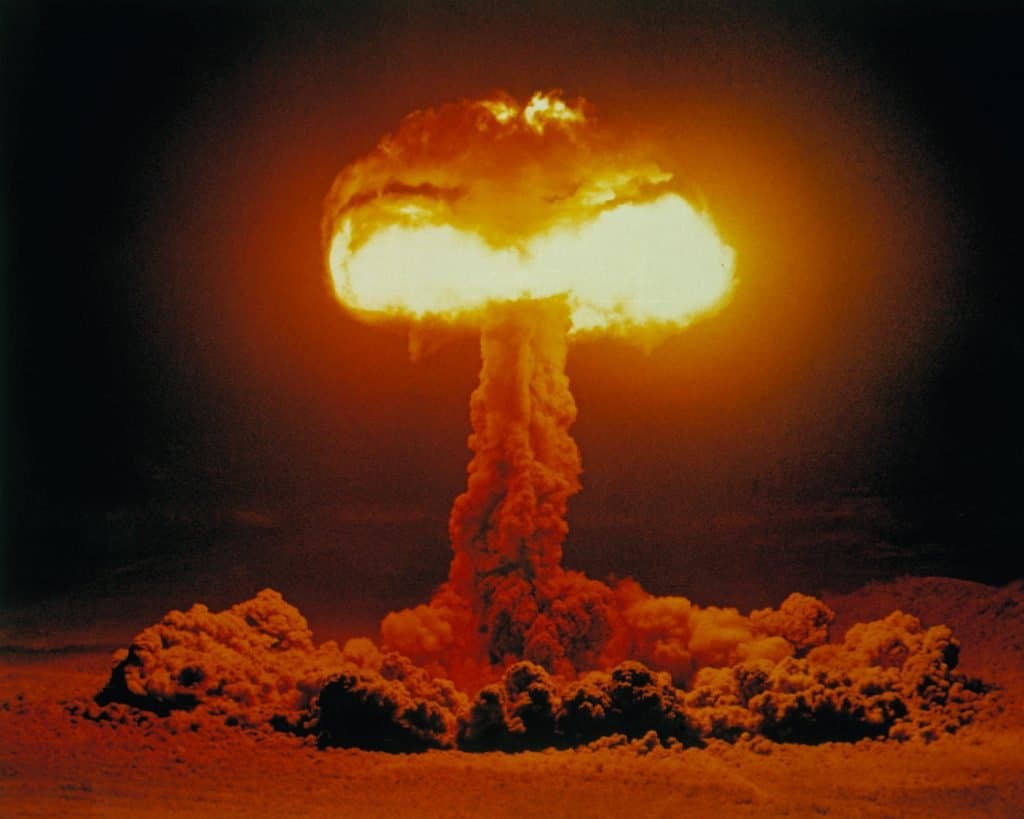
President Donald Trump's October 2025 directive to resume U.S. nuclear weapons testing "on an equal basis" with Russia and China, citing alleged low-yield activities by those nations, remains the central driver of market focus. Energy Secretary Chris Wright and other officials quickly clarified that any near-term efforts would involve subcritical experiments, hydrodynamic tests, or delivery system evaluations at the Nevada National Security Site rather than full-yield explosive detonations. The United States has maintained a voluntary moratorium on nuclear explosive tests since 1992 and relies on the Science-Based Stockpile Stewardship Program for arsenal confidence. Resuming underground explosive tests would require 24-36 months of preparation and could trigger reciprocal actions by other nuclear states. No such tests have occurred as of September 2026, with internal administration deliberations and congressional oversight continuing to shape timelines.
Résumé expérimental généré par IA à partir des données Polymarket. Ceci n'est pas un conseil de trading et ne joue aucun rôle dans la résolution de ce marché. · Mis à jourEssai nucléaire américain par… ?
Essai nucléaire américain par… ?
$795,287 Vol.
30 septembre 2026
1%
31 décembre 2026
5%
$795,287 Vol.
30 septembre 2026
1%
31 décembre 2026
5%
A nuclear test is defined as the intentional non-combat detonation of a device by the US that produces a nuclear chain reaction (fission or fusion), regardless of yield.
Accidents, radiological dispersal devices (bombs that spread radioactive material using conventional explosives such as "dirty bombs"), or actions by third parties will not count toward this market's resolution.
Tests not explicitly claimed by US may still qualify if a clear consensus of credible reporting attributes the nuclear detonation to US. For example, an unclaimed nuclear test analogous to the 1979 "Vela Incident" would count if credible reporting attributes it to the US.
The resolution source for this market will be a broad consensus of credible reporting.
Marché ouvert : Mar 31, 2026, 3:32 PM ET
Résolveur
0x65070BE91...A nuclear test is defined as the intentional non-combat detonation of a device by the US that produces a nuclear chain reaction (fission or fusion), regardless of yield.
Accidents, radiological dispersal devices (bombs that spread radioactive material using conventional explosives such as "dirty bombs"), or actions by third parties will not count toward this market's resolution.
Tests not explicitly claimed by US may still qualify if a clear consensus of credible reporting attributes the nuclear detonation to US. For example, an unclaimed nuclear test analogous to the 1979 "Vela Incident" would count if credible reporting attributes it to the US.
The resolution source for this market will be a broad consensus of credible reporting.
Résolveur
0x65070BE91...President Donald Trump's October 2025 directive to resume U.S. nuclear weapons testing "on an equal basis" with Russia and China, citing alleged low-yield activities by those nations, remains the central driver of market focus. Energy Secretary Chris Wright and other officials quickly clarified that any near-term efforts would involve subcritical experiments, hydrodynamic tests, or delivery system evaluations at the Nevada National Security Site rather than full-yield explosive detonations. The United States has maintained a voluntary moratorium on nuclear explosive tests since 1992 and relies on the Science-Based Stockpile Stewardship Program for arsenal confidence. Resuming underground explosive tests would require 24-36 months of preparation and could trigger reciprocal actions by other nuclear states. No such tests have occurred as of September 2026, with internal administration deliberations and congressional oversight continuing to shape timelines.
Résumé expérimental généré par IA à partir des données Polymarket. Ceci n'est pas un conseil de trading et ne joue aucun rôle dans la résolution de ce marché. · Mis à jour


Méfiez-vous des liens externes.
Méfiez-vous des liens externes.
Questions fréquentes