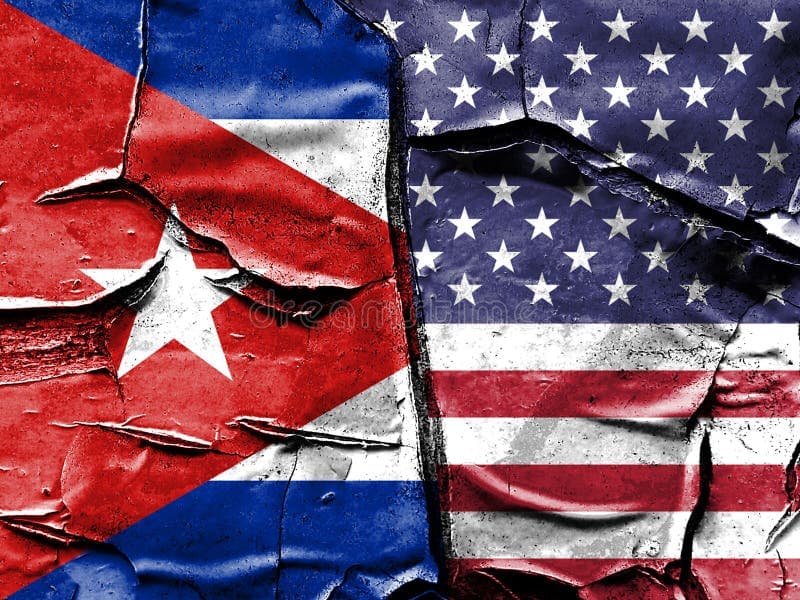
US-Cuba tensions escalated sharply in 2026 after President Trump’s January executive order declared a national emergency and imposed tariffs on third countries supplying oil to Cuba, triggering a severe fuel and economic crisis on the island. The administration has positioned naval assets including the USS Nimitz carrier group and Marine units in the Caribbean, increased surveillance flights, and conducted high-level visits such as Defense Secretary Hegseth’s June trip to Guantanamo Bay to signal readiness. Reports from May detail Pentagon planning for potential strikes or leadership-targeting operations, framed around Cuban drone acquisitions and ties to adversarial states. Cuba has rejected the allegations as pretexts while warning of major conflict risks. Congressional Democrats introduced a War Powers Resolution in late May to constrain unauthorized action, adding procedural uncertainty around any military timeline. Trader pricing reflects these overlapping sanctions, military signals, and diplomatic friction as the dominant near-term drivers.
Ringkasan eksperimental yang dihasilkan AI dengan referensi data Polymarket. Ini bukan saran trading dan tidak berperan dalam bagaimana pasar ini diselesaikan. · DiperbaruiTindakan militer AS terhadap Kuba oleh...?
Tindakan militer AS terhadap Kuba oleh...?
$7,058,755 Vol.
31 Desember
33%
$7,058,755 Vol.
31 Desember
33%
For the purposes of this market, a qualifying "strike" is defined as the use of aerial bombs, drones, or missiles (including FPV and ATGM strikes as well as cruise or ballistic missiles) launched by any United States operatives, including military forces, intelligence agencies, or other U.S. government operatives, that physically impact ground territory within the listed country.
A strike on any area within the terrestrial territory (including rivers, lakes, ports, but excluding territorial sea) of the listed country counts.
Missiles or drones that are intercepted and surface-to-air missile strikes will not be sufficient for a "Yes" resolution, regardless of whether they land territory or cause damage.
Actions such as artillery fire, small arms fire, ground incursions, naval shelling, or cyberattacks will not qualify.
Any strike occurring during this market’s timeframe that is claimed by either Donald Trump or the U.S. government will qualify.
The primary resolution source will be a consensus of credible reporting.
This market will remain open until the end of the second day after the resolution time. If the date/time of a qualifying strike cannot be confirmed by a consensus of credible reporting by that time, it will resolve to "No" regardless of whether a strike was later confirmed to have taken place.
Pasar Dibuka: Jan 4, 2026, 3:08 PM ET
Resolver
0x65070BE91...For the purposes of this market, a qualifying "strike" is defined as the use of aerial bombs, drones, or missiles (including FPV and ATGM strikes as well as cruise or ballistic missiles) launched by any United States operatives, including military forces, intelligence agencies, or other U.S. government operatives, that physically impact ground territory within the listed country.
A strike on any area within the terrestrial territory (including rivers, lakes, ports, but excluding territorial sea) of the listed country counts.
Missiles or drones that are intercepted and surface-to-air missile strikes will not be sufficient for a "Yes" resolution, regardless of whether they land territory or cause damage.
Actions such as artillery fire, small arms fire, ground incursions, naval shelling, or cyberattacks will not qualify.
Any strike occurring during this market’s timeframe that is claimed by either Donald Trump or the U.S. government will qualify.
The primary resolution source will be a consensus of credible reporting.
This market will remain open until the end of the second day after the resolution time. If the date/time of a qualifying strike cannot be confirmed by a consensus of credible reporting by that time, it will resolve to "No" regardless of whether a strike was later confirmed to have taken place.
Resolver
0x65070BE91...US-Cuba tensions escalated sharply in 2026 after President Trump’s January executive order declared a national emergency and imposed tariffs on third countries supplying oil to Cuba, triggering a severe fuel and economic crisis on the island. The administration has positioned naval assets including the USS Nimitz carrier group and Marine units in the Caribbean, increased surveillance flights, and conducted high-level visits such as Defense Secretary Hegseth’s June trip to Guantanamo Bay to signal readiness. Reports from May detail Pentagon planning for potential strikes or leadership-targeting operations, framed around Cuban drone acquisitions and ties to adversarial states. Cuba has rejected the allegations as pretexts while warning of major conflict risks. Congressional Democrats introduced a War Powers Resolution in late May to constrain unauthorized action, adding procedural uncertainty around any military timeline. Trader pricing reflects these overlapping sanctions, military signals, and diplomatic friction as the dominant near-term drivers.
Ringkasan eksperimental yang dihasilkan AI dengan referensi data Polymarket. Ini bukan saran trading dan tidak berperan dalam bagaimana pasar ini diselesaikan. · Diperbarui


Hati-hati dengan link eksternal.
Hati-hati dengan link eksternal.
Pertanyaan yang Sering Diajukan