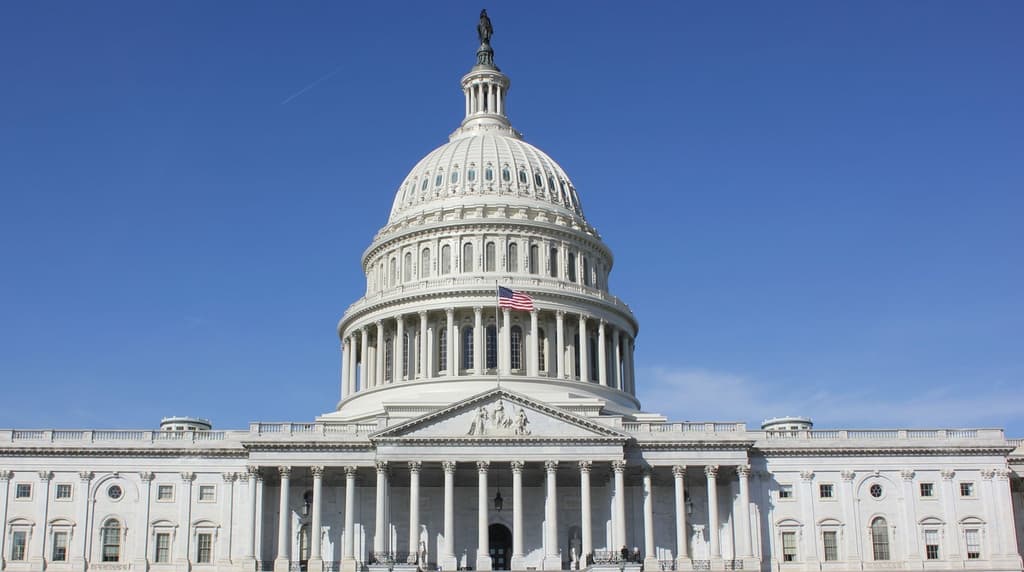
With the April 30 deadline passed, trader consensus at 99.7% "No" reflects Congress's repeated failure to advance an Iran War Powers Resolution, culminating in the Senate's sixth rejection on April 30 by a 50-47 vote along largely partisan lines. Democrats pushed multiple concurrent resolutions—such as H.Con.Res.91 and S.J.Res.104—invoking section 5(c) of the 1973 War Powers Resolution to mandate withdrawal from unauthorized hostilities against Iran amid the 60-day clock on U.S. operations, but Republican majorities blocked discharge motions and floor votes, even as Sen. Susan Collins crossed party lines once. House attempts similarly faltered, like a 213-214 defeat. Realistic shifts now hinge on improbable emergency sessions or veto overrides, unlikely given historical patterns and slim Democratic margins.
Eksperymentalne podsumowanie AI odwołujące się do danych Polymarket. To nie jest porada handlowa i nie ma wpływu na rozstrzyganie tego rynku. · Zaktualizowano$22,533 Wol.
$22,533 Wol.
$22,533 Wol.
$22,533 Wol.
Legislation will qualify as seeking to limit U.S. armed forces military action in the recent US/Israel–Iran conflict if it explicitly seeks to restrict, terminate, or require congressional approval for U.S. armed forces’ hostilities, strikes, deployments, or other military operations against Iran or its proxy forces. Non-binding statements or measures that express disapproval, call for investigation, or otherwise relate to the US/Israel-Iran conflict without seeking to limit military action will not qualify.
A measure amended by either chamber will only qualify if the amended version is subsequently finally passed by both chambers in identical form.
The resolution sources will be official congressional voting records and a consensus of credible reporting.
Rynek otwarty: Mar 24, 2026, 4:53 PM ET
Resolver
0x65070BE91...Wynik zaproponowany: No
Brak sporu
Ostateczny wynik: No
Legislation will qualify as seeking to limit U.S. armed forces military action in the recent US/Israel–Iran conflict if it explicitly seeks to restrict, terminate, or require congressional approval for U.S. armed forces’ hostilities, strikes, deployments, or other military operations against Iran or its proxy forces. Non-binding statements or measures that express disapproval, call for investigation, or otherwise relate to the US/Israel-Iran conflict without seeking to limit military action will not qualify.
A measure amended by either chamber will only qualify if the amended version is subsequently finally passed by both chambers in identical form.
The resolution sources will be official congressional voting records and a consensus of credible reporting.
Resolver
0x65070BE91...Wynik zaproponowany: No
Brak sporu
Ostateczny wynik: No
With the April 30 deadline passed, trader consensus at 99.7% "No" reflects Congress's repeated failure to advance an Iran War Powers Resolution, culminating in the Senate's sixth rejection on April 30 by a 50-47 vote along largely partisan lines. Democrats pushed multiple concurrent resolutions—such as H.Con.Res.91 and S.J.Res.104—invoking section 5(c) of the 1973 War Powers Resolution to mandate withdrawal from unauthorized hostilities against Iran amid the 60-day clock on U.S. operations, but Republican majorities blocked discharge motions and floor votes, even as Sen. Susan Collins crossed party lines once. House attempts similarly faltered, like a 213-214 defeat. Realistic shifts now hinge on improbable emergency sessions or veto overrides, unlikely given historical patterns and slim Democratic margins.
Eksperymentalne podsumowanie AI odwołujące się do danych Polymarket. To nie jest porada handlowa i nie ma wpływu na rozstrzyganie tego rynku. · Zaktualizowano


Uważaj na linki zewnętrzne.
Uważaj na linki zewnętrzne.
Często zadawane pytania