
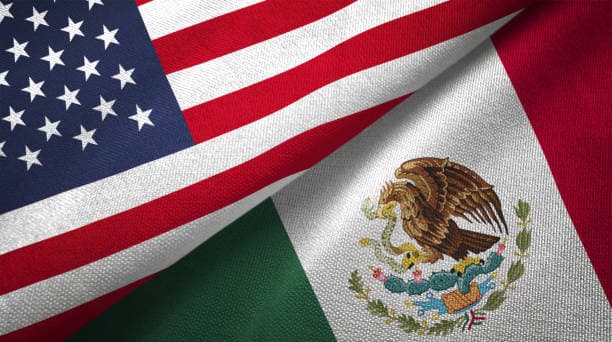
Strong economic interdependence through the USMCA trade framework, routine bilateral security cooperation, and Mexico's firm rejection of independent U.S. military operations on its soil underpin the near-certain trader consensus against a U.S. invasion in 2026. Despite President Trump's repeated emphasis on cartel threats, tariff leverage, and occasional unilateral rhetoric, recent developments such as Mexico's unanimous Senate approval of limited U.S. training exercises and ongoing intelligence sharing reflect managed tensions rather than escalation toward conflict. An invasion would require congressional authorization, face major legal and diplomatic barriers under international norms, and risk severe disruption to cross-border trade and migration management. Even amid sovereignty disputes and public polling on perceived threats, no verified military mobilization or war declaration has occurred. Unlikely triggers that could still shift odds include a sudden, large-scale cross-border security collapse or abrupt breakdown in all diplomatic channels, though these remain far outside current trajectories.
Eksperymentalne podsumowanie AI odwołujące się do danych Polymarket. To nie jest porada handlowa i nie ma wpływu na rozstrzyganie tego rynku. · ZaktualizowanoWill the U.S. invade Mexico in 2026?
Will the U.S. invade Mexico in 2026?
$254,580 Wol.
$254,580 Wol.
$254,580 Wol.
$254,580 Wol.
For the purposes of this market, land de facto controlled by Mexico or the United States, as of market creation, will be considered the sovereign territory of that country.
The resolution source for this market will be a consensus of credible reporting.
Rynek otwarty: Jan 5, 2026, 5:17 PM ET
Rozstrzygający
0x65070BE91...For the purposes of this market, land de facto controlled by Mexico or the United States, as of market creation, will be considered the sovereign territory of that country.
The resolution source for this market will be a consensus of credible reporting.
Rozstrzygający
0x65070BE91...Strong economic interdependence through the USMCA trade framework, routine bilateral security cooperation, and Mexico's firm rejection of independent U.S. military operations on its soil underpin the near-certain trader consensus against a U.S. invasion in 2026. Despite President Trump's repeated emphasis on cartel threats, tariff leverage, and occasional unilateral rhetoric, recent developments such as Mexico's unanimous Senate approval of limited U.S. training exercises and ongoing intelligence sharing reflect managed tensions rather than escalation toward conflict. An invasion would require congressional authorization, face major legal and diplomatic barriers under international norms, and risk severe disruption to cross-border trade and migration management. Even amid sovereignty disputes and public polling on perceived threats, no verified military mobilization or war declaration has occurred. Unlikely triggers that could still shift odds include a sudden, large-scale cross-border security collapse or abrupt breakdown in all diplomatic channels, though these remain far outside current trajectories.
Eksperymentalne podsumowanie AI odwołujące się do danych Polymarket. To nie jest porada handlowa i nie ma wpływu na rozstrzyganie tego rynku. · Zaktualizowano

Uważaj na linki zewnętrzne.
Uważaj na linki zewnętrzne.
Często zadawane pytania