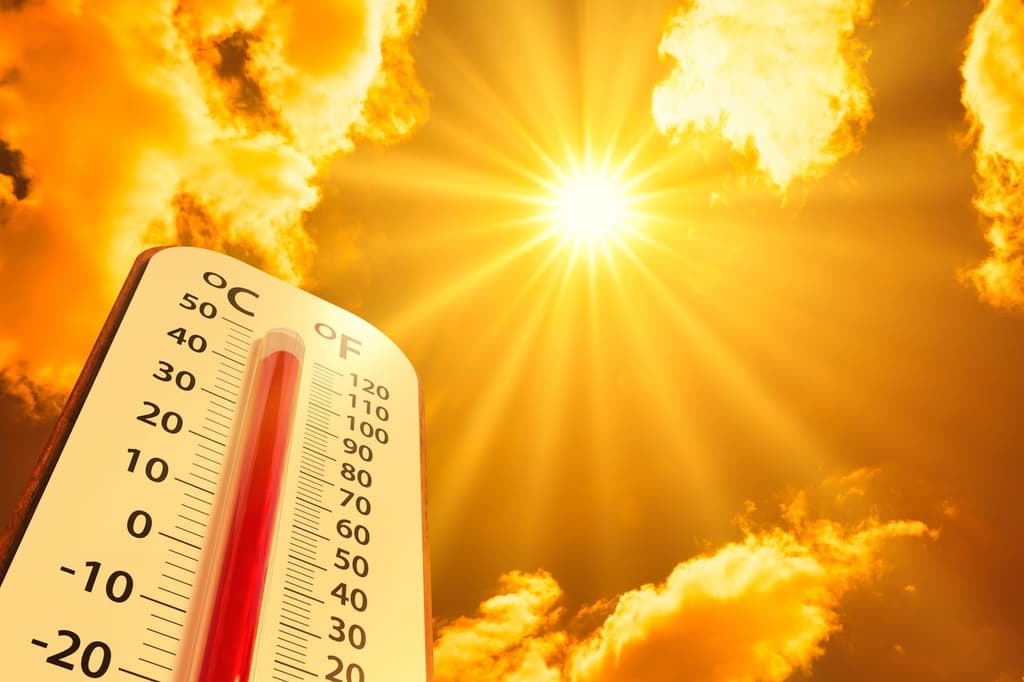
Developing El Niño conditions, now officially declared with strengthening sea-surface temperature anomalies across the equatorial Pacific, represent the dominant near-term driver pushing June 2026 global mean surface temperature anomalies toward the 1.15–1.19 °C range above the 1850–1900 baseline. Long-term anthropogenic warming provides the elevated baseline, while the emerging event—forecast by NOAA and WMO ensembles to intensify through late 2026—adds positive forcing that historically elevates monthly anomalies by 0.1–0.2 °C during onset phases. Recent 2025 observations near 1.19 °C and early June 2026 Pacific heat-content surges align with this central outcome; model consensus and historical analogs limit downside risk below 1.10 °C while capping upside above 1.24 °C absent rapid further intensification.
Resumo experimental gerado por IA com dados do Polymarket. Isto não é aconselhamento de trading e não tem qualquer papel na resolução deste mercado. · AtualizadoJune 2026 Temperature Increase (ºC)
June 2026 Temperature Increase (ºC)
1.15–1.19ºC 100.0%
<1.10ºC <1%
1.10–1.14ºC <1%
1.20–1.24ºC <1%
$88,622 Vol.
$88,622 Vol.
<1.10ºC
No
1.10–1.14ºC
No
1.15–1.19ºC
Yes
1.20–1.24ºC
No
1.25–1.29ºC
No
>1.29ºC
No
1.15–1.19ºC 100.0%
<1.10ºC <1%
1.10–1.14ºC <1%
1.20–1.24ºC <1%
$88,622 Vol.
$88,622 Vol.
<1.10ºC
No
1.10–1.14ºC
No
1.15–1.19ºC
Yes
1.20–1.24ºC
No
1.25–1.29ºC
No
>1.29ºC
No
An anomaly within a named bracket for June 2026 is necessary and sufficient to resolve this market immediately once the data becomes available, regardless of whether the figure for June 2026 is later revised.
The primary resolution source for this market will be the figure found in the table titled "GLOBAL Land-Ocean Temperature Index in 0.01 degrees Celsius" under the column "Jun" in the row "2026" (https://data.giss.nasa.gov/gistemp/tabledata_v4/GLB.Ts+dSST.txt).
If NASA’s “Global Temperature Index” is rendered permanently unavailable, other information from NASA may be used.
If no information for June 2026 is provided by NASA by August 1, 2026, 11:59 PM ET, this market will resolve to the lowest range bracket.
Mercado Aberto: May 26, 2026, 7:33 PM ET
Resolver
0x69c47De9D...Resultado proposto: No
Sem contestação
Resultado final: No
An anomaly within a named bracket for June 2026 is necessary and sufficient to resolve this market immediately once the data becomes available, regardless of whether the figure for June 2026 is later revised.
The primary resolution source for this market will be the figure found in the table titled "GLOBAL Land-Ocean Temperature Index in 0.01 degrees Celsius" under the column "Jun" in the row "2026" (https://data.giss.nasa.gov/gistemp/tabledata_v4/GLB.Ts+dSST.txt).
If NASA’s “Global Temperature Index” is rendered permanently unavailable, other information from NASA may be used.
If no information for June 2026 is provided by NASA by August 1, 2026, 11:59 PM ET, this market will resolve to the lowest range bracket.
Resolver
0x69c47De9D...Resultado proposto: No
Sem contestação
Resultado final: No
Developing El Niño conditions, now officially declared with strengthening sea-surface temperature anomalies across the equatorial Pacific, represent the dominant near-term driver pushing June 2026 global mean surface temperature anomalies toward the 1.15–1.19 °C range above the 1850–1900 baseline. Long-term anthropogenic warming provides the elevated baseline, while the emerging event—forecast by NOAA and WMO ensembles to intensify through late 2026—adds positive forcing that historically elevates monthly anomalies by 0.1–0.2 °C during onset phases. Recent 2025 observations near 1.19 °C and early June 2026 Pacific heat-content surges align with this central outcome; model consensus and historical analogs limit downside risk below 1.10 °C while capping upside above 1.24 °C absent rapid further intensification.
Resumo experimental gerado por IA com dados do Polymarket. Isto não é aconselhamento de trading e não tem qualquer papel na resolução deste mercado. · Atualizado
Cuidado com os links externos.
Cuidado com os links externos.
Frequently Asked Questions