
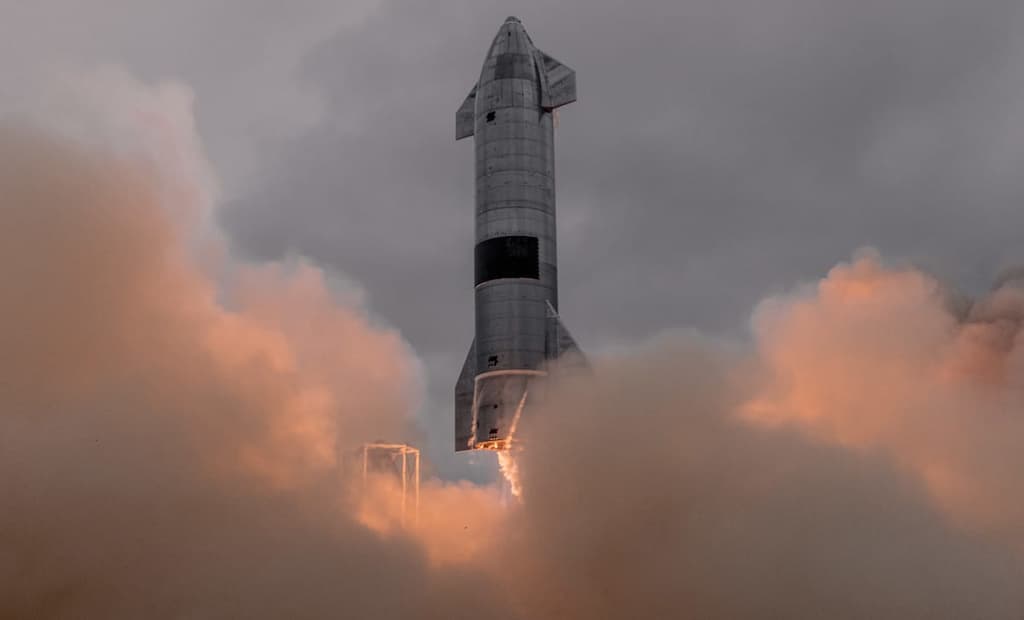
SpaceX's Starship Version 3 vehicles now incorporate dedicated docking ports, drogues, and propellant transfer hardware, enabling the first planned ship-to-ship rendezvous and refueling demonstration in low Earth orbit. Recent test flights through mid-2026 have validated core systems, but no two Starships have yet performed an autonomous docking, with the capability targeted for a 2026 orbital demo ahead of Artemis and Mars missions. Trader sentiment reflects optimism around rapid iteration at Starbase, tempered by typical schedule slips in complex rendezvous operations that historically require multiple attempts. Key upcoming catalysts include additional V3 flights and any public confirmation of a dedicated tanker-refueling test timeline.
Resumo experimental gerado por IA com dados do Polymarket. Isto não é aconselhamento de trading e não tem qualquer papel na resolução deste mercado. · AtualizadoTwo SpaceX Starships dock together by…?
Two SpaceX Starships dock together by…?
$59,663 Vol.
30 dez 2026
31 de dezembro de 2026
12%
31 de dezembro de 2027
61%
$59,663 Vol.
31 de dezembro de 2026
$38,824 Vol.
12%
31 de dezembro de 2027
$20,839 Vol.
61%
This market will resolve to “Yes” if two SpaceX Starships successfully execute a docking maneuver in a stable Earth orbit between market creation and the listed date, 11:59 PM ET. Otherwise, this market will resolve to “No”.
A qualifying docking maneuver must physically join two vessels, matching in velocity, into a connected structure via mating hardware for at least 60 continuous seconds. The two vessels must be in stable Earth orbit with a perigee of at least 100 kilometers above the Earth’s surface.
The docking of any two SpaceX vessels which each serve as an integrated rocket-and-spacecraft and both equal or exceed Starship in scale will qualify regardless of their contents or variant (standard, tanker, depot, HLS, test article, etc.). The two vessels must be free-flying. Any capsule or payload carried to orbit exclusively atop a separate launch vehicle will not qualify. If either vessel is passively placed into the mating interface of the other vessel, that conjunction will not qualify.
The resolution source for this market will be a consensus of credible reporting.SpaceX's Starship Version 3 vehicles now incorporate dedicated docking ports, drogues, and propellant transfer hardware, enabling the first planned ship-to-ship rendezvous and refueling demonstration in low Earth orbit. Recent test flights through mid-2026 have validated core systems, but no two Starships have yet performed an autonomous docking, with the capability targeted for a 2026 orbital demo ahead of Artemis and Mars missions. Trader sentiment reflects optimism around rapid iteration at Starbase, tempered by typical schedule slips in complex rendezvous operations that historically require multiple attempts. Key upcoming catalysts include additional V3 flights and any public confirmation of a dedicated tanker-refueling test timeline.
This market will resolve to “Yes” if two SpaceX Starships successfully execute a docking maneuver in a stable Earth orbit between market creation and the listed date, 11:59 PM ET. Otherwise, this market will resolve to “No”.
A qualifying docking maneuver must physically join two vessels, matching in velocity, into a connected structure via mating hardware for at least 60 continuous seconds. The two vessels must be in stable Earth orbit with a perigee of at least 100 kilometers above the Earth’s surface.
The docking of any two SpaceX vessels which each serve as an integrated rocket-and-spacecraft and both equal or exceed Starship in scale will qualify regardless of their contents or variant (standard, tanker, depot, HLS, test article, etc.). The two vessels must be free-flying. Any capsule or payload carried to orbit exclusively atop a separate launch vehicle will not qualify. If either vessel is passively placed into the mating interface of the other vessel, that conjunction will not qualify.
The resolution source for this market will be a consensus of credible reporting.
A qualifying docking maneuver must physically join two vessels, matching in velocity, into a connected structure via mating hardware for at least 60 continuous seconds. The two vessels must be in stable Earth orbit with a perigee of at least 100 kilometers above the Earth’s surface.
The docking of any two SpaceX vessels which each serve as an integrated rocket-and-spacecraft and both equal or exceed Starship in scale will qualify regardless of their contents or variant (standard, tanker, depot, HLS, test article, etc.). The two vessels must be free-flying. Any capsule or payload carried to orbit exclusively atop a separate launch vehicle will not qualify. If either vessel is passively placed into the mating interface of the other vessel, that conjunction will not qualify.
The resolution source for this market will be a consensus of credible reporting.
Mercado Aberto: Jun 11, 2026, 1:09 PM ET
Volume
$59,663Data de Término
31 dez 2028Mercado Aberto
Jun 11, 2026, 1:09 PM ETResolver
0x65070BE91...This market will resolve to “Yes” if two SpaceX Starships successfully execute a docking maneuver in a stable Earth orbit between market creation and the listed date, 11:59 PM ET. Otherwise, this market will resolve to “No”.
A qualifying docking maneuver must physically join two vessels, matching in velocity, into a connected structure via mating hardware for at least 60 continuous seconds. The two vessels must be in stable Earth orbit with a perigee of at least 100 kilometers above the Earth’s surface.
The docking of any two SpaceX vessels which each serve as an integrated rocket-and-spacecraft and both equal or exceed Starship in scale will qualify regardless of their contents or variant (standard, tanker, depot, HLS, test article, etc.). The two vessels must be free-flying. Any capsule or payload carried to orbit exclusively atop a separate launch vehicle will not qualify. If either vessel is passively placed into the mating interface of the other vessel, that conjunction will not qualify.
The resolution source for this market will be a consensus of credible reporting.SpaceX's Starship Version 3 vehicles now incorporate dedicated docking ports, drogues, and propellant transfer hardware, enabling the first planned ship-to-ship rendezvous and refueling demonstration in low Earth orbit. Recent test flights through mid-2026 have validated core systems, but no two Starships have yet performed an autonomous docking, with the capability targeted for a 2026 orbital demo ahead of Artemis and Mars missions. Trader sentiment reflects optimism around rapid iteration at Starbase, tempered by typical schedule slips in complex rendezvous operations that historically require multiple attempts. Key upcoming catalysts include additional V3 flights and any public confirmation of a dedicated tanker-refueling test timeline.
This market will resolve to “Yes” if two SpaceX Starships successfully execute a docking maneuver in a stable Earth orbit between market creation and the listed date, 11:59 PM ET. Otherwise, this market will resolve to “No”.
A qualifying docking maneuver must physically join two vessels, matching in velocity, into a connected structure via mating hardware for at least 60 continuous seconds. The two vessels must be in stable Earth orbit with a perigee of at least 100 kilometers above the Earth’s surface.
The docking of any two SpaceX vessels which each serve as an integrated rocket-and-spacecraft and both equal or exceed Starship in scale will qualify regardless of their contents or variant (standard, tanker, depot, HLS, test article, etc.). The two vessels must be free-flying. Any capsule or payload carried to orbit exclusively atop a separate launch vehicle will not qualify. If either vessel is passively placed into the mating interface of the other vessel, that conjunction will not qualify.
The resolution source for this market will be a consensus of credible reporting.
A qualifying docking maneuver must physically join two vessels, matching in velocity, into a connected structure via mating hardware for at least 60 continuous seconds. The two vessels must be in stable Earth orbit with a perigee of at least 100 kilometers above the Earth’s surface.
The docking of any two SpaceX vessels which each serve as an integrated rocket-and-spacecraft and both equal or exceed Starship in scale will qualify regardless of their contents or variant (standard, tanker, depot, HLS, test article, etc.). The two vessels must be free-flying. Any capsule or payload carried to orbit exclusively atop a separate launch vehicle will not qualify. If either vessel is passively placed into the mating interface of the other vessel, that conjunction will not qualify.
The resolution source for this market will be a consensus of credible reporting.
Volume
$59,663Data de Término
31 dez 2028Mercado Aberto
Jun 11, 2026, 1:09 PM ETResolver
0x65070BE91...SpaceX's Starship Version 3 vehicles now incorporate dedicated docking ports, drogues, and propellant transfer hardware, enabling the first planned ship-to-ship rendezvous and refueling demonstration in low Earth orbit. Recent test flights through mid-2026 have validated core systems, but no two Starships have yet performed an autonomous docking, with the capability targeted for a 2026 orbital demo ahead of Artemis and Mars missions. Trader sentiment reflects optimism around rapid iteration at Starbase, tempered by typical schedule slips in complex rendezvous operations that historically require multiple attempts. Key upcoming catalysts include additional V3 flights and any public confirmation of a dedicated tanker-refueling test timeline.
Resumo experimental gerado por IA com dados do Polymarket. Isto não é aconselhamento de trading e não tem qualquer papel na resolução deste mercado. · Atualizado
Cuidado com os links externos.
Cuidado com os links externos.
Frequently Asked Questions