
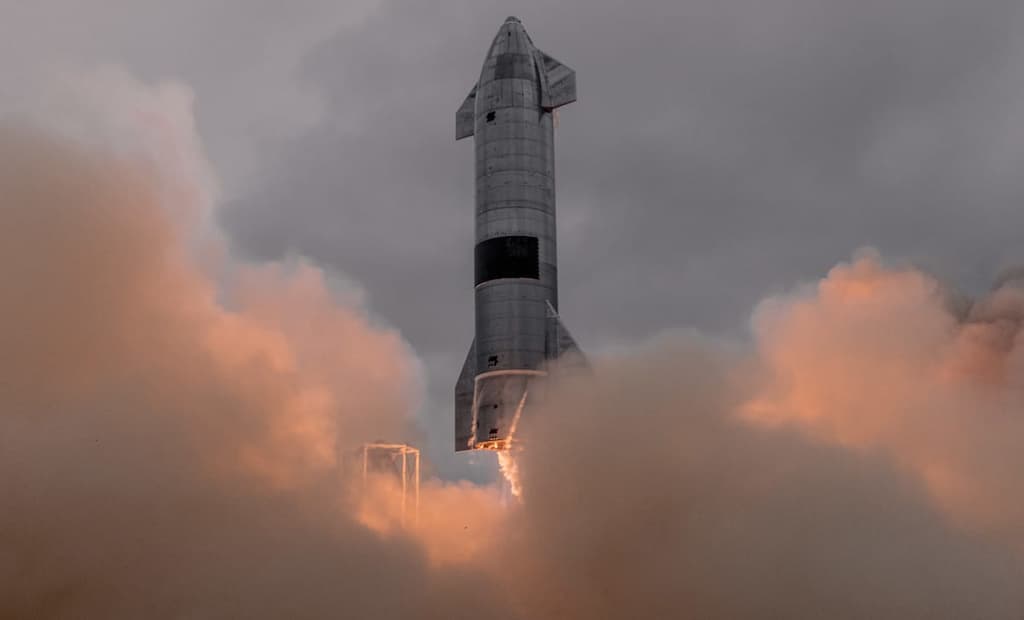
SpaceX’s Starship Version 3 vehicles now incorporate dedicated docking ports, drogues, propellant feed connections, and DragonEye sensors specifically to enable orbital rendezvous and ship-to-ship refueling. Recent successful V3 test flights, including the July 2026 thirteenth flight, have validated improved engines and structures, but the program has yet to demonstrate the complex sequence of launching a tanker, achieving stable proximity operations, and executing a fluid transfer in orbit. Traders see the 2027 resolution date as the most probable window because multiple incremental flights, regulatory approvals, and hardware iterations remain necessary before the first docking attempt, while 2026 timelines face tighter schedule pressure from ongoing test cadence limitations.
Eksperimental na AI-generated summary na nire-reference ang Polymarket data. Hindi ito trading advice at wala itong papel sa kung paano nire-resolve ang market na ito. · Na-updateTwo SpaceX Starships dock together by…?
Two SpaceX Starships dock together by…?
$59,990 Vol.
December 31, 2026
12%
December 31, 2027
54%
$59,990 Vol.
December 31, 2026
12%
December 31, 2027
54%
A qualifying docking maneuver must physically join two vessels, matching in velocity, into a connected structure via mating hardware for at least 60 continuous seconds. The two vessels must be in stable Earth orbit with a perigee of at least 100 kilometers above the Earth’s surface.
The docking of any two SpaceX vessels which each serve as an integrated rocket-and-spacecraft and both equal or exceed Starship in scale will qualify regardless of their contents or variant (standard, tanker, depot, HLS, test article, etc.). The two vessels must be free-flying. Any capsule or payload carried to orbit exclusively atop a separate launch vehicle will not qualify. If either vessel is passively placed into the mating interface of the other vessel, that conjunction will not qualify.
The resolution source for this market will be a consensus of credible reporting.
Binuksan ang Market: Jun 11, 2026, 1:09 PM ET
Resolver
0x65070BE91...A qualifying docking maneuver must physically join two vessels, matching in velocity, into a connected structure via mating hardware for at least 60 continuous seconds. The two vessels must be in stable Earth orbit with a perigee of at least 100 kilometers above the Earth’s surface.
The docking of any two SpaceX vessels which each serve as an integrated rocket-and-spacecraft and both equal or exceed Starship in scale will qualify regardless of their contents or variant (standard, tanker, depot, HLS, test article, etc.). The two vessels must be free-flying. Any capsule or payload carried to orbit exclusively atop a separate launch vehicle will not qualify. If either vessel is passively placed into the mating interface of the other vessel, that conjunction will not qualify.
The resolution source for this market will be a consensus of credible reporting.
Resolver
0x65070BE91...SpaceX’s Starship Version 3 vehicles now incorporate dedicated docking ports, drogues, propellant feed connections, and DragonEye sensors specifically to enable orbital rendezvous and ship-to-ship refueling. Recent successful V3 test flights, including the July 2026 thirteenth flight, have validated improved engines and structures, but the program has yet to demonstrate the complex sequence of launching a tanker, achieving stable proximity operations, and executing a fluid transfer in orbit. Traders see the 2027 resolution date as the most probable window because multiple incremental flights, regulatory approvals, and hardware iterations remain necessary before the first docking attempt, while 2026 timelines face tighter schedule pressure from ongoing test cadence limitations.
Eksperimental na AI-generated summary na nire-reference ang Polymarket data. Hindi ito trading advice at wala itong papel sa kung paano nire-resolve ang market na ito. · Na-update
Mag-ingat sa mga external link.
Mag-ingat sa mga external link.
Mga Madalas na Tanong