

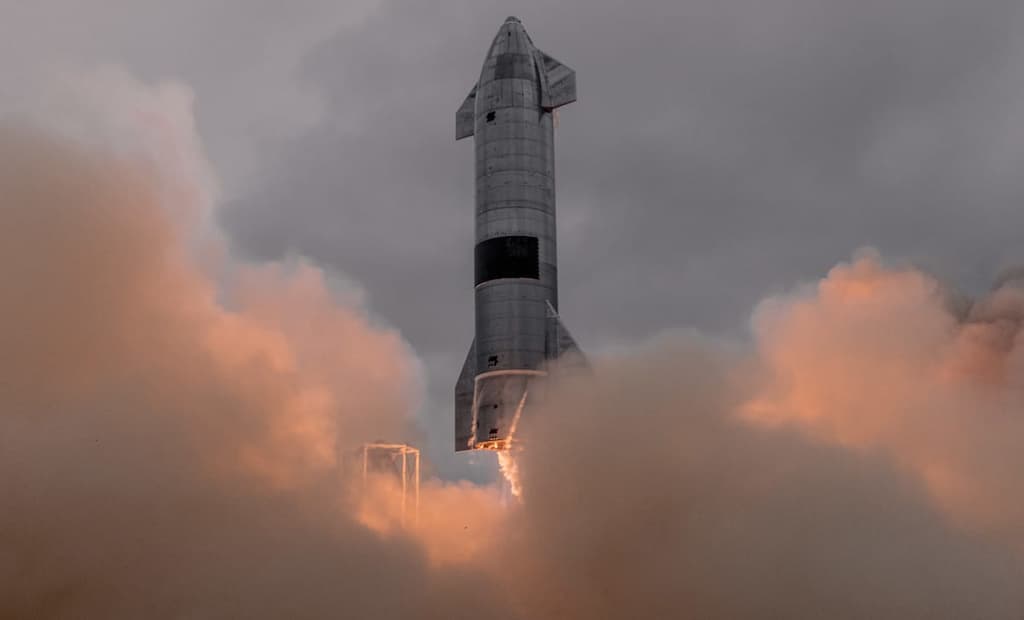
SpaceX has yet to demonstrate two Starships docking in stable low-Earth orbit after 13 integrated test flights, with the July 2026 V3 mission advancing engine relight, payload deployment, and recovery but lacking a second vehicle for rendezvous. The primary driver behind current trader sentiment is the program's focus on in-orbit propellant transfer hardware—now standard on V3 vehicles with androgynous ports and cryogenic couplers—needed for Artemis lunar refueling, though timelines have slipped from 2025 targets to late 2026. Recent regulatory reviews from the FAA and NASA assessments highlight remaining hurdles in autonomous navigation and multi-tanker operations. Key upcoming catalysts include Flight 14's orbital goals and potential tower catch attempts, which could enable the first dedicated two-ship demonstration before year-end.
基于Polymarket数据的AI实验性摘要。这不是交易建议,也不影响该市场的结算方式。 · 更新于$65,048 交易量
2026年12月31日
6%
2027年12月31日
59%
$65,048 交易量
2026年12月31日
6%
2027年12月31日
59%
A qualifying docking maneuver must physically join two vessels, matching in velocity, into a connected structure via mating hardware for at least 60 continuous seconds. The two vessels must be in stable Earth orbit with a perigee of at least 100 kilometers above the Earth’s surface.
The docking of any two SpaceX vessels which each serve as an integrated rocket-and-spacecraft and both equal or exceed Starship in scale will qualify regardless of their contents or variant (standard, tanker, depot, HLS, test article, etc.). The two vessels must be free-flying. Any capsule or payload carried to orbit exclusively atop a separate launch vehicle will not qualify. If either vessel is passively placed into the mating interface of the other vessel, that conjunction will not qualify.
The resolution source for this market will be a consensus of credible reporting.
市场开放时间: Jun 11, 2026, 1:09 PM ET
A qualifying docking maneuver must physically join two vessels, matching in velocity, into a connected structure via mating hardware for at least 60 continuous seconds. The two vessels must be in stable Earth orbit with a perigee of at least 100 kilometers above the Earth’s surface.
The docking of any two SpaceX vessels which each serve as an integrated rocket-and-spacecraft and both equal or exceed Starship in scale will qualify regardless of their contents or variant (standard, tanker, depot, HLS, test article, etc.). The two vessels must be free-flying. Any capsule or payload carried to orbit exclusively atop a separate launch vehicle will not qualify. If either vessel is passively placed into the mating interface of the other vessel, that conjunction will not qualify.
The resolution source for this market will be a consensus of credible reporting.
SpaceX has yet to demonstrate two Starships docking in stable low-Earth orbit after 13 integrated test flights, with the July 2026 V3 mission advancing engine relight, payload deployment, and recovery but lacking a second vehicle for rendezvous. The primary driver behind current trader sentiment is the program's focus on in-orbit propellant transfer hardware—now standard on V3 vehicles with androgynous ports and cryogenic couplers—needed for Artemis lunar refueling, though timelines have slipped from 2025 targets to late 2026. Recent regulatory reviews from the FAA and NASA assessments highlight remaining hurdles in autonomous navigation and multi-tanker operations. Key upcoming catalysts include Flight 14's orbital goals and potential tower catch attempts, which could enable the first dedicated two-ship demonstration before year-end.
基于Polymarket数据的AI实验性摘要。这不是交易建议,也不影响该市场的结算方式。 · 更新于
警惕外部链接哦。
警惕外部链接哦。
常见问题