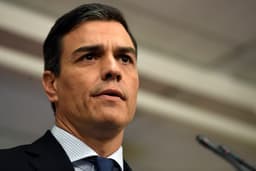
**Spain’s prime minister Pedro Sánchez continues to steer the minority PSOE-led government toward completing its term, with the next general election now expected in early or mid-2027 rather than a snap vote before year-end.** Sánchez has repeatedly affirmed his commitment to holding the election on schedule in 2027, possibly February or March, while rejecting alignment with the May 2027 regional and municipal contests. Recent statements emphasize presenting 2026 budgets and exhausting the legislature despite parliamentary fragility, including the withdrawal of Junts support since late 2025 and reliance on extended prior budgets after the 2026 spending plan was rejected. Polls show the PP leading comfortably, yet opposition parties and some coalition partners have not forced a successful motion of no confidence or budget collapse that would trigger dissolution. Sánchez’s public comments in June 2026 left limited room for an early call only if budgets fail, but subsequent messaging has reinforced the 2027 timeline. With no dissolution decree issued and the constitutional window for a 2026 snap election narrowing rapidly, trader pricing at 81.5% against a call this year aligns with the absence of decisive recent catalysts for an immediate election.
基於Polymarket數據的AI實驗性摘要。這不是交易建議,也不影響該市場的結算方式。 · 更新於是
$35,909 交易量
$35,909 交易量
是
$35,909 交易量
$35,909 交易量
The calling of a snap election requires the formal dissolution of at least one house of the Spanish Parliament or another formal scheduling, according to the rules of the jurisdiction, of an election for all members of at least one house of the Spanish Parliament prior to their scheduled election at the end of their parliamentary term.
The resolution source for this market will be official information from the government of Spain; however, a consensus of credible reporting may also be used.
市場開放時間: Mar 5, 2026, 5:03 PM ET
The calling of a snap election requires the formal dissolution of at least one house of the Spanish Parliament or another formal scheduling, according to the rules of the jurisdiction, of an election for all members of at least one house of the Spanish Parliament prior to their scheduled election at the end of their parliamentary term.
The resolution source for this market will be official information from the government of Spain; however, a consensus of credible reporting may also be used.
**Spain’s prime minister Pedro Sánchez continues to steer the minority PSOE-led government toward completing its term, with the next general election now expected in early or mid-2027 rather than a snap vote before year-end.** Sánchez has repeatedly affirmed his commitment to holding the election on schedule in 2027, possibly February or March, while rejecting alignment with the May 2027 regional and municipal contests. Recent statements emphasize presenting 2026 budgets and exhausting the legislature despite parliamentary fragility, including the withdrawal of Junts support since late 2025 and reliance on extended prior budgets after the 2026 spending plan was rejected. Polls show the PP leading comfortably, yet opposition parties and some coalition partners have not forced a successful motion of no confidence or budget collapse that would trigger dissolution. Sánchez’s public comments in June 2026 left limited room for an early call only if budgets fail, but subsequent messaging has reinforced the 2027 timeline. With no dissolution decree issued and the constitutional window for a 2026 snap election narrowing rapidly, trader pricing at 81.5% against a call this year aligns with the absence of decisive recent catalysts for an immediate election.
基於Polymarket數據的AI實驗性摘要。這不是交易建議,也不影響該市場的結算方式。 · 更新於


警惕外部連結哦。
警惕外部連結哦。
Frequently Asked Questions