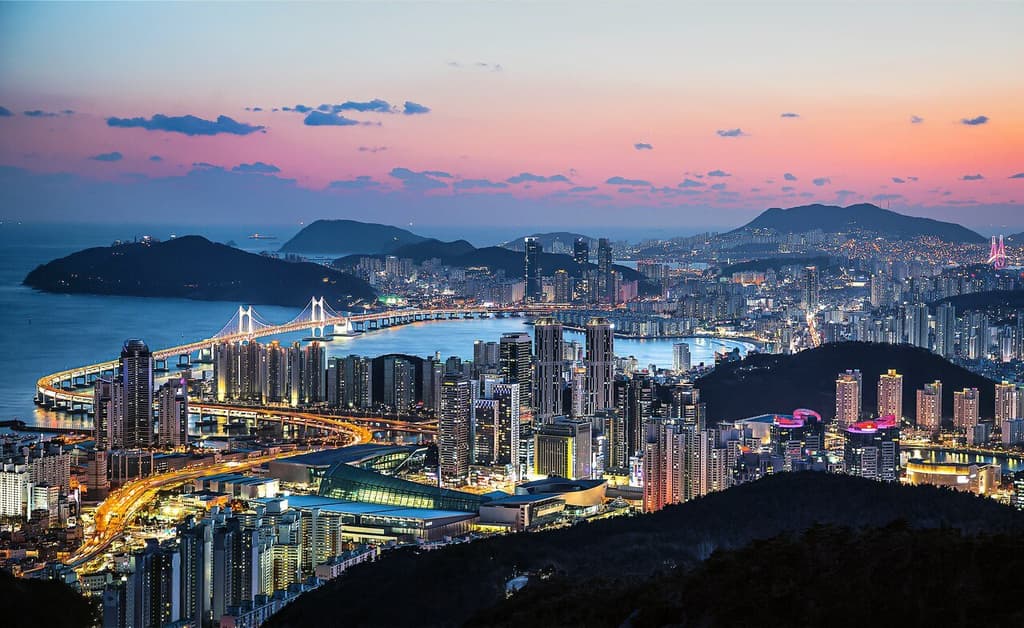
Ongoing heat wave conditions across South Korea, driven by the expansive North Pacific high-pressure system advecting warm, moist air, are the main factor shaping trader consensus around 38–40°C for Busan’s August 1 maximum. Current Korea Meteorological Administration warnings for Busan districts and regional model guidance indicate daytime highs near or above 35°C through early August, with coastal sea breezes providing limited moderation amid high humidity that elevates heat indices. Differentiation among the closely matched leading outcomes hinges on subtle variables: exact timing of peak insolation, potential thin cloud cover reducing surface heating by 1–2°C, shifts in wind direction between onshore flow and downslope warming, and urban heat-island amplification in central Busan. Short-range ensemble spreads from global models reflect this narrow uncertainty band, consistent with the market’s dispersed probabilities.
Riepilogo sperimentale generato dall'AI con riferimento ai dati di Polymarket. Questo non è un consiglio di trading e non ha alcun ruolo nella risoluzione di questo mercato. · AggiornatoLa temperatura più alta a Busan il 1° agosto?
La temperatura più alta a Busan il 1° agosto?
38°C 31%
39°C 26%
40°C 25%
42°C 17%
36°C o inferiore
13%
37°C
12%
38°C
21%
39°C
26%
40°C
25%
41°C
10%
42°C
17%
43°C
3%
44°C
2%
45°C
1%
46°C o superiore
1%
38°C 31%
39°C 26%
40°C 25%
42°C 17%
36°C o inferiore
13%
37°C
12%
38°C
21%
39°C
26%
40°C
25%
41°C
10%
42°C
17%
43°C
3%
44°C
2%
45°C
1%
46°C o superiore
1%
The resolution source for this market will be information from Wunderground, specifically the highest temperature recorded for all times on this day for the Gimhae Intl Airport Station, available here: https://www.wunderground.com/history/daily/kr/busan/RKPK.
To toggle between Fahrenheit and Celsius, click the gear icon next to the search bar and switch the Temperature setting between °F and °C.
This market can not resolve until the first data point for the following date has been published on the resolution source.
The resolution source for this market measures temperatures to whole degrees Celsius (eg, 9°C). Thus, this is the level of precision that will be used when resolving the market.
Revisions to temperatures recorded within this market's timeframe will be considered until the first datapoint for the following date has been published, after which any alterations will not be considered.
Mercato aperto: Jul 30, 2026, 12:04 AM ET
Fonte di risoluzione
https://www.wunderground.com/history/daily/kr/busan/RKPKResolver
0x69c47De9D...The resolution source for this market will be information from Wunderground, specifically the highest temperature recorded for all times on this day for the Gimhae Intl Airport Station, available here: https://www.wunderground.com/history/daily/kr/busan/RKPK.
To toggle between Fahrenheit and Celsius, click the gear icon next to the search bar and switch the Temperature setting between °F and °C.
This market can not resolve until the first data point for the following date has been published on the resolution source.
The resolution source for this market measures temperatures to whole degrees Celsius (eg, 9°C). Thus, this is the level of precision that will be used when resolving the market.
Revisions to temperatures recorded within this market's timeframe will be considered until the first datapoint for the following date has been published, after which any alterations will not be considered.
Fonte di risoluzione
https://www.wunderground.com/history/daily/kr/busan/RKPKResolver
0x69c47De9D...Ongoing heat wave conditions across South Korea, driven by the expansive North Pacific high-pressure system advecting warm, moist air, are the main factor shaping trader consensus around 38–40°C for Busan’s August 1 maximum. Current Korea Meteorological Administration warnings for Busan districts and regional model guidance indicate daytime highs near or above 35°C through early August, with coastal sea breezes providing limited moderation amid high humidity that elevates heat indices. Differentiation among the closely matched leading outcomes hinges on subtle variables: exact timing of peak insolation, potential thin cloud cover reducing surface heating by 1–2°C, shifts in wind direction between onshore flow and downslope warming, and urban heat-island amplification in central Busan. Short-range ensemble spreads from global models reflect this narrow uncertainty band, consistent with the market’s dispersed probabilities.
Riepilogo sperimentale generato dall'AI con riferimento ai dati di Polymarket. Questo non è un consiglio di trading e non ha alcun ruolo nella risoluzione di questo mercato. · Aggiornato
Fai attenzione ai link esterni.
Fai attenzione ai link esterni.
Domande frequenti