
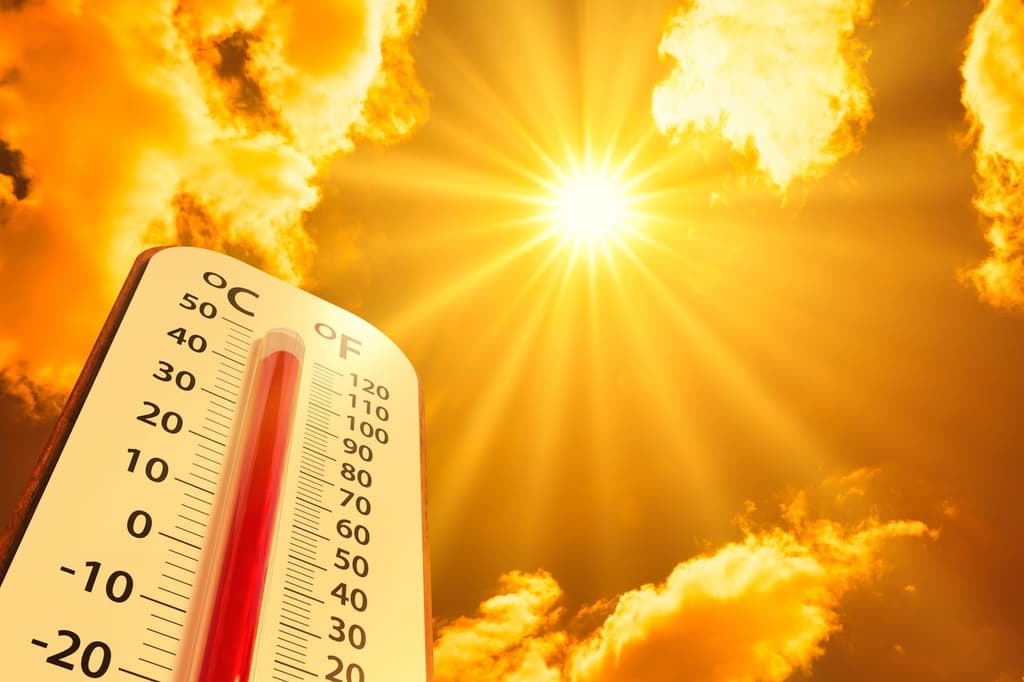
Strong El Niño conditions, with Niño-3.4 sea surface temperature anomalies near +2.8°C in September 2026 and forecasts for a very strong event peaking later in the year, form the main driver keeping global temperatures elevated. Mid-month observations place the planetary mean near +0.80°C above the 1991–2020 baseline, translating to roughly 1.35–1.44°C above the 1850–1900 pre-industrial average once seasonal cooling from August’s record 1.65°C peak is factored in. Ensemble projections from ECMWF and other centers show the month finishing inside a narrow band around 1.37–1.42°C, with limited downside risk from La Niña-like transitions or volcanic cooling. Final agency datasets from NOAA, NASA, and Copernicus expected in early October will resolve the precise value and determine whether the outcome clusters in the leading 1.35–1.39°C or 1.40–1.44°C buckets.
Riepilogo sperimentale generato dall'AI con riferimento ai dati di Polymarket. Questo non è un consiglio di trading e non ha alcun ruolo nella risoluzione di questo mercato. · AggiornatoSettembre 2026 Aumento della temperatura (ºC)
Settembre 2026 Aumento della temperatura (ºC)
1,35–1,39ºC 45%
1,40–1,44ºC 39%
<1,30ºC 26%
1,30–1,34ºC 14%
<1,30ºC
26%
1,30–1,34ºC
14%
1,35–1,39ºC
45%
1,40–1,44ºC
39%
1,45–1,49ºC
9%
>1,49ºC
7%
1,35–1,39ºC 45%
1,40–1,44ºC 39%
<1,30ºC 26%
1,30–1,34ºC 14%
<1,30ºC
26%
1,30–1,34ºC
14%
1,35–1,39ºC
45%
1,40–1,44ºC
39%
1,45–1,49ºC
9%
>1,49ºC
7%
An anomaly within a named bracket for September 2026 is necessary and sufficient to resolve this market immediately once the data becomes available, regardless of whether the figure for September 2026 is later revised.
The brackets are mutually exclusive and collectively exhaustive: each range is inclusive of both of its stated endpoints, and the reported anomaly (to the nearest 0.01ºC) falls within exactly one bracket.
The primary resolution source for this market will be the figure found in the table titled "GLOBAL Land-Ocean Temperature Index in 0.01 degrees Celsius" under the column "Sep" in the row "2026" (https://data.giss.nasa.gov/gistemp/tabledata_v4/GLB.Ts+dSST.txt).
If NASA's "Global Temperature Index" is rendered permanently unavailable, other information from NASA may be used.
If no information for September 2026 is provided by NASA by November 1, 2026, 11:59 PM ET, this market will resolve to the lowest range bracket.
Mercato aperto: Aug 31, 2026, 9:36 AM ET
Fonte di risoluzione
https://data.giss.nasa.gov/gistemp/tabledata_v4/GLB.Ts+dSST.txtRisolutore
0x69c47De9D...An anomaly within a named bracket for September 2026 is necessary and sufficient to resolve this market immediately once the data becomes available, regardless of whether the figure for September 2026 is later revised.
The brackets are mutually exclusive and collectively exhaustive: each range is inclusive of both of its stated endpoints, and the reported anomaly (to the nearest 0.01ºC) falls within exactly one bracket.
The primary resolution source for this market will be the figure found in the table titled "GLOBAL Land-Ocean Temperature Index in 0.01 degrees Celsius" under the column "Sep" in the row "2026" (https://data.giss.nasa.gov/gistemp/tabledata_v4/GLB.Ts+dSST.txt).
If NASA's "Global Temperature Index" is rendered permanently unavailable, other information from NASA may be used.
If no information for September 2026 is provided by NASA by November 1, 2026, 11:59 PM ET, this market will resolve to the lowest range bracket.
Fonte di risoluzione
https://data.giss.nasa.gov/gistemp/tabledata_v4/GLB.Ts+dSST.txtRisolutore
0x69c47De9D...Strong El Niño conditions, with Niño-3.4 sea surface temperature anomalies near +2.8°C in September 2026 and forecasts for a very strong event peaking later in the year, form the main driver keeping global temperatures elevated. Mid-month observations place the planetary mean near +0.80°C above the 1991–2020 baseline, translating to roughly 1.35–1.44°C above the 1850–1900 pre-industrial average once seasonal cooling from August’s record 1.65°C peak is factored in. Ensemble projections from ECMWF and other centers show the month finishing inside a narrow band around 1.37–1.42°C, with limited downside risk from La Niña-like transitions or volcanic cooling. Final agency datasets from NOAA, NASA, and Copernicus expected in early October will resolve the precise value and determine whether the outcome clusters in the leading 1.35–1.39°C or 1.40–1.44°C buckets.
Riepilogo sperimentale generato dall'AI con riferimento ai dati di Polymarket. Questo non è un consiglio di trading e non ha alcun ruolo nella risoluzione di questo mercato. · Aggiornato

Fai attenzione ai link esterni.
Fai attenzione ai link esterni.
Domande frequenti