
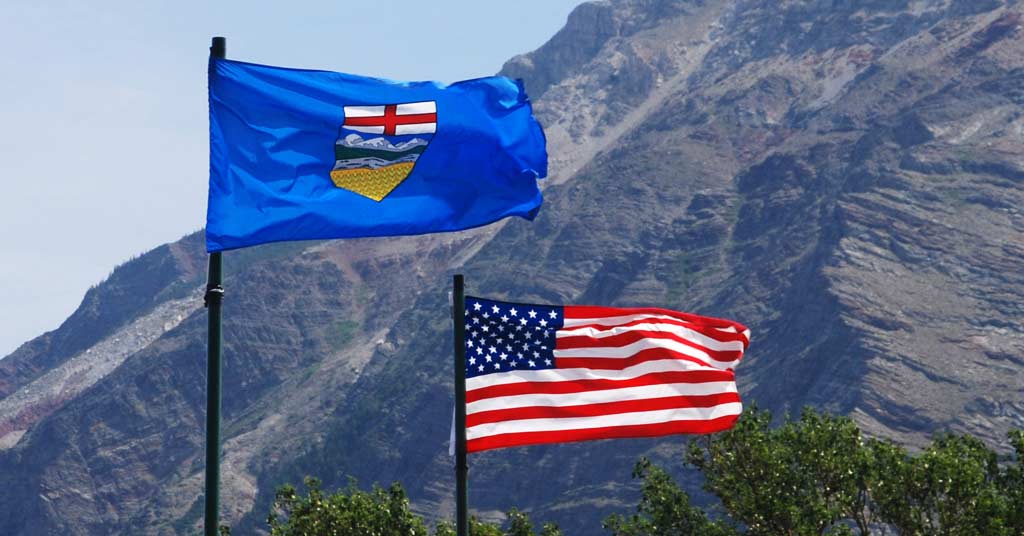
Alberta's path to U.S. statehood faces steep constitutional, legal, and political barriers under Canada's Clarity Act and Supreme Court precedents, which require a clear majority in a referendum followed by complex negotiations with Ottawa and other provinces. Separatist efforts, including the Alberta Prosperity Project's petition drive and an October 2026 referendum on independence from Canada, have drawn limited support in polls (typically under 30 percent) and focus primarily on sovereignty rather than annexation, with most organizers explicitly rejecting U.S. statehood in favor of an independent entity. U.S. officials have described Alberta as a "natural partner" amid trade tensions, yet no formal annexation proposals or endorsements have emerged, and Alberta Premier Danielle Smith has reaffirmed strong opposition to leaving Canada. Trader consensus at 98.2 percent reflects these structural realities, though remote shifts could arise from a decisive independence vote, sustained U.S.-Canada trade disputes, or unexpected diplomatic overtures that alter the independence debate.
Eksperimental na AI-generated summary na nire-reference ang Polymarket data. Hindi ito trading advice at wala itong papel sa kung paano nire-resolve ang market na ito. · Na-update$2,190,188 Vol.
$2,190,188 Vol.
$2,190,188 Vol.
$2,190,188 Vol.
Sovereignty is defined as the transfer of the majority of the territory of Alberta as of February 6, 2026, currently a Canadian province, to being under the formal governance or jurisdiction of the United States, either as a state, territory, or other classification within the US system.
An official announcement made by the United States and Canada that Alberta will come under US sovereignty, within this market's timeframe, will qualify, even if the actual transfer of sovereignty is yet to occur. Only announcements of official agreements or actions (e.g. a ratified treaty, signed legislation, etc.) will count - mere suggestions, negotiations, or posts on Social Media will not.
The resolution source for this market will be official information from the governments of the US, Canada, and Alberta, however a consensus of credible reporting confirming that Alberta has come under U.S. sovereignty will also qualify.
Binuksan ang Market: Feb 6, 2026, 5:03 PM ET
Resolver
0x65070BE91...Sovereignty is defined as the transfer of the majority of the territory of Alberta as of February 6, 2026, currently a Canadian province, to being under the formal governance or jurisdiction of the United States, either as a state, territory, or other classification within the US system.
An official announcement made by the United States and Canada that Alberta will come under US sovereignty, within this market's timeframe, will qualify, even if the actual transfer of sovereignty is yet to occur. Only announcements of official agreements or actions (e.g. a ratified treaty, signed legislation, etc.) will count - mere suggestions, negotiations, or posts on Social Media will not.
The resolution source for this market will be official information from the governments of the US, Canada, and Alberta, however a consensus of credible reporting confirming that Alberta has come under U.S. sovereignty will also qualify.
Resolver
0x65070BE91...Alberta's path to U.S. statehood faces steep constitutional, legal, and political barriers under Canada's Clarity Act and Supreme Court precedents, which require a clear majority in a referendum followed by complex negotiations with Ottawa and other provinces. Separatist efforts, including the Alberta Prosperity Project's petition drive and an October 2026 referendum on independence from Canada, have drawn limited support in polls (typically under 30 percent) and focus primarily on sovereignty rather than annexation, with most organizers explicitly rejecting U.S. statehood in favor of an independent entity. U.S. officials have described Alberta as a "natural partner" amid trade tensions, yet no formal annexation proposals or endorsements have emerged, and Alberta Premier Danielle Smith has reaffirmed strong opposition to leaving Canada. Trader consensus at 98.2 percent reflects these structural realities, though remote shifts could arise from a decisive independence vote, sustained U.S.-Canada trade disputes, or unexpected diplomatic overtures that alter the independence debate.
Eksperimental na AI-generated summary na nire-reference ang Polymarket data. Hindi ito trading advice at wala itong papel sa kung paano nire-resolve ang market na ito. · Na-update

Mag-ingat sa mga external link.
Mag-ingat sa mga external link.
Mga Madalas na Tanong