
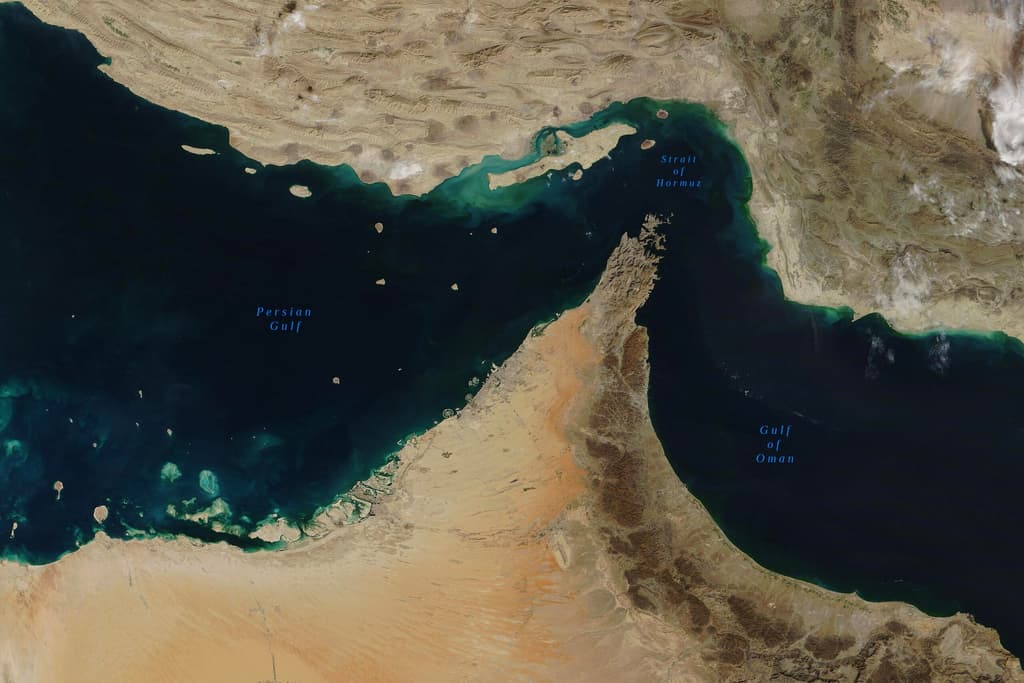
Persistent Iranian enforcement actions, including projectile and drone strikes on commercial vessels transiting unauthorized routes in the Strait of Hormuz, remain the dominant driver of trader sentiment. As of mid-September 2026, multiple incidents—such as the September 12 attack on the tanker El Gaia and the September 14 strike on ST HELENA—have sustained elevated risk levels, keeping daily AIS-detected transits well below pre-conflict baselines and prompting widespread dark shipping. These developments have supported higher risk premiums in energy markets, with Brent and WTI crude reflecting supply disruption concerns and tanker operators facing increased insurance costs and rerouting decisions. Key near-term catalysts include ongoing U.S.-Iran military exchanges and any shifts in IRGC directives on northern versus southern corridors, which directly influence vessel throughput volumes and associated commodity pricing.
Експериментальне резюме, згенероване ШІ з посиланням на дані Polymarket. Це не торгова порада і не впливає на вирішення цього ринку. · ОновленоShipping successfully targeted in Hormuz on...?
Shipping successfully targeted in Hormuz on...?
September 18
29%
September 19
36%
September 20
33%
September 21
36%
September 22
32%
September 23
40%
September 24
27%
September 25
29%
September 26
28%
September 27
27%
September 28
27%
September 29
54%
September 30
27%
$2,673 Обс.
September 18
29%
September 19
36%
September 20
33%
September 21
36%
September 22
32%
September 23
40%
September 24
27%
September 25
29%
September 26
28%
September 27
27%
September 28
27%
September 29
54%
September 30
27%
The defined area consists of the Persian Gulf, the Strait of Hormuz, and the Gulf of Oman. An incident occurring outside these three bodies of water will not qualify, including in the Arabian Sea, the Gulf of Aden, or the Red Sea.
No attribution is required. A qualifying incident will count regardless of the identity of the party responsible, regardless of whether any state or group claims responsibility, and regardless of whether responsibility is denied, disputed, or never established.
Attacks on military vessels will not be considered.
Missile/drone strikes targeting a ship that are intercepted or otherwise do not directly impact the vessel will not be considered, regardless of damage through debris.
Seize control refers to forcefully boarding and taking control of a commercial ship.
Qualifying incidents include, but are not limited to, drone and missile strikes, aerial bombings, and kinetic actions carried out by operatives in person. Damaged caused by mines will not qualify.
The primary resolution source for this market will be a consensus of credible reporting.
The occurrence, location, and timing of a qualifying incident will be primarily determined based on a consensus of information available from the resolution sources. Where multiple sources conflict regarding the occurrence, location, or timing of a relevant incident, this market will remain open until the earlier of: i) the confirmation of the occurrence, location, and timing of the incident based on a consensus of information available from the resolution sources or ii) 3 full calendar days (GST) from the date of the first credibly reported evidence of the incident. If this period would extend past the end date, this market will remain open to allow for 3 full calendar days to pass. If, at the end of the third calendar day, conflicting reports remain as to the occurrence, location, or timing of the incident, the incident will be judged on the totality of information available from the resolution sources at that time. No single statement, denial, or presentation of evidence will govern where it is contradicted by the totality of information.
Ринок відкрито: Sep 17, 2026, 1:58 PM ET
Вирішувач
0x65070BE91...The defined area consists of the Persian Gulf, the Strait of Hormuz, and the Gulf of Oman. An incident occurring outside these three bodies of water will not qualify, including in the Arabian Sea, the Gulf of Aden, or the Red Sea.
No attribution is required. A qualifying incident will count regardless of the identity of the party responsible, regardless of whether any state or group claims responsibility, and regardless of whether responsibility is denied, disputed, or never established.
Attacks on military vessels will not be considered.
Missile/drone strikes targeting a ship that are intercepted or otherwise do not directly impact the vessel will not be considered, regardless of damage through debris.
Seize control refers to forcefully boarding and taking control of a commercial ship.
Qualifying incidents include, but are not limited to, drone and missile strikes, aerial bombings, and kinetic actions carried out by operatives in person. Damaged caused by mines will not qualify.
The primary resolution source for this market will be a consensus of credible reporting.
The occurrence, location, and timing of a qualifying incident will be primarily determined based on a consensus of information available from the resolution sources. Where multiple sources conflict regarding the occurrence, location, or timing of a relevant incident, this market will remain open until the earlier of: i) the confirmation of the occurrence, location, and timing of the incident based on a consensus of information available from the resolution sources or ii) 3 full calendar days (GST) from the date of the first credibly reported evidence of the incident. If this period would extend past the end date, this market will remain open to allow for 3 full calendar days to pass. If, at the end of the third calendar day, conflicting reports remain as to the occurrence, location, or timing of the incident, the incident will be judged on the totality of information available from the resolution sources at that time. No single statement, denial, or presentation of evidence will govern where it is contradicted by the totality of information.
Вирішувач
0x65070BE91...Persistent Iranian enforcement actions, including projectile and drone strikes on commercial vessels transiting unauthorized routes in the Strait of Hormuz, remain the dominant driver of trader sentiment. As of mid-September 2026, multiple incidents—such as the September 12 attack on the tanker El Gaia and the September 14 strike on ST HELENA—have sustained elevated risk levels, keeping daily AIS-detected transits well below pre-conflict baselines and prompting widespread dark shipping. These developments have supported higher risk premiums in energy markets, with Brent and WTI crude reflecting supply disruption concerns and tanker operators facing increased insurance costs and rerouting decisions. Key near-term catalysts include ongoing U.S.-Iran military exchanges and any shifts in IRGC directives on northern versus southern corridors, which directly influence vessel throughput volumes and associated commodity pricing.
Експериментальне резюме, згенероване ШІ з посиланням на дані Polymarket. Це не торгова порада і не впливає на вирішення цього ринку. · Оновлено


Обережно з зовнішніми посиланнями.
Обережно з зовнішніми посиланнями.
Часті запитання