

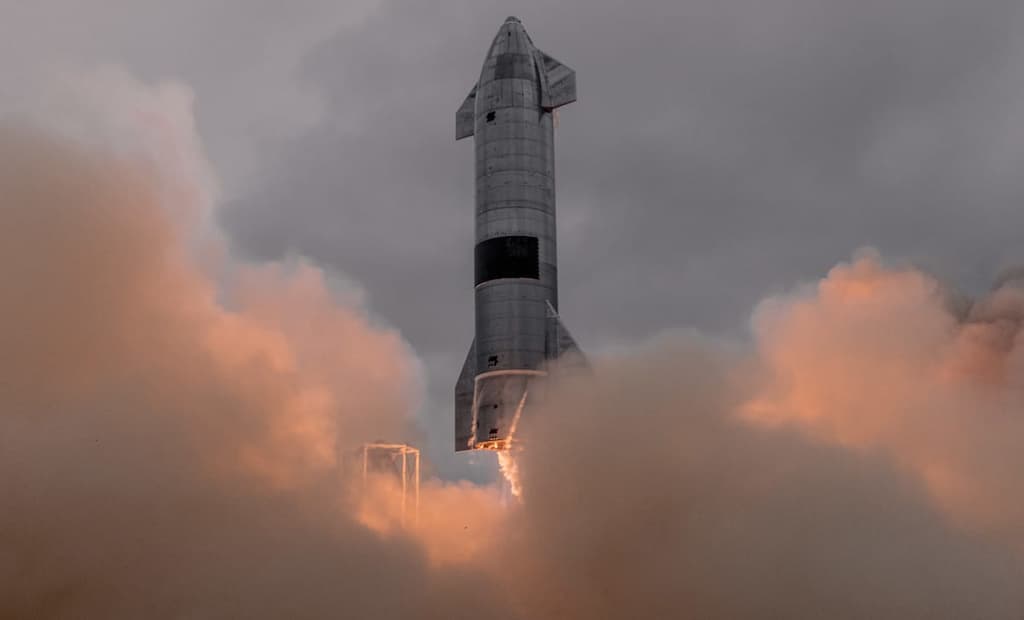
SpaceX has yet to demonstrate orbital flight with its Version 3 Starship vehicles, a prerequisite for any rendezvous and docking operation between two free-flying ships equipped with androgynous docking ports and cryogenic propellant transfer hardware. Flight 13 in July 2026 validated key V3 upgrades including engine relight and intact reentry, but remained suborbital. Flight 14, now targeted for mid-to-late September 2026 from Starbase Pad 2, aims to achieve the first stable low-Earth orbit insertion while deploying Starlink V3 satellites. Subsequent milestones would require repeated orbital missions, autonomous proximity operations, and successful mating for at least 60 seconds in a stable orbit above 100 km perigee. Trader sentiment reflects the compressed timeline for propellant transfer demonstrations originally slated for 2026, with most activity pointing toward 2027 resolution amid iterative testing and regulatory hurdles.
基於Polymarket數據的AI實驗性摘要。這不是交易建議,也不影響該市場的結算方式。 · 更新於$70,283 交易量
2026年12月31日
3%
2027年12月31日
52%
$70,283 交易量
2026年12月31日
3%
2027年12月31日
52%
A qualifying docking maneuver must physically join two vessels, matching in velocity, into a connected structure via mating hardware for at least 60 continuous seconds. The two vessels must be in stable Earth orbit with a perigee of at least 100 kilometers above the Earth’s surface.
The docking of any two SpaceX vessels which each serve as an integrated rocket-and-spacecraft and both equal or exceed Starship in scale will qualify regardless of their contents or variant (standard, tanker, depot, HLS, test article, etc.). The two vessels must be free-flying. Any capsule or payload carried to orbit exclusively atop a separate launch vehicle will not qualify. If either vessel is passively placed into the mating interface of the other vessel, that conjunction will not qualify.
The resolution source for this market will be a consensus of credible reporting.
市場開放時間: Jun 11, 2026, 1:09 PM ET
A qualifying docking maneuver must physically join two vessels, matching in velocity, into a connected structure via mating hardware for at least 60 continuous seconds. The two vessels must be in stable Earth orbit with a perigee of at least 100 kilometers above the Earth’s surface.
The docking of any two SpaceX vessels which each serve as an integrated rocket-and-spacecraft and both equal or exceed Starship in scale will qualify regardless of their contents or variant (standard, tanker, depot, HLS, test article, etc.). The two vessels must be free-flying. Any capsule or payload carried to orbit exclusively atop a separate launch vehicle will not qualify. If either vessel is passively placed into the mating interface of the other vessel, that conjunction will not qualify.
The resolution source for this market will be a consensus of credible reporting.
SpaceX has yet to demonstrate orbital flight with its Version 3 Starship vehicles, a prerequisite for any rendezvous and docking operation between two free-flying ships equipped with androgynous docking ports and cryogenic propellant transfer hardware. Flight 13 in July 2026 validated key V3 upgrades including engine relight and intact reentry, but remained suborbital. Flight 14, now targeted for mid-to-late September 2026 from Starbase Pad 2, aims to achieve the first stable low-Earth orbit insertion while deploying Starlink V3 satellites. Subsequent milestones would require repeated orbital missions, autonomous proximity operations, and successful mating for at least 60 seconds in a stable orbit above 100 km perigee. Trader sentiment reflects the compressed timeline for propellant transfer demonstrations originally slated for 2026, with most activity pointing toward 2027 resolution amid iterative testing and regulatory hurdles.
基於Polymarket數據的AI實驗性摘要。這不是交易建議,也不影響該市場的結算方式。 · 更新於

警惕外部連結哦。
警惕外部連結哦。
Frequently Asked Questions