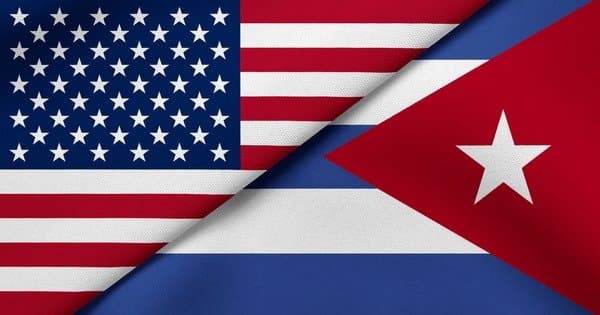
icon for US x Cuba military clash in 2026?

US x Cuba military clash in 2026?

icon for US x Cuba military clash in 2026?

US x Cuba military clash in 2026?

28% tsansa
Polymarket

$237,237 Vol.

28% tsansa
Polymarket

$237,237 Vol.

This market will resolve to "Yes" if there is a military encounter between the military forces of the United States and Cuba between market creation and December 31, 2026, 11:59 PM ET. Otherwise, this market will resolve to "No". A "military encounter" is defined as any incident involving the use of force such as missile strikes, artillery fire, exchange of gunfire, or other forms of direct military engagement between US and Cuban military forces. Non-violent actions, such as warning shots, artillery fire into uninhabited areas, or missile launches that land in territorial waters or pass through airspace, will not qualify for a "Yes" resolution. Intentional ship ramming that results in significant damage to (e.g., a hole in the hull) or the sinking of a military ship by another will count toward a "Yes" resolution, however minor damage (scrapes, dents) will not. Note: the United States Coast Guard is considered part of the United States military, and the Cuban Border Guard is considered part of the Cuban military. The resolution source for this market will be a consensus of credible reporting.**US-Cuba tensions have escalated sharply in 2026 through economic pressure and military signaling, but no direct clash has occurred.** Following the US operation in Venezuela, the Trump administration imposed an oil import blockade via executive order in late January, sanctioned Cuban leaders including President Miguel Díaz-Canel, and indicted former leader Raúl Castro. Pentagon planners examined contingency options such as air assaults and targeted strikes, while the US increased reconnaissance flights, deployed a carrier strike group and Marines to the Caribbean, and issued public warnings against Cuban arms acquisitions. These steps reflect a coercive strategy combining sanctions, third-country tariffs on oil suppliers, and visible force posture to press for regime change or concessions. Cuba has responded by preparing defenses, acquiring drones, and releasing prisoners amid fuel shortages and economic strain. High-level contacts, including a May CIA visit, and the absence of an order to execute planned operations indicate the US has prioritized attrition over immediate kinetic action. With roughly five months remaining in 2026 and competing priorities elsewhere, traders assign a 73% probability to "No," viewing the current approach as sustained pressure rather than an imminent territorial offensive.

This market will resolve to "Yes" if there is a military encounter between the military forces of the United States and Cuba between market creation and December 31, 2026, 11:59 PM ET. Otherwise, this market will resolve to "No".

A "military encounter" is defined as any incident involving the use of force such as missile strikes, artillery fire, exchange of gunfire, or other forms of direct military engagement between US and Cuban military forces. Non-violent actions, such as warning shots, artillery fire into uninhabited areas, or missile launches that land in territorial waters or pass through airspace, will not qualify for a "Yes" resolution. Intentional ship ramming that results in significant damage to (e.g., a hole in the hull) or the sinking of a military ship by another will count toward a "Yes" resolution, however minor damage (scrapes, dents) will not.

Note: the United States Coast Guard is considered part of the United States military, and the Cuban Border Guard is considered part of the Cuban military.

The resolution source for this market will be a consensus of credible reporting.
Volume
$237,237
Petsa ng Pagtatapos
Dec 31, 2026
Binuksan ang Market
Feb 25, 2026, 7:31 PM ET
This market will resolve to "Yes" if there is a military encounter between the military forces of the United States and Cuba between market creation and December 31, 2026, 11:59 PM ET. Otherwise, this market will resolve to "No". A "military encounter" is defined as any incident involving the use of force such as missile strikes, artillery fire, exchange of gunfire, or other forms of direct military engagement between US and Cuban military forces. Non-violent actions, such as warning shots, artillery fire into uninhabited areas, or missile launches that land in territorial waters or pass through airspace, will not qualify for a "Yes" resolution. Intentional ship ramming that results in significant damage to (e.g., a hole in the hull) or the sinking of a military ship by another will count toward a "Yes" resolution, however minor damage (scrapes, dents) will not. Note: the United States Coast Guard is considered part of the United States military, and the Cuban Border Guard is considered part of the Cuban military. The resolution source for this market will be a consensus of credible reporting.
This market will resolve to "Yes" if there is a military encounter between the military forces of the United States and Cuba between market creation and December 31, 2026, 11:59 PM ET. Otherwise, this market will resolve to "No". A "military encounter" is defined as any incident involving the use of force such as missile strikes, artillery fire, exchange of gunfire, or other forms of direct military engagement between US and Cuban military forces. Non-violent actions, such as warning shots, artillery fire into uninhabited areas, or missile launches that land in territorial waters or pass through airspace, will not qualify for a "Yes" resolution. Intentional ship ramming that results in significant damage to (e.g., a hole in the hull) or the sinking of a military ship by another will count toward a "Yes" resolution, however minor damage (scrapes, dents) will not. Note: the United States Coast Guard is considered part of the United States military, and the Cuban Border Guard is considered part of the Cuban military. The resolution source for this market will be a consensus of credible reporting.**US-Cuba tensions have escalated sharply in 2026 through economic pressure and military signaling, but no direct clash has occurred.** Following the US operation in Venezuela, the Trump administration imposed an oil import blockade via executive order in late January, sanctioned Cuban leaders including President Miguel Díaz-Canel, and indicted former leader Raúl Castro. Pentagon planners examined contingency options such as air assaults and targeted strikes, while the US increased reconnaissance flights, deployed a carrier strike group and Marines to the Caribbean, and issued public warnings against Cuban arms acquisitions. These steps reflect a coercive strategy combining sanctions, third-country tariffs on oil suppliers, and visible force posture to press for regime change or concessions. Cuba has responded by preparing defenses, acquiring drones, and releasing prisoners amid fuel shortages and economic strain. High-level contacts, including a May CIA visit, and the absence of an order to execute planned operations indicate the US has prioritized attrition over immediate kinetic action. With roughly five months remaining in 2026 and competing priorities elsewhere, traders assign a 73% probability to "No," viewing the current approach as sustained pressure rather than an imminent territorial offensive.

This market will resolve to "Yes" if there is a military encounter between the military forces of the United States and Cuba between market creation and December 31, 2026, 11:59 PM ET. Otherwise, this market will resolve to "No".

A "military encounter" is defined as any incident involving the use of force such as missile strikes, artillery fire, exchange of gunfire, or other forms of direct military engagement between US and Cuban military forces. Non-violent actions, such as warning shots, artillery fire into uninhabited areas, or missile launches that land in territorial waters or pass through airspace, will not qualify for a "Yes" resolution. Intentional ship ramming that results in significant damage to (e.g., a hole in the hull) or the sinking of a military ship by another will count toward a "Yes" resolution, however minor damage (scrapes, dents) will not.

Note: the United States Coast Guard is considered part of the United States military, and the Cuban Border Guard is considered part of the Cuban military.

The resolution source for this market will be a consensus of credible reporting.
Volume
$237,237
Petsa ng Pagtatapos
Dec 31, 2026
Binuksan ang Market
Feb 25, 2026, 7:31 PM ET
This market will resolve to "Yes" if there is a military encounter between the military forces of the United States and Cuba between market creation and December 31, 2026, 11:59 PM ET. Otherwise, this market will resolve to "No". A "military encounter" is defined as any incident involving the use of force such as missile strikes, artillery fire, exchange of gunfire, or other forms of direct military engagement between US and Cuban military forces. Non-violent actions, such as warning shots, artillery fire into uninhabited areas, or missile launches that land in territorial waters or pass through airspace, will not qualify for a "Yes" resolution. Intentional ship ramming that results in significant damage to (e.g., a hole in the hull) or the sinking of a military ship by another will count toward a "Yes" resolution, however minor damage (scrapes, dents) will not. Note: the United States Coast Guard is considered part of the United States military, and the Cuban Border Guard is considered part of the Cuban military. The resolution source for this market will be a consensus of credible reporting.

Mag-ingat sa mga external link.

Mga Madalas na Tanong

Ang "US x Cuba military clash in 2026?" ay isang prediction market sa Polymarket kung saan bumibili at nagbebenta ang mga trader ng "Yes" o "No" shares batay sa kung naniniwala silang mangyayari ang event na ito. Ang kasalukuyang crowd-sourced probability ay 28% para sa "Yes." Halimbawa, kung ang "Yes" ay naka-presyo sa 28¢, ang market ay kolektibong nagtatakda ng 28% na tsansa na mangyayari ang event na ito. Patuloy na nagbabago ang mga odds na ito habang tumutugon ang mga trader sa mga bagong development at impormasyon. Ang mga shares sa tamang outcome ay mare-redeem sa $1 bawat isa sa market resolution.

Sa ngayon, ang "US x Cuba military clash in 2026?" ay naka-generate ng $237.2K sa kabuuang trading volume mula nang ilunsad ang market noong Feb 25, 2026. Ang antas na ito ng trading activity ay sumasalamin sa malakas na engagement mula sa Polymarket community at tumutulong na matiyak na ang kasalukuyang odds ay sinusuportahan ng malawak na pool ng mga market participant. Maaari mong subaybayan ang live price movements at mag-trade sa anumang outcome nang direkta sa pahinang ito.

Para mag-trade sa "US x Cuba military clash in 2026?," piliin lang kung naniniwala ka na ang sagot ay "Yes" o "No." Ang bawat panig ay may kasalukuyang presyo na sumasalamin sa implied probability ng market. Ilagay ang iyong halaga at i-click ang "Trade." Kung bibili ka ng "Yes" shares at na-resolve ang outcome bilang "Yes," nagbabayad ang bawat share ng $1. Kung na-resolve bilang "No," ang iyong "Yes" shares ay nagkakahalaga ng $0. Maaari ka ring magbenta ng iyong shares anumang oras bago ang resolution kung gusto mong i-lock in ang kita o bawasan ang pagkalugi.

Ang kasalukuyang probability para sa "US x Cuba military clash in 2026?" ay 28% para sa "Yes." Ibig sabihin nito na kasalukuyang naniniwala ang Polymarket crowd na may 28% tsansa na mangyayari ang event na ito. Nag-a-update ang mga odds na ito sa real-time batay sa actual trades, na nagbibigay ng patuloy na ina-update na signal kung ano ang inaasahan ng market na mangyayari.

Ang mga resolution rules para sa "US x Cuba military clash in 2026?" ay tiyak na nagde-define kung ano ang kailangang mangyari para sa bawat outcome na maideklara bilang panalo — kasama ang mga opisyal na data source na ginagamit para matukoy ang resulta. Maaari mong i-review ang kumpletong resolution criteria sa "Rules" section sa pahinang ito sa itaas ng mga komento. Inirerekomenda namin na basahin nang mabuti ang mga patakaran bago mag-trade, dahil tinutukoy nila ang mga tiyak na kondisyon, edge cases, at mga source na namamahala kung paano nise-settle ang market na ito.