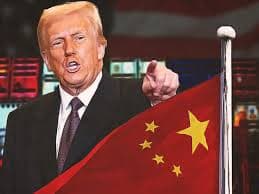
President Trump has repeatedly explored executive actions to assert greater federal authority over election administration ahead of the 2026 midterms, including drafts of orders citing alleged foreign interference—particularly from China—as grounds for a national emergency under the National Emergencies Act. A July 2026 primetime address highlighted declassified materials on election security threats and election integrity concerns, which analysts described as building a public predicate for such a declaration near voting. Prior March 2025 and 2026 executive orders on voter rules and citizenship verification faced court blocks, underscoring constitutional limits on presidential power over state-run elections. Traders weigh these signals against legal constraints, prior denials of intent, and the absence of a formal declaration to date, with resolution tied to an explicit NEA invocation by year-end.
基於Polymarket數據的AI實驗性摘要。這不是交易建議,也不影響該市場的結算方式。 · 更新於$180,545 交易量
12月31日
28%
$180,545 交易量
12月31日
28%
A qualifying declaration must include formal language stating that a national emergency exists and must be issued under the National Emergencies Act (50 U.S.C. § 1621 et seq.). The declaration must explicitly reference interference in U.S. elections, election processes, election systems, voting procedures, ballots, or voting machines as the basis for the emergency. Statements, speeches, social media posts, draft orders, executive orders that do not formally declare a national emergency under the National Emergencies Act, or other actions that merely reference election interference without declaring a national emergency will not qualify.
Renewals or extensions of previously existing national emergencies will not qualify unless the text is materially modified to explicitly relate to election interference.
The primary resolution source will be the Federal Register and official White House publications, however a consensus of credible reporting may also be used.
市場開放時間: Feb 26, 2026, 4:29 PM ET
Resolver
0x65070BE91...A qualifying declaration must include formal language stating that a national emergency exists and must be issued under the National Emergencies Act (50 U.S.C. § 1621 et seq.). The declaration must explicitly reference interference in U.S. elections, election processes, election systems, voting procedures, ballots, or voting machines as the basis for the emergency. Statements, speeches, social media posts, draft orders, executive orders that do not formally declare a national emergency under the National Emergencies Act, or other actions that merely reference election interference without declaring a national emergency will not qualify.
Renewals or extensions of previously existing national emergencies will not qualify unless the text is materially modified to explicitly relate to election interference.
The primary resolution source will be the Federal Register and official White House publications, however a consensus of credible reporting may also be used.
Resolver
0x65070BE91...President Trump has repeatedly explored executive actions to assert greater federal authority over election administration ahead of the 2026 midterms, including drafts of orders citing alleged foreign interference—particularly from China—as grounds for a national emergency under the National Emergencies Act. A July 2026 primetime address highlighted declassified materials on election security threats and election integrity concerns, which analysts described as building a public predicate for such a declaration near voting. Prior March 2025 and 2026 executive orders on voter rules and citizenship verification faced court blocks, underscoring constitutional limits on presidential power over state-run elections. Traders weigh these signals against legal constraints, prior denials of intent, and the absence of a formal declaration to date, with resolution tied to an explicit NEA invocation by year-end.
基於Polymarket數據的AI實驗性摘要。這不是交易建議,也不影響該市場的結算方式。 · 更新於

警惕外部連結哦。
警惕外部連結哦。
Frequently Asked Questions