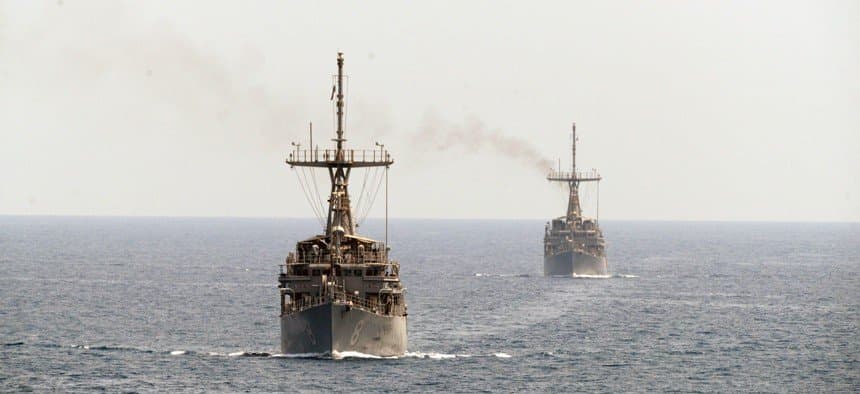
Tensions in the Strait of Hormuz, a vital chokepoint for global oil shipments, have intensified following Iran's April 13 missile and drone barrage against Israel—retaliation for an April 1 strike on Iran's Syrian consulate—and subsequent US defensive assistance. The US Fifth Fleet routinely conducts freedom of navigation transits with destroyers like the USS Thomas Hudner, including passages in recent weeks amid heightened Iranian threats to close the strait. No confirmed blockades or unusual foreign warship deployments occurred in the past 48 hours, though China's navy transited in March and European allies participate sporadically. Traders monitor potential escalations such as vessel seizures, Houthi-linked disruptions, or US carrier deployments, with the market resolving based on verified naval transits by April 30.
Resumen experimental generado por IA con datos de Polymarket · ActualizadoWhich countries will send warships through the Strait of Hormuz by April 30?
Which countries will send warships through the Strait of Hormuz by April 30?
Estados Unidos
33%
France
24%
United Kingdom
23%
India
22%
Netherlands
21%
Canada
21%
Pakistan
21%
Italy
21%
Japan
21%
Greece
20%
Germany
19%
$0.00 Vol.
Estados Unidos
33%
France
24%
United Kingdom
23%
India
22%
Netherlands
21%
Canada
21%
Pakistan
21%
Italy
21%
Japan
21%
Greece
20%
Germany
19%
A "warship transit" is defined as a military vessel passing through the Strait of Hormuz. Military cargo or support vessels will be considered “warships”; however, commercial or civilian vessels will not qualify.
For the purposes of this market, only transits through the Strait of Hormuz will be considered, defined as passage through the narrowest portion of the waterway between Iran and Oman. Operations solely in the Persian Gulf, Gulf of Oman, or Arabian Sea without passage through this narrowest section will not qualify.
Official confirmation by a national government or its military that its vessels transited through the Strait of Hormuz during the specified timeframe will resolve this market immediately. An overwhelming consensus of credible reporting confirming that such a transit occurred during the specified timeframe will also suffice.
Qualifying confirmations include statements such as official announcements that a country has deployed naval vessels to transit or escort shipping through the Strait of Hormuz.
Confirmations referring only to naval presence in the broader region, including the Persian Gulf, Gulf of Oman, or Arabian Sea, without confirmed transit through the Strait itself, as well as aerial operations, cyber operations, or actions by proxies or third parties, will not alone qualify.
The primary resolution source for this market will be official information by the respective national governments or their militaries; however, an overwhelming consensus of credible reporting will also suffice.
Mercado abierto: Mar 27, 2026, 1:36 PM ET
Resolver
0x65070BE91...A "warship transit" is defined as a military vessel passing through the Strait of Hormuz. Military cargo or support vessels will be considered “warships”; however, commercial or civilian vessels will not qualify.
For the purposes of this market, only transits through the Strait of Hormuz will be considered, defined as passage through the narrowest portion of the waterway between Iran and Oman. Operations solely in the Persian Gulf, Gulf of Oman, or Arabian Sea without passage through this narrowest section will not qualify.
Official confirmation by a national government or its military that its vessels transited through the Strait of Hormuz during the specified timeframe will resolve this market immediately. An overwhelming consensus of credible reporting confirming that such a transit occurred during the specified timeframe will also suffice.
Qualifying confirmations include statements such as official announcements that a country has deployed naval vessels to transit or escort shipping through the Strait of Hormuz.
Confirmations referring only to naval presence in the broader region, including the Persian Gulf, Gulf of Oman, or Arabian Sea, without confirmed transit through the Strait itself, as well as aerial operations, cyber operations, or actions by proxies or third parties, will not alone qualify.
The primary resolution source for this market will be official information by the respective national governments or their militaries; however, an overwhelming consensus of credible reporting will also suffice.
Resolver
0x65070BE91...Tensions in the Strait of Hormuz, a vital chokepoint for global oil shipments, have intensified following Iran's April 13 missile and drone barrage against Israel—retaliation for an April 1 strike on Iran's Syrian consulate—and subsequent US defensive assistance. The US Fifth Fleet routinely conducts freedom of navigation transits with destroyers like the USS Thomas Hudner, including passages in recent weeks amid heightened Iranian threats to close the strait. No confirmed blockades or unusual foreign warship deployments occurred in the past 48 hours, though China's navy transited in March and European allies participate sporadically. Traders monitor potential escalations such as vessel seizures, Houthi-linked disruptions, or US carrier deployments, with the market resolving based on verified naval transits by April 30.
Resumen experimental generado por IA con datos de Polymarket · Actualizado
Cuidado con los enlaces externos.
Cuidado con los enlaces externos.
Preguntas frecuentes