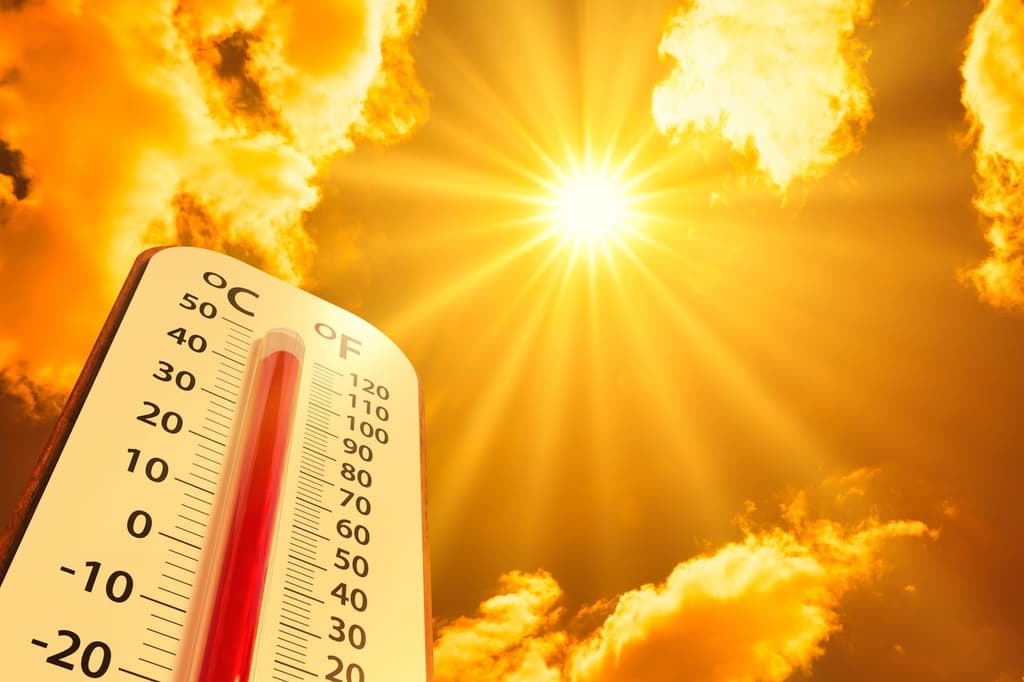
A rapidly strengthening El Niño in the equatorial Pacific, with Niño-3.4 anomalies already exceeding +2°C and forecasts pointing to a potentially record-strong event peaking later in 2026, serves as the dominant near-term driver pushing August global surface temperature anomalies higher. This overlays long-term anthropogenic warming, following June and July 2026 readings near 1.49°C and joint-second warmest July levels above the 1850–1900 baseline. Trader consensus across the closely matched 1.30–1.45°C buckets reflects uncertainty in the precise timing and magnitude of El Niño-driven heat release during peak boreal summer, alongside natural variability and model spread in monthly averages. Upcoming August observational updates from agencies like NOAA and Copernicus will refine resolution thresholds.
Polymarketデータを参照したAI生成の実験的な要約。これは取引アドバイスではなく、このマーケットの解決方法には一切関係ありません。 · 更新日2026年8月気温上昇(º C ) (より高いストライキ)
2026年8月気温上昇(º C ) (より高いストライキ)
<1.30ºC 50%
1.30–1.33ºC 50%
1.34–1.37ºC 50%
1.38–1.41ºC 50%
<1.30ºC
50%
1.30–1.33ºC
50%
1.34–1.37ºC
50%
1.38–1.41ºC
50%
1.42–1.45ºC
50%
>1.45ºC
50%
<1.30ºC 50%
1.30–1.33ºC 50%
1.34–1.37ºC 50%
1.38–1.41ºC 50%
<1.30ºC
50%
1.30–1.33ºC
50%
1.34–1.37ºC
50%
1.38–1.41ºC
50%
1.42–1.45ºC
50%
>1.45ºC
50%
An anomaly within a named bracket for August 2026 is necessary and sufficient to resolve this market immediately once the data becomes available, regardless of whether the figure for August 2026 is later revised.
The primary resolution source for this market will be the figure found in the table titled "GLOBAL Land-Ocean Temperature Index in 0.01 degrees Celsius" under the column "Aug" in the row "2026" (https://data.giss.nasa.gov/gistemp/tabledata_v4/GLB.Ts+dSST.txt).
If NASA’s “Global Temperature Index” is rendered permanently unavailable, other information from NASA may be used.
If no information for August 2026 is provided by NASA by October 1, 2026, 11:59 PM ET, this market will resolve to the lowest range bracket.
マーケット開始日: Aug 14, 2026, 2:30 PM ET
Resolver
0x69c47De9D...An anomaly within a named bracket for August 2026 is necessary and sufficient to resolve this market immediately once the data becomes available, regardless of whether the figure for August 2026 is later revised.
The primary resolution source for this market will be the figure found in the table titled "GLOBAL Land-Ocean Temperature Index in 0.01 degrees Celsius" under the column "Aug" in the row "2026" (https://data.giss.nasa.gov/gistemp/tabledata_v4/GLB.Ts+dSST.txt).
If NASA’s “Global Temperature Index” is rendered permanently unavailable, other information from NASA may be used.
If no information for August 2026 is provided by NASA by October 1, 2026, 11:59 PM ET, this market will resolve to the lowest range bracket.
Resolver
0x69c47De9D...A rapidly strengthening El Niño in the equatorial Pacific, with Niño-3.4 anomalies already exceeding +2°C and forecasts pointing to a potentially record-strong event peaking later in 2026, serves as the dominant near-term driver pushing August global surface temperature anomalies higher. This overlays long-term anthropogenic warming, following June and July 2026 readings near 1.49°C and joint-second warmest July levels above the 1850–1900 baseline. Trader consensus across the closely matched 1.30–1.45°C buckets reflects uncertainty in the precise timing and magnitude of El Niño-driven heat release during peak boreal summer, alongside natural variability and model spread in monthly averages. Upcoming August observational updates from agencies like NOAA and Copernicus will refine resolution thresholds.
Polymarketデータを参照したAI生成の実験的な要約。これは取引アドバイスではなく、このマーケットの解決方法には一切関係ありません。 · 更新日
外部リンクに注意してください。
外部リンクに注意してください。
よくある質問