O estreito de Bab el-Mandeb foi efetivamente fechado por...?
$6,751,615 Vol.
31 jul 2026
31 de julho
$330,674 Vol.
6%
31 de agosto
$303,273 Vol.
17%
30 de setembro
$1,138,635 Vol.
22%
31 de dezembro
$89,216 Vol.
34%
$6,751,615 Vol.
31 de julho
$330,674 Vol.
6%
31 de agosto
$303,273 Vol.
17%
30 de setembro
$1,138,635 Vol.
22%
31 de dezembro
$89,216 Vol.
34%
This market will resolve to “Yes” if IMF PortWatch publishes a 7-day moving average of transit calls (“Arrivals of Ships”) for the Bab el-Mandeb Strait less than or equal to 10 for any date between market creation and the listed date. Otherwise, this market will resolve to “No”.
This market will resolve as soon as IMF PortWatch publishes a 7-day moving average of transit calls for the Bab el-Mandeb Strait equal to or below 10, or once data has been published for the listed date and no such value has been published.
If no data has been published for the listed date within 14 calendar days (ET) after that date, this market will resolve based on the data published up to that point.
Revisions to previously published data points made before data has been published for the listed date will be considered; however, they will not disqualify a previously published data point from qualifying. Revisions made after data has been published for the listed date will not be considered.
The resolution source for this market will be IMF PortWatch, specifically the “Arrivals of Ships” data published for the Bab el-Mandeb Strait at https://portwatch.imf.org/pages/6b1814d64903461b98144a6cc25eb79c.This market will resolve to “Yes” if IMF PortWatch publishes a 7-day moving average of transit calls (“Arrivals of Ships”) for the Bab el-Mandeb Strait less than or equal to 10 for any date between market creation and the listed date. Otherwise, this market will resolve to “No”.
This market will resolve as soon as IMF PortWatch publishes a 7-day moving average of transit calls for the Bab el-Mandeb Strait equal to or below 10, or once data has been published for the listed date and no such value has been published.
If no data has been published for the listed date within 14 calendar days (ET) after that date, this market will resolve based on the data published up to that point.
Revisions to previously published data points made before data has been published for the listed date will be considered; however, they will not disqualify a previously published data point from qualifying. Revisions made after data has been published for the listed date will not be considered.
The resolution source for this market will be IMF PortWatch, specifically the “Arrivals of Ships” data published for the Bab el-Mandeb Strait at https://portwatch.imf.org/pages/6b1814d64903461b98144a6cc25eb79c
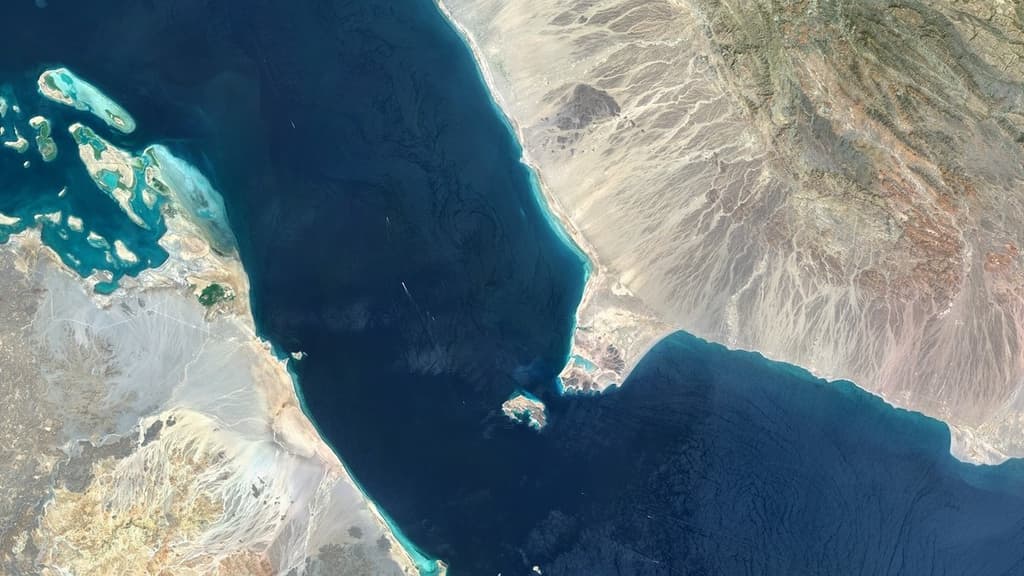
, including both the chart and downloadable files.**Geopolitical escalation in the 2026 Iran conflict has intensified Houthi threats to disrupt or close the Bab el-Mandeb Strait, a key chokepoint handling roughly 4.2 million barrels per day of petroleum liquids in early 2025.** Renewed warnings in April–June 2026, including targeting Israeli-linked vessels, have prompted major carriers like Maersk to pause Red Sea transits, sustaining the shift of Asia-Europe traffic around the Cape of Good Hope and elevating insurance premiums and freight rates. Oil markets price in limited additional upside from Bab el-Mandeb risks given the larger Strait of Hormuz disruption, while shipping volumes through the Suez route remain suppressed versus pre-2024 levels. Trader consensus on Polymarket assigns low near-term probabilities to effective closure, reflecting naval patrols, vessel rerouting flexibility, and historical patterns of asymmetric but contained attacks since the October 2025 ceasefire. Key upcoming catalysts include further Iran-related diplomatic developments or Houthi operational signals that could alter risk premiums.
This market will resolve to “Yes” if IMF PortWatch publishes a 7-day moving average of transit calls (“Arrivals of Ships”) for the Bab el-Mandeb Strait less than or equal to 10 for any date between market creation and the listed date. Otherwise, this market will resolve to “No”.
This market will resolve as soon as IMF PortWatch publishes a 7-day moving average of transit calls for the Bab el-Mandeb Strait equal to or below 10, or once data has been published for the listed date and no such value has been published.
If no data has been published for the listed date within 14 calendar days (ET) after that date, this market will resolve based on the data published up to that point.
Revisions to previously published data points made before data has been published for the listed date will be considered; however, they will not disqualify a previously published data point from qualifying. Revisions made after data has been published for the listed date will not be considered.
This market will resolve to “Yes” if IMF PortWatch publishes a 7-day moving average of transit calls (“Arrivals of Ships”) for the Bab el-Mandeb Strait less than or equal to 10 for any date between market creation and the listed date. Otherwise, this market will resolve to “No”.
This market will resolve as soon as IMF PortWatch publishes a 7-day moving average of transit calls for the Bab el-Mandeb Strait equal to or below 10, or once data has been published for the listed date and no such value has been published.
If no data has been published for the listed date within 14 calendar days (ET) after that date, this market will resolve based on the data published up to that point.
Revisions to previously published data points made before data has been published for the listed date will be considered; however, they will not disqualify a previously published data point from qualifying. Revisions made after data has been published for the listed date will not be considered.
The resolution source for this market will be IMF PortWatch, specifically the “Arrivals of Ships” data published for the Bab el-Mandeb Strait at https://portwatch.imf.org/pages/6b1814d64903461b98144a6cc25eb79c.
**Geopolitical escalation in the 2026 Iran conflict has intensified Houthi threats to disrupt or close the Bab el-Mandeb Strait, a key chokepoint handling roughly 4.2 million barrels per day of petroleum liquids in early 2025.** Renewed warnings in April–June 2026, including targeting Israeli-linked vessels, have prompted major carriers like Maersk to pause Red Sea transits, sustaining the shift of Asia-Europe traffic around the Cape of Good Hope and elevating insurance premiums and freight rates. Oil markets price in limited additional upside from Bab el-Mandeb risks given the larger Strait of Hormuz disruption, while shipping volumes through the Suez route remain suppressed versus pre-2024 levels. Trader consensus on Polymarket assigns low near-term probabilities to effective closure, reflecting naval patrols, vessel rerouting flexibility, and historical patterns of asymmetric but contained attacks since the October 2025 ceasefire. Key upcoming catalysts include further Iran-related diplomatic developments or Houthi operational signals that could alter risk premiums.
Resumo experimental gerado por IA com dados do Polymarket. Isto não é aconselhamento de trading e não tem qualquer papel na resolução deste mercado. · Atualizado
Jun 26 2026
Final data confirms Bab el-Mandeb Strait remains open with transit calls above closure threshold
September 30 dips to 13%1%
Data published for the end of the analysis window confirmed that the 7-day moving average of transit calls remained above 10, leading to market resolution favoring no closure.
Jun 18 2026
Transit calls at Bab el-Mandeb Strait reach lowest point but remain above closure threshold
September 30 drops to 14%10%
The 7-day moving average of transit calls dropped to a low of 11, close to the closure threshold, but did not fall to or below 10, keeping the market's closure probability low.
Jun 10 2026
Announcement of closure risks at Bab el-Mandeb Strait causes market uncertainty
September 30 jumps to 23%5%
News of potential closure risks led to a temporary increase in market uncertainty and price volatility, though actual transit data did not confirm closure.
Jun 9 2026
US maritime advisory warns of ongoing Houthi threats in Bab el-Mandeb and Red Sea
September 30 rises to 28%1%
A US maritime advisory highlighted continued threats by the Houthis to commercial shipping in the Bab el-Mandeb Strait and surrounding waters, underscoring persistent security risks that contribute to the strait's effective closure and market uncertainty.
Jun 8 2026
Iran and allies declare Bab el-Mandeb Strait closed to Israeli ships
September 30 jumps to 27%10%
Iran and its allies, including the Houthis, declared the Bab el-Mandeb Strait completely closed to Israeli shipping in solidarity with Lebanon and Iran, signaling a significant escalation in maritime blockade efforts affecting a key global trade route.
Jun 8 2026
Houthis renew naval blockade on Israel, close Bab el-Mandeb Strait to Israeli shipping
September 30 jumps to 27%10%
Yemen's Houthi rebels announced a renewed naval blockade targeting Israeli shipping in the Red Sea and declared closure of the Bab el-Mandeb Strait to Israeli vessels, intensifying the maritime security crisis and threatening a critical global shipping route.
Jun 5 2026
Iran's Revolutionary Guard threatens to close Bab el-Mandeb Strait amid escalating conflict
September 30 jumps to 26%5%
Iran's Revolutionary Guard issued threats to close the Bab el-Mandeb Strait if Israel did not halt strikes in Gaza and Lebanon, raising the risk of a dual chokepoint crisis alongside the Strait of Hormuz and further disrupting global oil supplies.
Jun 2 2026
Iran signals expansion of maritime blockade to Bab el-Mandeb Strait
September 30 jumps to 26%5%
Iran's state-linked Tasnim News Agency reported Tehran and its regional allies considering actions to affect the Bab el-Mandeb Strait after the effective closure of the Strait of Hormuz, raising fears of a major disruption in global trade and energy supplies.
Jun 1 2026
Iran halts talks with US, vows to block Bab el-Mandeb Strait
September 30 plunges to 21%29%
Iran's state-linked Tasnim News Agency reported that Iran and its allies resolved to completely block the Strait of Hormuz and activate other fronts including the Bab el-Mandeb Strait, signaling an escalation in maritime disruption threats. This announcement heightened fears of a broader blockade affecting global trade routes.
May 24 2026
Bab el-Mandeb Strait transit calls dip near closure threshold but recover quickly
September 30 drops to 16%5%
Data showed a brief dip in transit calls close to the threshold of 10, causing market concern, but subsequent recovery prevented a closure resolution.
May 20 2026
Regional tensions cause temporary transit fluctuations but no closure at Bab el-Mandeb
September 30 dips to 21%3%
Despite spikes in regional conflict, transit data showed fluctuations but did not fall below the closure threshold, leading to market price volatility but no confirmation of closure.
May 6 2026
Reports show Bab el-Mandeb Strait transit calls remain above closure threshold
September 30 plunges to 24%26%
Initial market pricing at 50% reflected concerns about a potential closure, but early data indicated transit calls were still above 10, tempering fears of a full blockade and causing a sharp price drop.
This market will resolve to “Yes” if IMF PortWatch publishes a 7-day moving average of transit calls (“Arrivals of Ships”) for the Bab el-Mandeb Strait less than or equal to 10 for any date between market creation and the listed date. Otherwise, this market will resolve to “No”.
This market will resolve as soon as IMF PortWatch publishes a 7-day moving average of transit calls for the Bab el-Mandeb Strait equal to or below 10, or once data has been published for the listed date and no such value has been published.
If no data has been published for the listed date within 14 calendar days (ET) after that date, this market will resolve based on the data published up to that point.
Revisions to previously published data points made before data has been published for the listed date will be considered; however, they will not disqualify a previously published data point from qualifying. Revisions made after data has been published for the listed date will not be considered.
The resolution source for this market will be IMF PortWatch, specifically the “Arrivals of Ships” data published for the Bab el-Mandeb Strait at https://portwatch.imf.org/pages/6b1814d64903461b98144a6cc25eb79c.This market will resolve to “Yes” if IMF PortWatch publishes a 7-day moving average of transit calls (“Arrivals of Ships”) for the Bab el-Mandeb Strait less than or equal to 10 for any date between market creation and the listed date. Otherwise, this market will resolve to “No”.
This market will resolve as soon as IMF PortWatch publishes a 7-day moving average of transit calls for the Bab el-Mandeb Strait equal to or below 10, or once data has been published for the listed date and no such value has been published.
If no data has been published for the listed date within 14 calendar days (ET) after that date, this market will resolve based on the data published up to that point.
Revisions to previously published data points made before data has been published for the listed date will be considered; however, they will not disqualify a previously published data point from qualifying. Revisions made after data has been published for the listed date will not be considered.
The resolution source for this market will be IMF PortWatch, specifically the “Arrivals of Ships” data published for the Bab el-Mandeb Strait at https://portwatch.imf.org/pages/6b1814d64903461b98144a6cc25eb79c
, including both the chart and downloadable files.**Geopolitical escalation in the 2026 Iran conflict has intensified Houthi threats to disrupt or close the Bab el-Mandeb Strait, a key chokepoint handling roughly 4.2 million barrels per day of petroleum liquids in early 2025.** Renewed warnings in April–June 2026, including targeting Israeli-linked vessels, have prompted major carriers like Maersk to pause Red Sea transits, sustaining the shift of Asia-Europe traffic around the Cape of Good Hope and elevating insurance premiums and freight rates. Oil markets price in limited additional upside from Bab el-Mandeb risks given the larger Strait of Hormuz disruption, while shipping volumes through the Suez route remain suppressed versus pre-2024 levels. Trader consensus on Polymarket assigns low near-term probabilities to effective closure, reflecting naval patrols, vessel rerouting flexibility, and historical patterns of asymmetric but contained attacks since the October 2025 ceasefire. Key upcoming catalysts include further Iran-related diplomatic developments or Houthi operational signals that could alter risk premiums.
This market will resolve to “Yes” if IMF PortWatch publishes a 7-day moving average of transit calls (“Arrivals of Ships”) for the Bab el-Mandeb Strait less than or equal to 10 for any date between market creation and the listed date. Otherwise, this market will resolve to “No”.
This market will resolve as soon as IMF PortWatch publishes a 7-day moving average of transit calls for the Bab el-Mandeb Strait equal to or below 10, or once data has been published for the listed date and no such value has been published.
If no data has been published for the listed date within 14 calendar days (ET) after that date, this market will resolve based on the data published up to that point.
Revisions to previously published data points made before data has been published for the listed date will be considered; however, they will not disqualify a previously published data point from qualifying. Revisions made after data has been published for the listed date will not be considered.
This market will resolve to “Yes” if IMF PortWatch publishes a 7-day moving average of transit calls (“Arrivals of Ships”) for the Bab el-Mandeb Strait less than or equal to 10 for any date between market creation and the listed date. Otherwise, this market will resolve to “No”.
This market will resolve as soon as IMF PortWatch publishes a 7-day moving average of transit calls for the Bab el-Mandeb Strait equal to or below 10, or once data has been published for the listed date and no such value has been published.
If no data has been published for the listed date within 14 calendar days (ET) after that date, this market will resolve based on the data published up to that point.
Revisions to previously published data points made before data has been published for the listed date will be considered; however, they will not disqualify a previously published data point from qualifying. Revisions made after data has been published for the listed date will not be considered.
The resolution source for this market will be IMF PortWatch, specifically the “Arrivals of Ships” data published for the Bab el-Mandeb Strait at https://portwatch.imf.org/pages/6b1814d64903461b98144a6cc25eb79c.
**Geopolitical escalation in the 2026 Iran conflict has intensified Houthi threats to disrupt or close the Bab el-Mandeb Strait, a key chokepoint handling roughly 4.2 million barrels per day of petroleum liquids in early 2025.** Renewed warnings in April–June 2026, including targeting Israeli-linked vessels, have prompted major carriers like Maersk to pause Red Sea transits, sustaining the shift of Asia-Europe traffic around the Cape of Good Hope and elevating insurance premiums and freight rates. Oil markets price in limited additional upside from Bab el-Mandeb risks given the larger Strait of Hormuz disruption, while shipping volumes through the Suez route remain suppressed versus pre-2024 levels. Trader consensus on Polymarket assigns low near-term probabilities to effective closure, reflecting naval patrols, vessel rerouting flexibility, and historical patterns of asymmetric but contained attacks since the October 2025 ceasefire. Key upcoming catalysts include further Iran-related diplomatic developments or Houthi operational signals that could alter risk premiums.
Resumo experimental gerado por IA com dados do Polymarket. Isto não é aconselhamento de trading e não tem qualquer papel na resolução deste mercado. · Atualizado
Jun 26 2026
Final data confirms Bab el-Mandeb Strait remains open with transit calls above closure threshold
September 30 dips to 13%1%
Data published for the end of the analysis window confirmed that the 7-day moving average of transit calls remained above 10, leading to market resolution favoring no closure.
Jun 18 2026
Transit calls at Bab el-Mandeb Strait reach lowest point but remain above closure threshold
September 30 drops to 14%10%
The 7-day moving average of transit calls dropped to a low of 11, close to the closure threshold, but did not fall to or below 10, keeping the market's closure probability low.
Jun 10 2026
Announcement of closure risks at Bab el-Mandeb Strait causes market uncertainty
September 30 jumps to 23%5%
News of potential closure risks led to a temporary increase in market uncertainty and price volatility, though actual transit data did not confirm closure.
Jun 9 2026
US maritime advisory warns of ongoing Houthi threats in Bab el-Mandeb and Red Sea
September 30 rises to 28%1%
A US maritime advisory highlighted continued threats by the Houthis to commercial shipping in the Bab el-Mandeb Strait and surrounding waters, underscoring persistent security risks that contribute to the strait's effective closure and market uncertainty.
Jun 8 2026
Iran and allies declare Bab el-Mandeb Strait closed to Israeli ships
September 30 jumps to 27%10%
Iran and its allies, including the Houthis, declared the Bab el-Mandeb Strait completely closed to Israeli shipping in solidarity with Lebanon and Iran, signaling a significant escalation in maritime blockade efforts affecting a key global trade route.
Jun 8 2026
Houthis renew naval blockade on Israel, close Bab el-Mandeb Strait to Israeli shipping
September 30 jumps to 27%10%
Yemen's Houthi rebels announced a renewed naval blockade targeting Israeli shipping in the Red Sea and declared closure of the Bab el-Mandeb Strait to Israeli vessels, intensifying the maritime security crisis and threatening a critical global shipping route.
Jun 5 2026
Iran's Revolutionary Guard threatens to close Bab el-Mandeb Strait amid escalating conflict
September 30 jumps to 26%5%
Iran's Revolutionary Guard issued threats to close the Bab el-Mandeb Strait if Israel did not halt strikes in Gaza and Lebanon, raising the risk of a dual chokepoint crisis alongside the Strait of Hormuz and further disrupting global oil supplies.
Jun 2 2026
Iran signals expansion of maritime blockade to Bab el-Mandeb Strait
September 30 jumps to 26%5%
Iran's state-linked Tasnim News Agency reported Tehran and its regional allies considering actions to affect the Bab el-Mandeb Strait after the effective closure of the Strait of Hormuz, raising fears of a major disruption in global trade and energy supplies.
Jun 1 2026
Iran halts talks with US, vows to block Bab el-Mandeb Strait
September 30 plunges to 21%29%
Iran's state-linked Tasnim News Agency reported that Iran and its allies resolved to completely block the Strait of Hormuz and activate other fronts including the Bab el-Mandeb Strait, signaling an escalation in maritime disruption threats. This announcement heightened fears of a broader blockade affecting global trade routes.
May 24 2026
Bab el-Mandeb Strait transit calls dip near closure threshold but recover quickly
September 30 drops to 16%5%
Data showed a brief dip in transit calls close to the threshold of 10, causing market concern, but subsequent recovery prevented a closure resolution.
May 20 2026
Regional tensions cause temporary transit fluctuations but no closure at Bab el-Mandeb
September 30 dips to 21%3%
Despite spikes in regional conflict, transit data showed fluctuations but did not fall below the closure threshold, leading to market price volatility but no confirmation of closure.
May 6 2026
Reports show Bab el-Mandeb Strait transit calls remain above closure threshold
September 30 plunges to 24%26%
Initial market pricing at 50% reflected concerns about a potential closure, but early data indicated transit calls were still above 10, tempering fears of a full blockade and causing a sharp price drop.
"O estreito de Bab el-Mandeb foi efetivamente fechado por...?" is a prediction market on Polymarket with 10 possible outcomes where traders buy and sell shares based on what they believe will happen. The current leading outcome is "31 de dezembro" at 34%, followed by "30 de setembro" at 22%. Prices reflect real-time crowd-sourced probabilities. For example, a share priced at 34¢ implies that the market collectively assigns a 34% chance to that outcome. These odds shift continuously as traders react to new developments and information. Shares in the correct outcome are redeemable for $1 each upon market resolution.
As of today, "O estreito de Bab el-Mandeb foi efetivamente fechado por...?" has generated $6.8 million in total trading volume since the market launched on Mar 16, 2026. This level of trading activity reflects strong engagement from the Polymarket community and helps ensure that the current odds are informed by a deep pool of market participants. You can track live price movements and trade on any outcome directly on this page.
To trade on "O estreito de Bab el-Mandeb foi efetivamente fechado por...?," browse the 10 available outcomes listed on this page. Each outcome displays a current price representing the market's implied probability. To take a position, select the outcome you believe is most likely, choose "Yes" to trade in favor of it or "No" to trade against it, enter your amount, and click "Trade." If your chosen outcome is correct when the market resolves, your "Yes" shares pay out $1 each. If it's incorrect, they pay out $0. You can also sell your shares at any time before resolution if you want to lock in a profit or cut a loss.
The current frontrunner for "O estreito de Bab el-Mandeb foi efetivamente fechado por...?" is "31 de dezembro" at 34%, meaning the market assigns a 34% chance to that outcome. The next closest outcome is "30 de setembro" at 22%. These odds update in real-time as traders buy and sell shares, so they reflect the latest collective view of what's most likely to happen. Check back frequently or bookmark this page to follow how the odds shift as new information emerges.
The resolution rules for "O estreito de Bab el-Mandeb foi efetivamente fechado por...?" define exactly what needs to happen for each outcome to be declared a winner — including the official data sources used to determine the result. You can review the complete resolution criteria in the "Rules" section on this page above the comments. We recommend reading the rules carefully before trading, as they specify the precise conditions, edge cases, and sources that govern how this market is settled.
Yes. You don't need to trade to stay informed. This page serves as a live tracker for "O estreito de Bab el-Mandeb foi efetivamente fechado por...?." The outcome probabilities update in real-time as new trades come in. You can bookmark this page and check the comments section to see what other traders are saying. You can also use the time-range filters on the chart to see how the odds have shifted over time. It's a free, real-time window into what the market expects to happen.
Polymarket odds are set by real traders putting real money behind their beliefs, which tends to surface accurate predictions. With $6.8 million traded on “O estreito de Bab el-Mandeb foi efetivamente fechado por...?,” these prices aggregate the collective knowledge and conviction of thousands of participants — often outperforming polls, expert forecasts, and traditional surveys. Prediction markets like Polymarket have a strong track record of accuracy, especially as events approach their resolution date. For example, Polymarket has a one month accuracy score of 94%. For the latest stats on Polymarket’s prediction accuracy, visit the accuracy page on Polymarket.
To place your first trade on "O estreito de Bab el-Mandeb foi efetivamente fechado por...?," sign up for a free Polymarket account and fund it using crypto, a credit or debit card, or a bank transfer. Once your account is funded, return to this page, select the outcome you want to trade, enter your amount, and click "Trade." If you're new to prediction markets, click the "How it works" link at the top of any Polymarket page for a quick step-by-step walkthrough of how trading works.
On Polymarket, the price of each outcome represents the market's implied probability. A price of 34¢ for "31 de dezembro" in the "O estreito de Bab el-Mandeb foi efetivamente fechado por...?" market means traders collectively believe there is roughly a 34% chance that "31 de dezembro" will be the correct result. If you buy "Yes" shares at 34¢ and the outcome is correct, you receive $1.00 per share — a profit of 66¢ per share. If incorrect, those shares are worth $0.
The "O estreito de Bab el-Mandeb foi efetivamente fechado por...?" market's scheduled end date has passed, but the market has not yet been officially resolved. The end date indicates when the underlying event is expected to occur or become knowable. It is not the moment trading stops. The market remains open for trading until the outcome is formally resolved through the resolution process. You can still buy, sell, or close your position while the market is pending resolution. Check the resolution status tracker and "Rules" section on this page for updates on the resolution timeline.
The "O estreito de Bab el-Mandeb foi efetivamente fechado por...?" market has an active community of 169 comments where traders share their analysis, debate outcomes, and discuss breaking developments. Scroll down to the comments section below to read what other participants think. You can also filter by "Top Holders" to see what the market's biggest traders are positioned on, or check the "Activity" tab for a real-time feed of trades.
Polymarket is the world's largest prediction market, where you can stay informed and profit from your knowledge of real-world events. Traders buy and sell shares on outcomes for topics ranging from politics and elections to crypto, finance, sports, tech, and culture, including markets like "O estreito de Bab el-Mandeb foi efetivamente fechado por...?." Prices reflect real-time, crowd-sourced probabilities backed by financial conviction, often providing faster and more accurate signals than polls, pundits, or traditional surveys.
Cuidado com os links externos.
Cuidado com os links externos.
Frequently Asked Questions