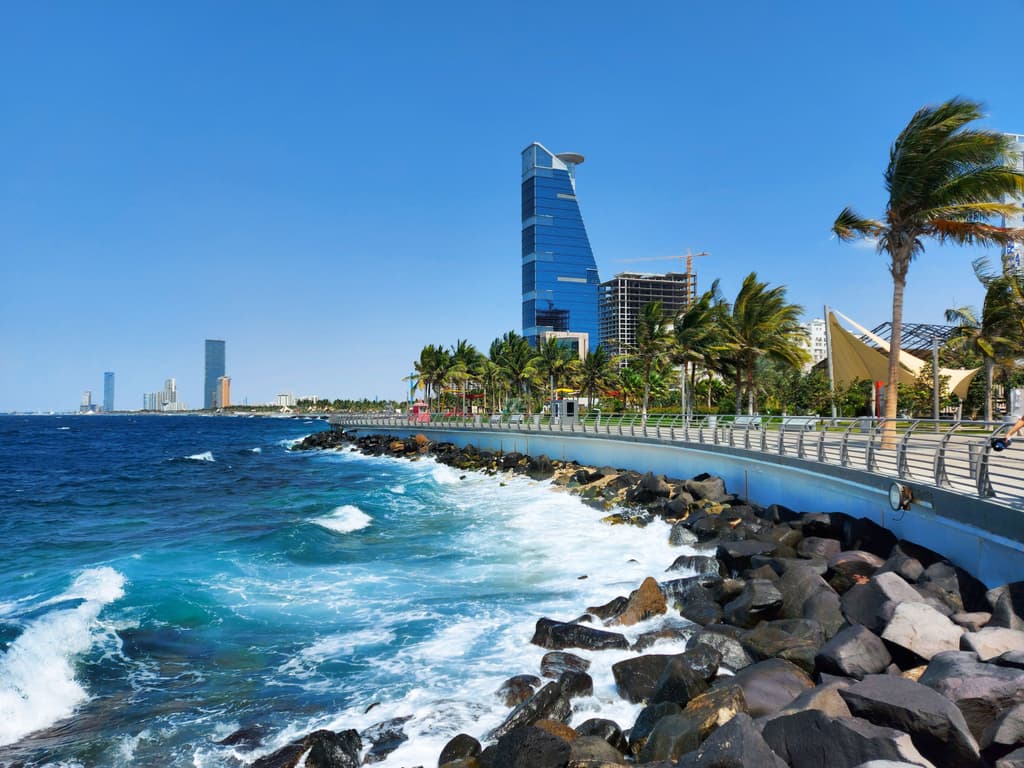
Recent model consensus from sources including NHC-adjacent regional guidance and global ensembles points to a typical late-summer high of 38–39 °C in Jeddah on September 1, sustaining the near-even market split between those two outcomes. Persistent subtropical high pressure, strong northwesterly flow off the Red Sea, and near-peak solar insolation under mostly clear skies support daytime maxima near the upper end of the September climatological range of 35–37 °C. Minor differences between leading forecasts hinge on exact boundary-layer mixing, dew-point suppression from drier continental air, and any subtle cloud or wind shifts that could trim or boost the peak by 1 °C. With resolution only 48 hours away, the next model runs will likely tighten the implied probabilities around these two values.
Ringkasan eksperimental yang dihasilkan AI dengan referensi data Polymarket. Ini bukan saran trading dan tidak berperan dalam bagaimana pasar ini diselesaikan. · DiperbaruiHighest temperature in Jeddah on September 1?
Highest temperature in Jeddah on September 1?
38°C 35%
39°C 31%
37°C 18%
40°C 11%
31°C or below
<1%
32°C
<1%
33°C
<1%
34°C
1%
35°C
1%
36°C
9%
37°C
18%
38°C
35%
39°C
31%
40°C
11%
41°C or higher
9%
38°C 35%
39°C 31%
37°C 18%
40°C 11%
31°C or below
<1%
32°C
<1%
33°C
<1%
34°C
1%
35°C
1%
36°C
9%
37°C
18%
38°C
35%
39°C
31%
40°C
11%
41°C or higher
9%
The resolution source for this market will be information from NOAA, specifically the highest reading under the "Temp" column for all times on this day, available here: https://www.weather.gov/wrh/timeseries?site=oejn
If NOAA data for the observation date is unavailable by 11:59 PM ET on the day following the observation date, the Weather Underground Daily Observations table will be used as the resolution source.
To toggle between Fahrenheit and Celsius, click the "Switch to Metric Units" button until the relevant table displays °C.
This market can not resolve until the first data point for the following date has been published on the resolution source.
The resolution source for this market measures temperatures to whole degrees Celsius (eg, 9°C). Thus, this is the level of precision that will be used when resolving the market.
Revisions to temperatures recorded within this market's timeframe will be considered until the first datapoint for the following date has been published, after which any alterations will not be considered.
Pasar Dibuka: Aug 30, 2026, 12:58 AM ET
Sumber Resolusi
https://www.weather.gov/wrh/timeseries?site=oejnResolver
0x69c47De9D...The resolution source for this market will be information from NOAA, specifically the highest reading under the "Temp" column for all times on this day, available here: https://www.weather.gov/wrh/timeseries?site=oejn
If NOAA data for the observation date is unavailable by 11:59 PM ET on the day following the observation date, the Weather Underground Daily Observations table will be used as the resolution source.
To toggle between Fahrenheit and Celsius, click the "Switch to Metric Units" button until the relevant table displays °C.
This market can not resolve until the first data point for the following date has been published on the resolution source.
The resolution source for this market measures temperatures to whole degrees Celsius (eg, 9°C). Thus, this is the level of precision that will be used when resolving the market.
Revisions to temperatures recorded within this market's timeframe will be considered until the first datapoint for the following date has been published, after which any alterations will not be considered.
Sumber Resolusi
https://www.weather.gov/wrh/timeseries?site=oejnResolver
0x69c47De9D...Recent model consensus from sources including NHC-adjacent regional guidance and global ensembles points to a typical late-summer high of 38–39 °C in Jeddah on September 1, sustaining the near-even market split between those two outcomes. Persistent subtropical high pressure, strong northwesterly flow off the Red Sea, and near-peak solar insolation under mostly clear skies support daytime maxima near the upper end of the September climatological range of 35–37 °C. Minor differences between leading forecasts hinge on exact boundary-layer mixing, dew-point suppression from drier continental air, and any subtle cloud or wind shifts that could trim or boost the peak by 1 °C. With resolution only 48 hours away, the next model runs will likely tighten the implied probabilities around these two values.
Ringkasan eksperimental yang dihasilkan AI dengan referensi data Polymarket. Ini bukan saran trading dan tidak berperan dalam bagaimana pasar ini diselesaikan. · Diperbarui
Hati-hati dengan link eksternal.
Hati-hati dengan link eksternal.
Pertanyaan yang Sering Diajukan