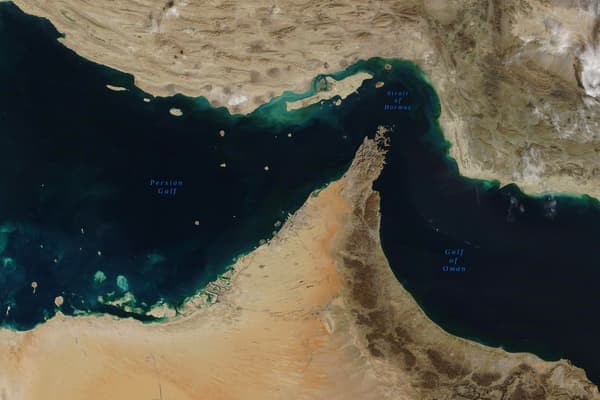
Trader sentiment on Strait of Hormuz ship transits hinges on the fragile U.S.-Iran ceasefire announced this week, which prompted limited vessel movements on April 8—only a handful cleared the chokepoint amid Iranian Revolutionary Guard Corps requirements for naval permissions and warnings over naval mines, per real-time AIS tracking. Daily "arrivals of ships" via IMF Portwatch remain throttled well below historical norms of 20-plus, sustaining elevated tanker charter rates and marine insurance premiums despite Brent crude's sharp pullback to around $94 per barrel from recent peaks above $110. With hundreds of vessels queued, key swing factors include Iran's enforcement consistency through April 12 and potential toll demands of $2-2.5 million per shipment; forthcoming daily Portwatch data will clarify normalization prospects amid 20% of global seaborne oil flows at stake.
Resumen experimental generado por IA con datos de Polymarket · Actualizado10
85%
20
42%
30
20%
40
19%
50
12%
60
6%
$3,469 Vol.
10
85%
20
42%
30
20%
40
19%
50
12%
60
6%
The number of daily transit calls/arrivals includes container, dry bulk, roll-on/roll-off, general cargo, and tanker ships. Ships not reported by IMF Portwatch will not be considered.
This market will resolve as soon as IMF Portwatch publishes a daily number of transit calls equal to or above the specified level, or once data has been published for the final date in the specified period and no such value has been published. If no data has been published for the final date of the specified period within 14 calendar days (ET) after the end of that period, this market will resolve based on data published up to that point.
Revisions to previously published data points, made within this market’s timeframe, will be considered. However, they will not disqualify a previously published data point from qualifying. Revisions to previously published data points after data is published for April 12, 2026, however, will not be considered.
The resolution source for this market will be IMF Portwatch, specifically the transit calls data published for the Strait of Hormuz at https://portwatch.imf.org/pages/cb5856222a5b4105adc6ee7e880a1730, both in the chart and through downloadable files.
Mercado abierto: Apr 8, 2026, 1:46 PM ET
Resolver
0x65070BE91...The number of daily transit calls/arrivals includes container, dry bulk, roll-on/roll-off, general cargo, and tanker ships. Ships not reported by IMF Portwatch will not be considered.
This market will resolve as soon as IMF Portwatch publishes a daily number of transit calls equal to or above the specified level, or once data has been published for the final date in the specified period and no such value has been published. If no data has been published for the final date of the specified period within 14 calendar days (ET) after the end of that period, this market will resolve based on data published up to that point.
Revisions to previously published data points, made within this market’s timeframe, will be considered. However, they will not disqualify a previously published data point from qualifying. Revisions to previously published data points after data is published for April 12, 2026, however, will not be considered.
The resolution source for this market will be IMF Portwatch, specifically the transit calls data published for the Strait of Hormuz at https://portwatch.imf.org/pages/cb5856222a5b4105adc6ee7e880a1730, both in the chart and through downloadable files.
Resolver
0x65070BE91...Trader sentiment on Strait of Hormuz ship transits hinges on the fragile U.S.-Iran ceasefire announced this week, which prompted limited vessel movements on April 8—only a handful cleared the chokepoint amid Iranian Revolutionary Guard Corps requirements for naval permissions and warnings over naval mines, per real-time AIS tracking. Daily "arrivals of ships" via IMF Portwatch remain throttled well below historical norms of 20-plus, sustaining elevated tanker charter rates and marine insurance premiums despite Brent crude's sharp pullback to around $94 per barrel from recent peaks above $110. With hundreds of vessels queued, key swing factors include Iran's enforcement consistency through April 12 and potential toll demands of $2-2.5 million per shipment; forthcoming daily Portwatch data will clarify normalization prospects amid 20% of global seaborne oil flows at stake.
Resumen experimental generado por IA con datos de Polymarket · Actualizado
Cuidado con los enlaces externos.
Cuidado con los enlaces externos.
Preguntas frecuentes