
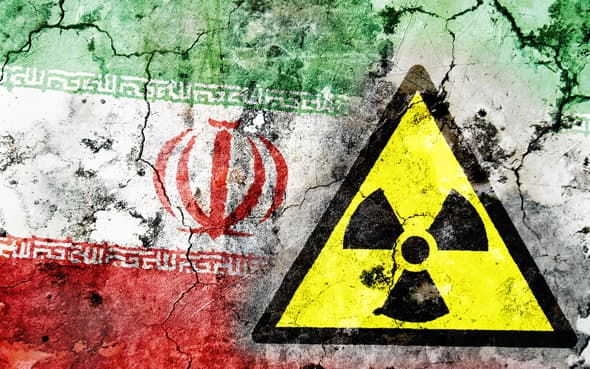
Recent U.S. and Israeli strikes on Iranian enrichment sites at Natanz, Fordow, and Isfahan in 2025 and early 2026 severely damaged key facilities and centrifuges, leaving Iran's program largely dormant with no verified resumption of enrichment activity. IAEA reports through September 2026 highlight a verification blackout on the pre-strike stockpile of roughly 440 kg of 60% enriched uranium, Iran's denial of inspector access, and referral to the UN Security Council for non-compliance, while a short-lived June 2026 U.S.-Iran memorandum on stockpile down-blending collapsed without agreement. U.S. intelligence and other assessments place the current path to a weapon at nine to twelve months or longer absent major recovery of materials and infrastructure. Trader consensus at 95% against an Iranian nuclear weapon before 2027 reflects these setbacks and the short remaining window, though rapid clandestine extraction of buried material or accelerated rebuilding at undeclared sites could still alter timelines if verification gaps persist.
Résumé expérimental généré par IA à partir des données Polymarket. Ceci n'est pas un conseil de trading et ne joue aucun rôle dans la résolution de ce marché. · Mis à jourOui
$1,314,278 Vol.
$1,314,278 Vol.
Oui
$1,314,278 Vol.
$1,314,278 Vol.
Otherwise, this market will resolve to "No".
Marché ouvert : Nov 13, 2025, 5:50 PM ET
Résolveur
0x65070BE91...Otherwise, this market will resolve to "No".
Résolveur
0x65070BE91...Recent U.S. and Israeli strikes on Iranian enrichment sites at Natanz, Fordow, and Isfahan in 2025 and early 2026 severely damaged key facilities and centrifuges, leaving Iran's program largely dormant with no verified resumption of enrichment activity. IAEA reports through September 2026 highlight a verification blackout on the pre-strike stockpile of roughly 440 kg of 60% enriched uranium, Iran's denial of inspector access, and referral to the UN Security Council for non-compliance, while a short-lived June 2026 U.S.-Iran memorandum on stockpile down-blending collapsed without agreement. U.S. intelligence and other assessments place the current path to a weapon at nine to twelve months or longer absent major recovery of materials and infrastructure. Trader consensus at 95% against an Iranian nuclear weapon before 2027 reflects these setbacks and the short remaining window, though rapid clandestine extraction of buried material or accelerated rebuilding at undeclared sites could still alter timelines if verification gaps persist.
Résumé expérimental généré par IA à partir des données Polymarket. Ceci n'est pas un conseil de trading et ne joue aucun rôle dans la résolution de ce marché. · Mis à jour

Méfiez-vous des liens externes.
Méfiez-vous des liens externes.
Questions fréquentes