
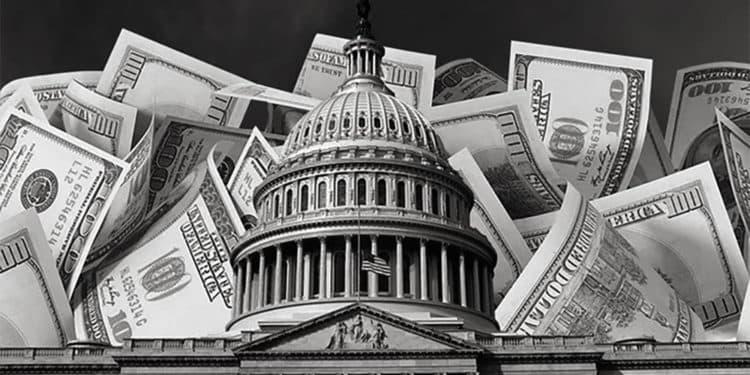
Strong capital buffers and recent Federal Reserve stress tests underpin the 93.5% market-implied odds against a major U.S. bank bailout before 2027. In June 2026, all 32 largest institutions absorbed a hypothetical $708 billion in losses—including $200 billion from credit cards and $75 billion from commercial real estate—while their aggregate CET1 ratio fell only 1.6 percentage points to 11.2%, remaining well above regulatory minimums. Second-quarter 2026 FDIC data showed industry net income rising 12% to $90.1 billion, with just 47–52 problem banks holding 1.1% of institutions and total assets at $26.5 trillion. Only small failures have occurred this year. A severe, unforeseen downturn triggering outsized credit losses or deposit runs could still test this resilience before year-end, though the short timeframe limits such scenarios.
基于Polymarket数据的AI实验性摘要。这不是交易建议,也不影响该市场的结算方式。 · 更新于2027年之前的美国主要银行救助?
2027年之前的美国主要银行救助?
是
是
A bailout is defined as any of these actions in direct response to directly related to solvency, liquidity, or capital adequacy concerns.
-Establishing a Federal Reserve emergency lending facility
-Creating an FDIC-assisted resolution or bridge bank
-A U.S. Treasury capital injection
-A publicly disclosed, regulatory-facilitated acquisition
An official announcement from the U.S. government that they are taking any of these actions will qualify regardless of if/when the action occurs.
Routine access to standing facilities (such as the discount window or BTFP) or participation in stress tests, capital raises, or ordinary supervision will not on their own qualify.
If a bank experiences distress but is acquired privately without public intervention or coordination, this will not qualify.
市场开放时间: Nov 12, 2025, 6:22 PM ET
A bailout is defined as any of these actions in direct response to directly related to solvency, liquidity, or capital adequacy concerns.
-Establishing a Federal Reserve emergency lending facility
-Creating an FDIC-assisted resolution or bridge bank
-A U.S. Treasury capital injection
-A publicly disclosed, regulatory-facilitated acquisition
An official announcement from the U.S. government that they are taking any of these actions will qualify regardless of if/when the action occurs.
Routine access to standing facilities (such as the discount window or BTFP) or participation in stress tests, capital raises, or ordinary supervision will not on their own qualify.
If a bank experiences distress but is acquired privately without public intervention or coordination, this will not qualify.
Strong capital buffers and recent Federal Reserve stress tests underpin the 93.5% market-implied odds against a major U.S. bank bailout before 2027. In June 2026, all 32 largest institutions absorbed a hypothetical $708 billion in losses—including $200 billion from credit cards and $75 billion from commercial real estate—while their aggregate CET1 ratio fell only 1.6 percentage points to 11.2%, remaining well above regulatory minimums. Second-quarter 2026 FDIC data showed industry net income rising 12% to $90.1 billion, with just 47–52 problem banks holding 1.1% of institutions and total assets at $26.5 trillion. Only small failures have occurred this year. A severe, unforeseen downturn triggering outsized credit losses or deposit runs could still test this resilience before year-end, though the short timeframe limits such scenarios.
基于Polymarket数据的AI实验性摘要。这不是交易建议,也不影响该市场的结算方式。 · 更新于

警惕外部链接哦。
警惕外部链接哦。
常见问题