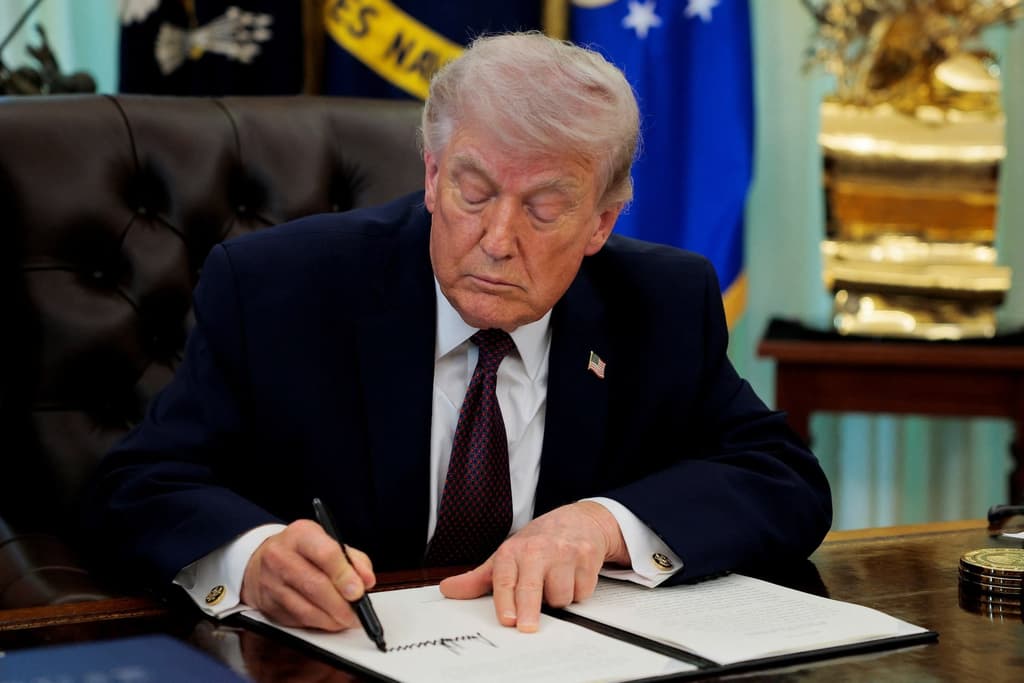
President Trump's executive order signed March 31, 2026, directing federal agencies like DHS to compile verified citizen voter lists and restrict mail-in ballots nationwide, triggered immediate lawsuits from 23 Democratic attorneys general, one governor, and voting rights groups alleging unconstitutional interference in state election administration. Filed in early April across districts including Massachusetts, Oregon, and Washington, these challenges sought preliminary injunctions, but no federal court granted a block or stayed implementation by month's end. This absence of judicial action amid ongoing litigation drives the 87.2% trader consensus on "No," reflecting the skin-in-the-game assessment that the order avoided an April block, though pending rulings could affect 2026 midterm voting procedures.
Experimental AI-generated summary referencing Polymarket data. This is not trading advice and plays no role in how this market resolves. · Updated$4,532 Vol.
$4,532 Vol.
$4,532 Vol.
$4,532 Vol.
This market will resolve to “Yes” if any US court blocks the implementation of any portion of the executive order titled “Ensuring Citizenship Verification and Integrity in Federal Elections” in any part of the United States by April 30, 2026, 11:59 PM ET. Otherwise, this market will resolve to “No”.
Any official court action that temporarily halts or permanently blocks implementation of this executive order (e.g., a temporary restraining order, preliminary injunction, stay, or substantially similar order) will qualify. Filings, hearings, or statements without an operative order will not qualify.
The primary resolution source for this market will be official information from relevant courts, however a consensus of credible reporting will also be used.
Market Opened: Apr 1, 2026, 4:41 PM ET
Resolver
0x65070BE91...Outcome proposed: No
No dispute
Final outcome: No
This market will resolve to “Yes” if any US court blocks the implementation of any portion of the executive order titled “Ensuring Citizenship Verification and Integrity in Federal Elections” in any part of the United States by April 30, 2026, 11:59 PM ET. Otherwise, this market will resolve to “No”.
Any official court action that temporarily halts or permanently blocks implementation of this executive order (e.g., a temporary restraining order, preliminary injunction, stay, or substantially similar order) will qualify. Filings, hearings, or statements without an operative order will not qualify.
The primary resolution source for this market will be official information from relevant courts, however a consensus of credible reporting will also be used.
Resolver
0x65070BE91...Outcome proposed: No
No dispute
Final outcome: No
President Trump's executive order signed March 31, 2026, directing federal agencies like DHS to compile verified citizen voter lists and restrict mail-in ballots nationwide, triggered immediate lawsuits from 23 Democratic attorneys general, one governor, and voting rights groups alleging unconstitutional interference in state election administration. Filed in early April across districts including Massachusetts, Oregon, and Washington, these challenges sought preliminary injunctions, but no federal court granted a block or stayed implementation by month's end. This absence of judicial action amid ongoing litigation drives the 87.2% trader consensus on "No," reflecting the skin-in-the-game assessment that the order avoided an April block, though pending rulings could affect 2026 midterm voting procedures.
Experimental AI-generated summary referencing Polymarket data. This is not trading advice and plays no role in how this market resolves. · Updated


Beware of external links.
Beware of external links.
Frequently Asked Questions