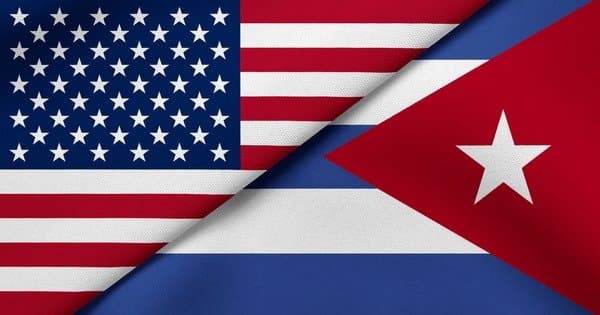
Trader consensus slightly favors no US-Cuba military clash in 2026 at 55%, driven by ongoing bilateral talks amid Cuba's deepening economic crisis from the US oil blockade imposed early this year, which severed Venezuelan fuel supplies and sparked blackouts and protests. Despite President Trump's regime change rhetoric and Cuban vows to defend against potential aggression—echoed by President Díaz-Canel on the April 16 Bay of Pigs anniversary—top US generals stated in March that no invasion preparations are underway. Havana's prisoner releases and economic cooperation roadmap signal de-escalation efforts, though Pentagon contingency planning and Russian ties raise tail risks of escalation via naval incidents or proxy support. Diplomatic breakthroughs or Cuban concessions could avert conflict before year-end.
Polymarketデータを参照したAI生成の実験的な要約。これは取引アドバイスではなく、このマーケットの解決方法には一切関係ありません。 · 更新日はい
$87,547 Vol.
$87,547 Vol.
はい
$87,547 Vol.
$87,547 Vol.
A "military encounter" is defined as any incident involving the use of force such as missile strikes, artillery fire, exchange of gunfire, or other forms of direct military engagement between US and Cuban military forces. Non-violent actions, such as warning shots, artillery fire into uninhabited areas, or missile launches that land in territorial waters or pass through airspace, will not qualify for a "Yes" resolution. Intentional ship ramming that results in significant damage to (e.g., a hole in the hull) or the sinking of a military ship by another will count toward a "Yes" resolution, however minor damage (scrapes, dents) will not.
Note: the United States Coast Guard is considered part of the United States military, and the Cuban Border Guard is considered part of the Cuban military.
The resolution source for this market will be a consensus of credible reporting.
マーケット開始日: Feb 25, 2026, 7:31 PM ET
Resolver
0x65070BE91...A "military encounter" is defined as any incident involving the use of force such as missile strikes, artillery fire, exchange of gunfire, or other forms of direct military engagement between US and Cuban military forces. Non-violent actions, such as warning shots, artillery fire into uninhabited areas, or missile launches that land in territorial waters or pass through airspace, will not qualify for a "Yes" resolution. Intentional ship ramming that results in significant damage to (e.g., a hole in the hull) or the sinking of a military ship by another will count toward a "Yes" resolution, however minor damage (scrapes, dents) will not.
Note: the United States Coast Guard is considered part of the United States military, and the Cuban Border Guard is considered part of the Cuban military.
The resolution source for this market will be a consensus of credible reporting.
Resolver
0x65070BE91...Trader consensus slightly favors no US-Cuba military clash in 2026 at 55%, driven by ongoing bilateral talks amid Cuba's deepening economic crisis from the US oil blockade imposed early this year, which severed Venezuelan fuel supplies and sparked blackouts and protests. Despite President Trump's regime change rhetoric and Cuban vows to defend against potential aggression—echoed by President Díaz-Canel on the April 16 Bay of Pigs anniversary—top US generals stated in March that no invasion preparations are underway. Havana's prisoner releases and economic cooperation roadmap signal de-escalation efforts, though Pentagon contingency planning and Russian ties raise tail risks of escalation via naval incidents or proxy support. Diplomatic breakthroughs or Cuban concessions could avert conflict before year-end.
Polymarketデータを参照したAI生成の実験的な要約。これは取引アドバイスではなく、このマーケットの解決方法には一切関係ありません。 · 更新日
外部リンクに注意してください。
外部リンクに注意してください。
よくある質問